
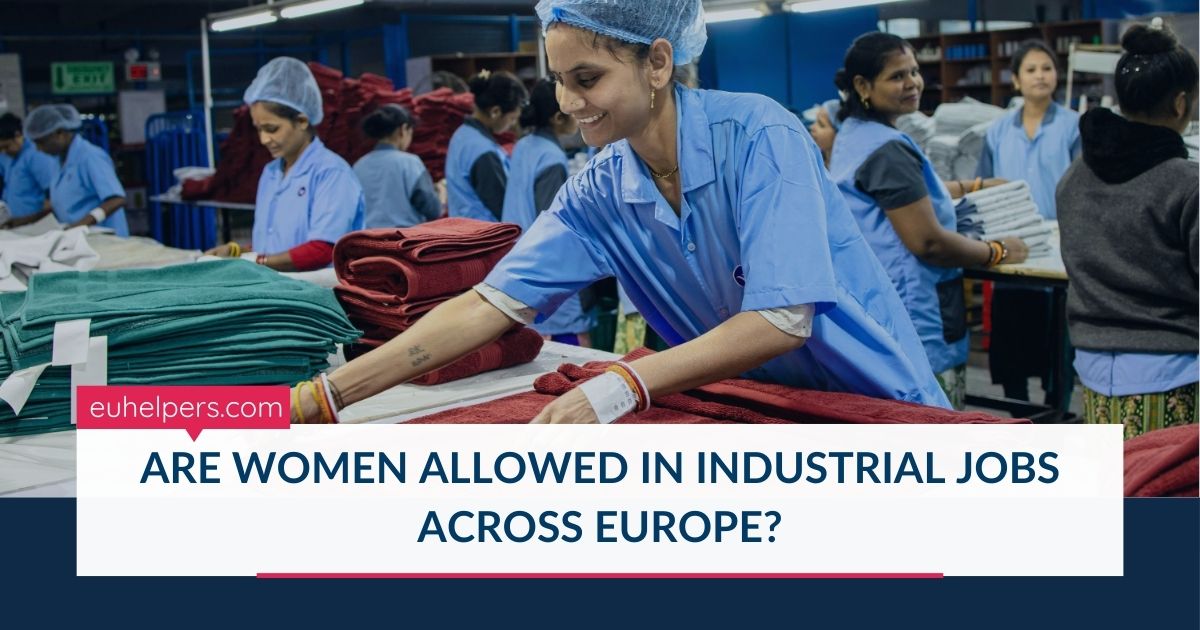

Yes, women are legally allowed to work in industrial jobs across Europe. European labour laws strongly support gender equality, and employers are prohibited from discriminating based on gender when hiring for factory, industrial, or technical roles.
Women are already working across Europe in manufacturing, warehouses, logistics, electronics, food processing, and light industry.
What Do Industrial Jobs Mean?
Industrial jobs refer to roles in factories, plants, and production facilities. These jobs can be manual, technical, or supervisory, depending on the industry.
Common industrial roles include:
-
Factory workers
-
Assembly line operators
-
Packaging and sorting staff
-
Quality control inspectors
-
Machine operators
-
Warehouse workers
-
Electronics and textile workers
Many of these roles are suitable for both men and women.
Are There Any Legal Restrictions for Women?
In most European countries, there are no general bans on women working in industry.
However, limited restrictions may apply to:
-
Extremely hazardous work
-
Heavy lifting beyond safety limits
-
Certain night-shift roles (in specific cases)
-
Pregnant or nursing workers
These rules are based on health and safety, not gender discrimination.
Which Industrial Sectors Commonly Hire Women?
Women are commonly employed in:
-
Food processing factories
-
Electronics and electrical assembly
-
Textile and garment manufacturing
-
Pharmaceutical production
-
Packaging and labeling units
-
Warehousing and logistics
Many employers actively encourage female workers to apply.
Are Night Shifts Allowed for Women?
Yes. In most European countries, women are allowed to work night shifts.
Employers must ensure:
-
Safe transport options (in some countries)
-
Proper lighting and security
-
Compliance with working hour limits
Restrictions may apply during pregnancy or based on medical advice.
Do Women Receive Equal Pay in Industrial Jobs?
European law requires equal pay for equal work, regardless of gender.
This means:
-
Same salary for the same role
-
Same overtime and shift allowances
-
Same benefits and social security coverage
Any employer offering different pay based on gender is violating labour law.
Can Foreign Women Work in Industrial Jobs?
Yes. Foreign women can legally work in industrial jobs if they have:
-
A valid work permit or visa
-
A legal job contract
-
Employment with a registered employer
Many European factories actively hire female migrant workers, especially in light manufacturing and packaging roles.
Are Industrial Jobs Safe for Women?
When legally employed, industrial jobs must follow strict EU safety standards, including:
-
Protective equipment
-
Safe machinery operation
-
Training and supervision
-
Workplace safety checks
Employers are legally responsible for worker safety, regardless of gender.
Do Industrial Jobs Offer Long-Term Opportunities for Women?
Yes. Many industrial jobs offer:
-
Long-term contracts
-
Stable monthly income
-
Social security and health insurance
-
Paid leave
-
Career growth into supervisory roles
Some countries also allow residence permit extensions for long-term workers.
How EUHelpers Supports Women Workers
EUHelpers helps women by:
-
Sharing verified industrial job opportunities
-
Explaining work conditions clearly before application
-
Supporting legal work permit processes
-
Reducing the risk of unsafe or illegal employment
This ensures women access safe, legal, and transparent jobs in Europe.
Frequently Asked Questions (FAQs)
Are women legally allowed to work in factories in Europe?
Yes. European labour laws fully allow women to work in factories and industrial roles.
Can women work night shifts in industrial jobs?
Yes, with safety and health protections in place.
Do industrial employers prefer men?
No. Hiring decisions must be gender-neutral under EU law.
Can women from non-EU countries apply?
Yes, with a valid work permit and job offer.