
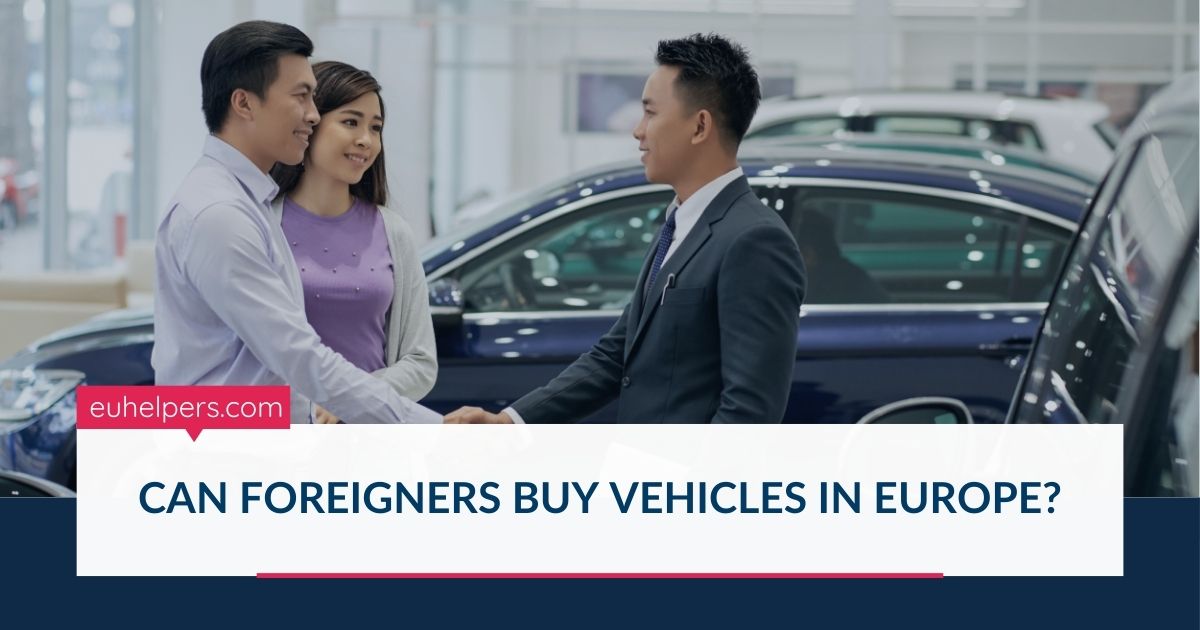

Yes, foreigners can legally buy vehicles in most European countries, including cars, motorcycles, and scooters. Both EU and non-EU nationals are allowed to purchase vehicles, provided they meet certain legal and administrative requirements.
Buying a vehicle in Europe is common among foreign workers, students, long-term residents, and even short-term residents in some cases.
Who Is Considered a Foreigner When Buying a Vehicle?
In Europe, a foreigner can be:
-
A non-EU citizen with a work or residence permit
-
An EU citizen living in another EU country
-
A student or trainee with legal residence
-
A long-term visitor with temporary registration
Citizenship usually matters less than legal residence status when buying a vehicle.
Is Residence Required to Buy a Vehicle?
In most EU countries, yes, some form of residence or address registration is required.
Typically required:
-
Valid passport
-
Residence permit or long-term visa
-
Registered local address
-
Tax or identification number (country-specific)
Tourists may be able to buy vehicles in limited situations, but registration and insurance are difficult without residency.
Can Foreigners Buy New and Used Vehicles?
Yes. Foreigners can buy:
-
New vehicles from dealerships
-
Used vehicles from dealers or private sellers
Dealership purchases are easier for foreigners because:
-
Paperwork support is provided
-
VAT rules are clear
-
Registration assistance is often included
Private purchases require more caution and legal checks.
What Documents Are Needed to Buy a Vehicle?
Common documents include:
-
Valid passport
-
Residence permit or visa
-
Proof of address
-
Tax identification number
-
Proof of insurance
-
Sales contract
Some countries may also require a local bank account for payments and fees.
Can Foreigners Register a Vehicle in Their Name?
Yes, but vehicle registration must be done in the country of residence.
Registration usually requires:
-
Proof of legal residence
-
Vehicle inspection certificate
-
Insurance policy
-
Registration fees and road tax
Vehicles must be registered locally if they are used long-term.
Is Vehicle Insurance Mandatory?
Yes. Third-party liability insurance is mandatory across all EU countries.
Optional but recommended:
-
Comprehensive insurance
-
Theft and damage coverage
Insurance premiums may be higher for new foreign residents, especially without EU driving history.
Can Foreigners Get Car Loans or Financing?
This depends on the country and bank.
Generally:
-
Long-term residents may qualify for financing
-
New arrivals often need full payment
-
Stable income and residence history improve eligibility
Many foreigners buy used vehicles initially to avoid financing barriers.
Can Foreigners Use Their Home Country Driving License?
Yes, but with limits.
Rules vary:
-
EU licenses are valid across the EU
-
Non-EU licenses are usually valid for 6–12 months
-
After that, conversion or exchange may be required
Driving without a valid license can invalidate insurance.
Can Foreigners Buy Vehicles Without a Driving License?
Yes. A driving license is not required to buy a vehicle, but it is required to drive it legally.
However, registration and insurance may be difficult without a valid license.
Are There Extra Taxes for Foreign Buyers?
No special taxes apply just because someone is a foreigner.
However, buyers must pay:
-
Vehicle registration fees
-
Road tax
-
Environmental or emission taxes (in some countries)
-
VAT (for new vehicles)
Tax rules depend on whether the vehicle is new or used.
Can Foreigners Export Vehicles from Europe?
Yes. Foreigners can buy vehicles in Europe and export them.
Export usually requires:
-
Export plates
-
Temporary insurance
-
Customs documentation
This process is more common for EU-made vehicles sold outside Europe.
Common Challenges Foreigners Face When Buying Vehicles
Foreign buyers may face:
-
Language barriers
-
Complex paperwork
-
Higher insurance premiums
-
Scams in private sales
-
Registration delays
Using authorized dealers and official offices reduces risks.
Key Takeaway for Foreign Workers and Migrants
Foreigners can buy and own vehicles in Europe, but success depends on legal residence, proper registration, and insurance compliance.
For most foreign workers, it is easier to:
-
Buy used vehicles
-
Use dealer-supported purchases
-
Ensure license validity before driving
Careful planning helps avoid fines, insurance issues, and legal problems.