
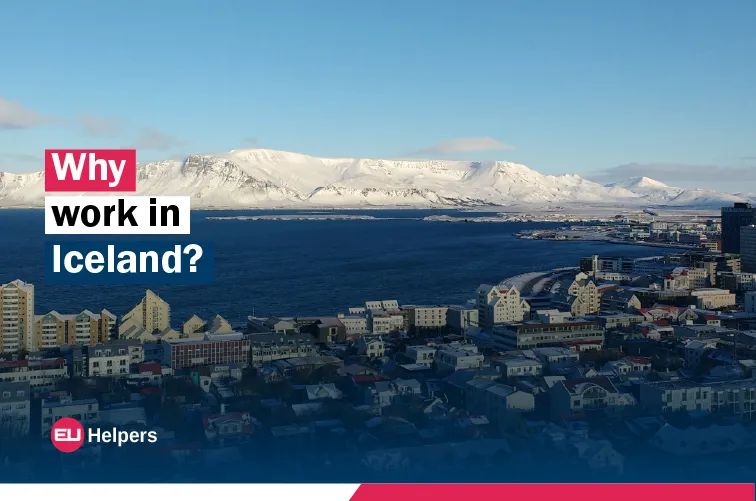

Why Work in Iceland? A Complete EU Helpers Guide for International Professionals
Iceland, the dynamic North Atlantic nation located between Greenland to the west and Norway to the east, positioned along the Mid-Atlantic Ridge where the North American and Eurasian tectonic plates meet (creating Iceland's distinctive geological character with active volcanoes, geothermal areas, and dramatic landscapes), occupies an exceptionally distinctive position in Europe and the world for those seeking the rare combination of full EEA and Schengen integration (Iceland joined the EEA in 1994 and Schengen in 2001, providing extensive EU market access and free movement despite Iceland not being an EU member — Iceland briefly applied for EU membership during the 2008 financial crisis but later withdrew the application in 2015), founding NATO member (since 1949 as one of NATO's original members — remarkable given Iceland has no standing military), founding Council of Europe member (since 1949), Nordic Council member (participating in Nordic integration alongside Denmark, Finland, Norway, and Sweden), exceptional natural beauty (with dramatic volcanic landscapes including approximately 130 volcanic mountains and 30 active volcanic systems making Iceland one of the world's most volcanically active places, stunning glaciers covering about 11% of the country's surface including Vatnajökull — Europe's largest glacier by volume, magnificent waterfalls including the iconic Gullfoss — the "Golden Waterfall" — one of Iceland's most visited attractions, Skógafoss, Seljalandsfoss — famous for being able to walk behind the falls, Dettifoss — Europe's most powerful waterfall by volume, and Goðafoss — the "Waterfall of the Gods", the famous Blue Lagoon geothermal spa — one of Iceland's most iconic experiences with milky-blue geothermal seawater, the spectacular Northern Lights — aurora borealis visible during winter months from September to April making Iceland one of the world's best destinations for aurora viewing, the Midnight Sun during summer with continuous daylight north of the Arctic Circle in late June, black sand beaches including the famous Reynisfjara black sand beach with its basalt columns and Reynisdrangar sea stacks, geothermal areas including Geysir — the original geyser that gave the geological feature its name and the currently active Strokkur that erupts every 5-10 minutes, the geothermal Landmannalaugar area, the volcanic Þórsmörk valley, Jökulsárlón glacier lagoon with floating icebergs, the Diamond Beach where icebergs wash up on black sand, the famous Golden Circle tourist route including Þingvellir National Park, Gullfoss, and Geysir, the dramatic Vestrahorn mountain, and diverse geological wonders), distinctive Icelandic culture with exceptional heritage preservation (Icelandic culture preserves substantial elements of medieval Norse heritage including the Icelandic language — Íslenska which has remained remarkably similar to Old Norse over 1,000 years, allowing modern Icelanders to read the medieval sagas in their original form — an exceptional cultural continuity found in very few languages worldwide, the famous Icelandic Sagas — Íslendingasögur — considered among the greatest medieval literature covering Viking Age Iceland with masterpieces including Egil's Saga, Njál's Saga, Grettir's Saga, and Laxdæla Saga, the Alþingi — Iceland's parliament established in 930 AD at Þingvellir making it one of the world's oldest parliamentary institutions still in operation, distinctive Icelandic folk traditions including belief in álfar — elves and huldufólk — hidden folk which remains part of Icelandic cultural identity, and the naming tradition where Icelanders use patronymic surnames — with son of X or daughter of X — rather than family surnames making Iceland one of very few countries maintaining this ancient tradition), exceptional quality of life (Iceland consistently ranks among the world's happiest countries, appearing in top positions in the World Happiness Report, plus exceptional gender equality with Iceland consistently ranking as one of the world's most gender-equal countries — Iceland has been ranked as the world's most gender-equal country by the World Economic Forum for years in a row, with a female president Vigdís Finnbogadóttir being the world's first democratically elected female head of state in 1980, and continuing progressive tradition, plus very high standard of living and one of the world's highest human development indices), significant renewable energy leadership (Iceland runs on nearly 100% renewable energy — one of very few countries with this achievement, using primarily geothermal energy leveraging Iceland's unique volcanic geology with about 25% of electricity from geothermal and 75% from hydroelectric, plus most heating from geothermal district heating systems making Iceland a global leader in green energy and geothermal expertise providing consulting to countries worldwide), UNESCO World Heritage Sites (Þingvellir National Park — the historic site of the Alþingi and site of continental drift between the North American and Eurasian tectonic plates visible above ground, plus Surtsey — a volcanic island that emerged from the sea in 1963 through underwater volcanic eruption and has been preserved for scientific study as a natural laboratory for understanding how ecosystems establish on new land), distinctive Icelandic wildlife (including the Icelandic horse — one of the world's oldest and purest horse breeds preserved through strict biosecurity — no horses can be imported to Iceland and once an Icelandic horse leaves the country it cannot return, puffins with substantial breeding populations particularly in the Westman Islands, whales visible off Iceland's coasts including humpback, minke, and orca with Húsavík being called the "whale watching capital of Europe", Arctic foxes — Iceland's only native land mammal, and reindeer in eastern Iceland), exceptional literary and creative tradition (Iceland has extraordinary literary heritage per capita including Nobel laureate Halldór Laxness who won the Nobel Prize in Literature in 1955 becoming Iceland's most internationally famous author, plus the medieval sagas remaining foundational to world literature, and Iceland producing more writers per capita than almost any nation with the famous saying that "every Icelander has a book in them"; exceptional music heritage including internationally famous artists like Björk — one of the world's most influential experimental musicians, Sigur Rós — the atmospheric post-rock band, Of Monsters and Men, Ólafur Arnalds — the acclaimed composer, plus many others; and Iceland Airwaves — the internationally renowned annual music festival held in Reykjavík), significant Icelandic diaspora connections (with substantial Icelandic communities particularly in Canada — the Icelandic Canadian community especially in Manitoba, Winnipeg where Gimli hosts the famous Íslendingadagurinn festival, and the United States with substantial Icelandic-American communities), the historical heritage of having been settled by Norse Vikings from Norway around 874 AD (with the famous First Settler being Ingólfur Arnarson who established Reykjavík), the Icelandic Commonwealth period (930-1262), Norwegian and later Danish rule (from 1262 until Icelandic independence movements), the achievement of home rule in 1874 and full independence from Denmark in 1944 during World War II (when Denmark was occupied by Nazi Germany), and modern Iceland as a leading Nordic democracy, exceptional Icelandic hospitality, distinctive Icelandic character (with strong self-reliance culture reflecting Iceland's isolated island position, strong environmental consciousness, strong social welfare tradition characteristic of Nordic countries, and exceptional trust levels — Iceland has one of the world's highest social trust levels), the distinctive Icelandic weather including polar and subpolar oceanic climate with milder temperatures than the latitude suggests due to the Gulf Stream and North Atlantic Current, and unique geographic position at the crossroads of North Atlantic between Europe and North America. With a population of only approximately 380,000 (making Iceland one of Europe's smallest countries by population) and covering about 103,000 square kilometers (making it larger by area than many EU countries, though with vast uninhabited highland interior — most of the population lives along the coasts), Iceland has firmly established itself as one of the most distinctive Nordic destinations. The capital Reykjavík (the vibrant capital and main business, IT, and cultural hub, the northernmost capital city of a sovereign state in the world located just south of the Arctic Circle, home to about two-thirds of Iceland's population in the greater metropolitan area, founded around 874 AD by Ingólfur Arnarson as Iceland's first Norse settlement, with iconic landmarks including Hallgrímskirkja — the iconic Lutheran church visible throughout the city with distinctive basalt-inspired architecture inspired by Iceland's natural basalt columns and named after Iceland's most famous poet Hallgrímur Pétursson, completed in 1986 after 41 years of construction and standing 74.5 meters tall making it Iceland's tallest church, the Sun Voyager sculpture — Sólfar — on the Reykjavík waterfront the famous stainless steel sculpture symbolizing exploration and dreams designed by Jón Gunnar Árnason inaugurated 1990, the Harpa concert hall — Reykjavík's iconic modern glass concert hall inaugurated in 2011 with its distinctive geometric glass facade designed by Olafur Eliasson, the National Museum of Iceland showcasing 1,200 years of Icelandic history and culture, the Perlan — Pearl — the distinctive dome viewing platform on Öskjuhlíð hill built atop water tanks with 360-degree views of Reykjavík, the historic Old Town including the Old Harbor area, the Reykjavík City Hall on Tjörnin — the city pond, the famous colorful houses of the historic center, the National and University Library of Iceland — Landsbókasafn, the Icelandic Phallological Museum — a distinctively Icelandic institution and one of the world's more unusual museums, exceptional café and dining scene with Reykjavík being considered one of the world's most creative small capitals per capita, and vibrant nightlife reputation particularly around Laugavegur — Reykjavík's main shopping street), along with Akureyri (Iceland's second-largest urban area in the north — sometimes called the "Capital of the North" with about 20,000 inhabitants, gateway to Iceland's northern natural attractions including Lake Mývatn, Dettifoss waterfall, Húsavík whale watching, and the famous Diamond Circle of northern attractions, notable Akureyri Church, the Botanical Garden of Akureyri, and being one of the northernmost significant urban areas in the world), Reykjanesbær (near Keflavík International Airport — Iceland's main international airport, including the towns of Keflavík and Njarðvík, with growing tourism-related activity), Hafnarfjörður (part of the greater Reykjavík area with notable Viking heritage and the famous Viking Village), Akranes (across the fjord from Reykjavík), Selfoss (in southern Iceland and a gateway to the Golden Circle tourist route with the famous Bobby Fischer Center honoring the American chess champion who spent his final years in Iceland), Ísafjörður (the largest town in the remote Westfjords region with dramatic mountain scenery), and Egilsstaðir (the main town in eastern Iceland and gateway to the East Fjords), host Icelandic and multinational companies, technology hubs, and innovative start-ups. For applicants from anywhere considering Iceland, the country offers structured immigration pathways including the qualified professional permit, the shortage occupation permit, the distinctive Remote Work Long-Term Visa (launched 2020 — one of Europe's earliest digital nomad visa frameworks), self-employment provisions, the researcher route, family reunification provisions, and a clear long-term route toward Icelandic permanent residence and eventually Icelandic citizenship. At EU Helpers, candidates regularly ask the fundamental question: why should I consider Iceland specifically?
This complete EU Helpers guide answers that question in depth and walks you through the genuine, practical, and long-term reasons that make Iceland one of the world's most uniquely distinctive destinations.
Why Iceland Is Genuinely Distinctive Among European Destinations
Iceland occupies an exceptionally distinctive position in Europe and the world — EEA and Schengen integrated (though not EU), with world-leading renewable energy, exceptional natural beauty, distinctive Norse-heritage culture, one of the world's happiest countries, and distinctive digital nomad framework.
EEA and Schengen Integration (Not EU)
Iceland is not an EU member (having chosen not to pursue membership and withdrawn its application in 2015), but is a full member of the European Economic Area (EEA — since 1994) and Schengen Area (since 2001), providing extensive EU market access and free movement benefits.
One of the World's Happiest Countries
Iceland consistently ranks among the world's happiest countries, appearing in top positions in the World Happiness Report. This reflects exceptional quality of life, strong social welfare, safety, and equality.
World-Leading Renewable Energy Country
Iceland runs on nearly 100% renewable energy — one of very few countries with this achievement, using primarily geothermal and hydroelectric power leveraging Iceland's unique volcanic geology. Iceland is a global leader in geothermal expertise.
Exceptional Gender Equality
Iceland consistently ranks as one of the world's most gender-equal countries — Iceland has been ranked as the world's most gender-equal country by the World Economic Forum for years in a row. Iceland elected the world's first democratically elected female head of state, Vigdís Finnbogadóttir, in 1980.
Exceptional Natural Beauty
Iceland has exceptional natural beauty including dramatic volcanic landscapes (approximately 130 volcanic mountains and 30 active volcanic systems), stunning glaciers (about 11% of the country's surface including Vatnajökull — Europe's largest glacier by volume), magnificent waterfalls (Gullfoss, Skógafoss, Seljalandsfoss, Dettifoss — Europe's most powerful waterfall), the famous Blue Lagoon geothermal spa, spectacular Northern Lights, Midnight Sun in summer, black sand beaches, and diverse geological wonders.
Distinctive Icelandic Language and Culture
Icelandic culture preserves substantial elements of medieval Norse heritage. The Icelandic language has remained remarkably similar to Old Norse over 1,000 years, allowing modern Icelanders to read the medieval sagas in their original form — an exceptional cultural continuity found in very few languages worldwide.
Alþingi — One of the World's Oldest Parliaments
The Alþingi — Iceland's parliament established in 930 AD at Þingvellir — is one of the world's oldest parliamentary institutions still in operation, representing over 1,000 years of continuous democratic tradition.
Icelandic Sagas — World Literature Heritage
The famous Icelandic Sagas — Íslendingasögur — are considered among the greatest medieval literature. Iceland has produced Nobel laureate Halldór Laxness (1955) and produces more writers per capita than almost any nation.
UNESCO World Heritage Sites
Iceland has UNESCO World Heritage Sites including Þingvellir National Park (site of the Alþingi and continental drift between North American and Eurasian tectonic plates visible above ground) and Surtsey (volcanic island that emerged from the sea in 1963 preserved for scientific study).
Distinctive Remote Work Long-Term Visa
Iceland introduced its Remote Work Long-Term Visa in 2020 — one of Europe's earliest digital nomad visa frameworks, supporting higher-income foreign nationals working remotely for non-Icelandic employers or clients.
Exceptional Safety
Iceland consistently ranks as one of the world's safest countries with very low crime rates and stable political conditions.
Northernmost Capital City
Reykjavík is the northernmost capital city of a sovereign state in the world, located just south of the Arctic Circle. Iceland is one of Europe's most geographically distinctive countries.
Distinctive Icelandic Wildlife
Iceland has distinctive wildlife including the Icelandic horse (one of the world's oldest and purest horse breeds preserved through strict biosecurity), puffins, whales, Arctic foxes (Iceland's only native land mammal), and reindeer.
Top Financial Reasons to Consider Iceland
The financial rationale for working in Iceland centers around high salaries balanced against very high cost of living.
High Salary Levels
Icelandic salaries are among the highest in Europe, reflecting Iceland's high cost of living, small labor market, and strong Nordic welfare traditions.
Very High Cost of Living Balance
Icelandic salaries are balanced against a very high cost of living — one of Europe's highest. Housing in Reykjavík is particularly expensive.
Strong Nordic Welfare Traditions
Iceland has strong Nordic welfare traditions with comprehensive social protections, universal healthcare, extensive paid leave, and other benefits.
Universal Healthcare
Iceland has universal healthcare consistently providing quality care for residents.
Strong Worker Protections
Iceland has strong labor laws providing comprehensive paid vacation, parental leave (with exceptional Icelandic parental leave provisions supporting both mothers and fathers), and other worker protections.
Free or Affordable Education
Iceland offers essentially free public education through university level, creating substantial long-term family benefits.
Lifestyle and Quality-of-Life Benefits
Beyond money, Iceland offers an exceptional lifestyle combining distinctive Nordic character, exceptional natural beauty, and unique cultural heritage.
Vibrant Capital Reykjavík
Reykjavík combines distinctive character (northernmost capital of a sovereign state in the world, historic settlement from 874 AD), iconic landmarks (Hallgrímskirkja — the iconic Lutheran church with basalt-inspired architecture, the Sun Voyager sculpture on the waterfront, the Harpa concert hall — inaugurated 2011 with distinctive glass facade designed by Olafur Eliasson, the Perlan viewing platform, the historic Old Town, the National Museum of Iceland), exceptional café and dining scene (Reykjavík is considered one of the world's most creative small capitals per capita), vibrant nightlife reputation, and rich cultural scene.
Charming Akureyri and Other Icelandic Towns
Akureyri (Iceland's second-largest urban area — "Capital of the North" — gateway to northern attractions). Reykjanesbær (near Keflavík International Airport). Hafnarfjörður (with Viking heritage). Selfoss (gateway to the Golden Circle). Ísafjörður (in the dramatic Westfjords). Egilsstaðir (in the East Fjords). Each town offers distinctive character.
Spectacular Volcanic Landscapes
Iceland's volcanic landscapes are among the world's most dramatic — approximately 130 volcanic mountains, 30 active volcanic systems, the recent Fagradalsfjall eruptions near Reykjavík (2021-2023), Eyjafjallajökull (which erupted famously in 2010), Hekla, Katla, and many others.
Magnificent Glaciers
Glaciers cover about 11% of Iceland's surface including Vatnajökull (Europe's largest glacier by volume), Langjökull, Hofsjökull, Mýrdalsjökull, and Snæfellsjökull (with the famous Snæfellsnes peninsula which inspired Jules Verne's "Journey to the Center of the Earth"). Glacier hiking, ice caves, and glacier lagoons including Jökulsárlón with floating icebergs offer distinctive experiences.
Iconic Waterfalls
Iceland's magnificent waterfalls include Gullfoss ("Golden Waterfall" — one of Iceland's most visited attractions), Skógafoss, Seljalandsfoss (famous for being able to walk behind the falls), Dettifoss (Europe's most powerful waterfall by volume), Goðafoss ("Waterfall of the Gods"), Svartifoss (surrounded by basalt columns), and many others.
Famous Blue Lagoon and Geothermal Spas
The Blue Lagoon geothermal spa is one of Iceland's most iconic experiences with milky-blue geothermal seawater. Iceland has numerous other geothermal spas including Sky Lagoon (opened 2021), Mývatn Nature Baths, Secret Lagoon, GeoSea, and Krauma.
Spectacular Northern Lights
The Northern Lights (aurora borealis) are visible from Iceland from September to April, making Iceland one of the world's best destinations for aurora viewing.
Midnight Sun and Polar Nights
Iceland experiences Midnight Sun during summer with near-continuous daylight around late June, and polar nights during winter with very short daylight hours in December.
Golden Circle and Distinctive Tourist Routes
The famous Golden Circle tourist route includes Þingvellir National Park (UNESCO listed — site of the Alþingi and continental drift), Gullfoss waterfall, and Geysir geothermal area (with the currently active Strokkur that erupts every 5-10 minutes).
Rich Cultural Heritage
Iceland has rich cultural heritage spanning the Norse Viking settlement (from around 874 AD), the Icelandic Commonwealth period (930-1262), Norwegian and Danish rule, the achievement of home rule in 1874 and full independence from Denmark in 1944, and modern Iceland as a leading Nordic democracy.
Distinctive Icelandic Cuisine
Icelandic cuisine has distinctive specialties including lamb (Icelandic lamb is renowned for its distinctive flavor from sheep grazing on wild herbs), skyr (traditional Icelandic dairy product similar to yogurt), harðfiskur (dried fish), plokkfiskur (traditional fish stew), Icelandic hot dogs (pylsur — famously enjoyed at Bæjarins Beztu Pylsur in Reykjavík), the famous Icelandic bread including rúgbrauð (rye bread) traditionally baked using geothermal heat, and adventurous specialties like fermented shark (hákarl) and roasted puffin — though tourists more commonly enjoy modern Icelandic cuisine using distinctive local ingredients. The New Nordic Cuisine movement has brought international recognition to modern Icelandic dining.
Icelandic Coffee Culture
Iceland has strong coffee culture, with Icelanders being among the world's biggest coffee consumers per capita.
Distinctive Music Scene
Iceland has exceptional music tradition including internationally famous artists like Björk, Sigur Rós, Of Monsters and Men, and Ólafur Arnalds. Iceland Airwaves is the internationally renowned annual music festival held in Reykjavík every November.
Exceptional Safety
Iceland consistently ranks as one of the world's safest countries with very low crime rates.
Strong Icelandic Character
Icelanders are known for self-reliance culture (reflecting Iceland's isolated island position), strong environmental consciousness, resilience, distinctive humor, and exceptional trust levels — Iceland has one of the world's highest social trust levels.
Icelandic Naming Tradition
Iceland maintains the ancient Norse patronymic naming tradition where Icelanders use son of X (Jónsson) or daughter of X (Jónsdóttir) rather than family surnames, making Iceland one of very few countries maintaining this ancient tradition. This is why Icelanders are typically addressed by first name only in professional contexts.
Icelandic Weather
Iceland has polar and subpolar oceanic climate with milder temperatures than the latitude suggests due to the Gulf Stream and North Atlantic Current. Weather is famously changeable — Icelanders have a saying "if you don't like the weather, wait five minutes."
Growing International Community
Iceland's growing tourism sector, IT/data center development, and distinctive Remote Work Long-Term Visa framework have created growing international communities, particularly in Reykjavík.
Family-Friendly Society
Iceland has exceptionally family-friendly culture with generous parental leave (with exceptional Icelandic parental leave provisions supporting both mothers and fathers), family allowances, public childcare, and family-friendly workplace policies.
Career Growth and Professional Opportunities
Iceland's career environment offers opportunities in growing sectors despite the small labor market.
Career Pathways in Tourism
Iceland's dramatic tourism growth creates substantial opportunities for hospitality professionals.
Career Pathways in IT and Data Centers
Iceland's emerging data center sector (leveraging renewable energy advantages) creates opportunities.
Career Pathways in Renewable Energy
Iceland's renewable energy leadership creates specialized opportunities in geothermal.
Career Pathways in Healthcare
Iceland's demographic-driven healthcare demand creates opportunities.
Opportunities for Remote Workers
The distinctive Remote Work Long-Term Visa (launched 2020) supports higher-income remote workers.
Small Labor Market Consideration
Iceland's very small population (approximately 380,000) creates limited opportunities compared to larger countries, meaning applicants should carefully evaluate whether their specific sector has opportunities.
Residency, Work Permit, and Legal Benefits
Working legally in Iceland comes with structured immigration pathways.
Structured Permit System
Foreign workers obtain residence through dedicated schemes including the qualified professional permit, shortage occupation permit, distinctive Remote Work Long-Term Visa, self-employment routes, researcher route, family reunification provisions, and other pathways.
Family Reunification
Iceland allows qualifying workers and residents to bring close family members.
Pathway to Icelandic Citizenship
After qualifying continuous residence in Iceland (typically 7 years for most nationalities, with variations by circumstance) and meeting other requirements including Icelandic language and integration criteria, foreign nationals may become eligible for Icelandic citizenship by naturalization.
Healthcare, Education, and Social Benefits
Icelandic public services are exceptionally well-regarded.
Universal Healthcare
Iceland has universal healthcare providing comprehensive coverage for residents.
Free Educational System
Iceland offers essentially free public education through university level, with the University of Iceland (founded 1911 — Iceland's largest university) being one of the country's major academic institutions.
Strong Social Protections
Registered workers benefit from comprehensive contributions including pensions, healthcare, family allowances, and other benefits.
Practical Considerations for Working in Iceland
While Iceland offers compelling benefits, applicants should also understand practical considerations.
Icelandic Language Importance
Icelandic is essential for many contexts, though English is widely used and highly proficient across the Icelandic population, particularly in tourism, IT, and international business.
Very Small Labor Market
Iceland's very small population (approximately 380,000) creates a limited labor market with fewer opportunities than larger countries.
Very High Cost of Living
Iceland has among the highest cost of living in Europe. Housing in Reykjavík is particularly expensive given the tight housing market.
Weather and Darkness Considerations
Iceland's location just south of the Arctic Circle creates significant seasonal variation with very short daylight hours in December (about 4 hours of daylight) and very long daylight hours in June (near-continuous daylight). This may affect some people significantly.
Geographic Isolation
Iceland is geographically isolated in the North Atlantic between Europe and North America. This creates distinctive character but also creates practical considerations for travel to other countries.
Required Documents and Step-by-Step Overview
While exact requirements depend on the specific permit and applicant profile, the general route involves coordination with the Directorate of Immigration (Útlendingastofnun), Icelandic diplomatic representation abroad, and other authorities.
Practical Tips for International Applicants Considering Iceland
Tips From EU Helpers for Considering Iceland
Carefully evaluate which permit category fits your profile. For higher-income remote workers, evaluate the Remote Work Long-Term Visa. For skilled professionals, evaluate the qualified professional permit through employer sponsorship. Target Icelandic employers in strong sectors — tourism, IT/data centers, renewable energy, healthcare. Take advantage of Iceland's exceptional natural beauty and quality of life. Plan carefully for very high cost of living, particularly housing in Reykjavík. Prepare for Iceland's very small labor market. Develop basic Icelandic language skills for daily life and integration, while leveraging English (widely spoken in Iceland). Embrace Iceland's distinctive Nordic character — self-reliance culture, strong environmental consciousness, exceptional trust levels. Always rely on the latest official guidance.
Final Guidance
Why work in Iceland? Because few countries in Europe — or in the world — combine such a unique mix of full EEA and Schengen integration (though not EU membership), founding NATO and Council of Europe member (since 1949), one of the world's happiest countries with exceptional quality of life (consistently top-ranked in the World Happiness Report), world-leading renewable energy country (nearly 100% renewable energy through geothermal and hydroelectric — positioning Iceland as a global leader in green energy), exceptional gender equality (Iceland has been ranked as the world's most gender-equal country by the World Economic Forum for years in a row, with the world's first democratically elected female head of state Vigdís Finnbogadóttir in 1980), exceptional natural beauty (dramatic volcanic landscapes with approximately 130 volcanic mountains, stunning glaciers covering 11% of the country including Vatnajökull — Europe's largest glacier by volume, magnificent waterfalls including Gullfoss and Dettifoss — Europe's most powerful waterfall, the famous Blue Lagoon geothermal spa, spectacular Northern Lights visible September-April, Midnight Sun in summer, black sand beaches, geothermal areas including the original Geysir, the famous Golden Circle route, and diverse geological wonders), distinctive Icelandic culture with exceptional heritage preservation (Icelandic language remains remarkably similar to Old Norse allowing modern Icelanders to read medieval sagas in their original form — an exceptional cultural continuity found in very few languages worldwide; Icelandic Sagas — Íslendingasögur — considered among the greatest medieval literature; the Alþingi — Iceland's parliament established in 930 AD making it one of the world's oldest parliamentary institutions; distinctive Icelandic naming tradition maintaining ancient Norse patronymic surnames; and belief in álfar — elves and huldufólk — hidden folk remaining part of Icelandic cultural identity), UNESCO World Heritage Sites (Þingvellir National Park — site of the Alþingi and continental drift between North American and Eurasian tectonic plates, plus Surtsey — volcanic island preserved for scientific study), Nobel literary heritage (Halldór Laxness — 1955 Nobel laureate — Iceland's most internationally famous author, plus Iceland producing more writers per capita than almost any nation), exceptional music heritage (Björk, Sigur Rós, Of Monsters and Men, Ólafur Arnalds, and the internationally renowned Iceland Airwaves music festival), distinctive Icelandic wildlife (Icelandic horse — one of the world's oldest and purest horse breeds, puffins, whales, Arctic foxes — Iceland's only native land mammal), exceptional safety (Iceland consistently ranks as one of the world's safest countries), exceptional trust levels (Iceland has one of the world's highest social trust levels), universal healthcare, essentially free public education through university level, exceptional Nordic welfare traditions, and distinctive Remote Work Long-Term Visa framework (launched 2020 — one of Europe's earliest digital nomad visa frameworks). For international tourism and hospitality professionals attracted to Iceland's dramatic tourism growth, IT and tech professionals drawn to Iceland's emerging data center sector leveraging renewable energy advantages, renewable energy professionals attracted to Iceland's world-leading geothermal expertise, healthcare professionals attracted to Iceland's demographic-driven demand, higher-income remote workers using the distinctive Remote Work Long-Term Visa, lifestyle migrants attracted to Iceland's exceptional natural beauty, unique Nordic character, and one of the world's highest quality of life rankings, or researchers attracted to Iceland's distinctive scientific opportunities in volcanology, geothermal, glaciology, and other fields, Iceland stands out as one of the world's most uniquely distinctive destinations. EU Helpers supports international applicants at every stage — from evaluating eligibility and selecting the right permit route (qualified professional permit, shortage occupation permit, Remote Work Long-Term Visa, researcher route, family-based residence, or others) to preparing documents, employer coordination, embassy or consulate navigation, Directorate of Immigration timeline planning, and planning a smooth transition. If Iceland is on your radar as a future work destination, EU Helpers can help you move forward with clarity, confidence, and the latest accurate information.
FAQs
Iceland offers a unique combination of EEA/Schengen integration (though not EU), one of the world's happiest countries, world-leading renewable energy country (nearly 100% renewable), exceptional gender equality (one of the world's most gender-equal countries), exceptional natural beauty (volcanic landscapes, glaciers, Northern Lights, Blue Lagoon), distinctive Icelandic culture preserving Old Norse heritage, exceptional safety, and distinctive Remote Work Long-Term Visa framework.
Iceland is NOT an EU member (having chosen not to pursue membership and withdrawn its application in 2015), but is a member of the European Economic Area (EEA — since 1994) and Schengen Area (since 2001). Iceland is not in the eurozone — using the Icelandic króna (ISK).
Iceland uses the Icelandic króna (ISK). Iceland is not in the eurozone.
Iceland consistently ranks among the world's happiest countries in the World Happiness Report. This reflects exceptional quality of life, strong social welfare, exceptional gender equality, safety (one of the world's safest countries), exceptional social trust levels, universal healthcare, and strong Nordic welfare traditions.
Iceland runs on nearly 100% renewable energy — one of very few countries with this achievement, using primarily geothermal (about 25% of electricity) and hydroelectric (about 75% of electricity) power. Iceland's unique volcanic geology makes geothermal energy exceptionally accessible, and Iceland is a global leader in geothermal expertise.
Iceland consistently ranks as one of the world's most gender-equal countries — Iceland has been ranked as the world's most gender-equal country by the World Economic Forum for years in a row. Iceland elected the world's first democratically elected female head of state, Vigdís Finnbogadóttir, in 1980.
The Alþingi is Iceland's parliament, established in 930 AD at Þingvellir. It is one of the world's oldest parliamentary institutions still in operation, representing over 1,000 years of continuous democratic tradition.
Icelandic (Íslenska) has remained remarkably similar to Old Norse over 1,000 years, allowing modern Icelanders to read the medieval sagas in their original form. This exceptional cultural continuity is found in very few languages worldwide.
The Icelandic Sagas (Íslendingasögur) are medieval Icelandic prose narratives written primarily in the 13th and 14th centuries about events during the Viking Age Iceland. They are considered among the greatest medieval literature and include masterpieces like Egil's Saga, Njál's Saga, and Laxdæla Saga.
Reykjavík is the northernmost capital city of a sovereign state in the world, located just south of the Arctic Circle. Founded around 874 AD by the first Norse settler Ingólfur Arnarson, it is home to about two-thirds of Iceland's population. Landmarks include Hallgrímskirkja church, the Sun Voyager sculpture, and the Harpa concert hall.
The Northern Lights (aurora borealis) are the natural phenomenon of colorful lights in the night sky caused by solar particles interacting with Earth's atmosphere. Iceland's location makes it one of the world's best destinations for viewing the Northern Lights, visible from September to April.
The Blue Lagoon is Iceland's most iconic geothermal spa, featuring milky-blue geothermal seawater rich in minerals. Located near Keflavík International Airport, it is one of Iceland's most visited attractions.
Iceland has UNESCO World Heritage Sites including Þingvellir National Park (site of the Alþingi and continental drift between North American and Eurasian tectonic plates visible above ground) and Surtsey (volcanic island that emerged from the sea in 1963 preserved for scientific study).
Iceland introduced its Remote Work Long-Term Visa in 2020 — one of Europe's earliest digital nomad visa frameworks. The visa supports foreign nationals working remotely for non-Icelandic employers or freelancing for non-Icelandic clients while residing in Iceland for up to 6 months, with substantial income requirements.
Iceland maintains the ancient Norse patronymic naming tradition where Icelanders use son of X (Jónsson) or daughter of X (Jónsdóttir) rather than family surnames. This is why Icelanders are typically addressed by first name only, and even the phone book is organized by first name.
Icelandic cuisine features distinctive specialties including Icelandic lamb (renowned for distinctive flavor), skyr (traditional dairy product similar to yogurt), harðfiskur (dried fish), plokkfiskur (traditional fish stew), Icelandic hot dogs (pylsur), traditional rúgbrauð (rye bread) baked using geothermal heat, and modern Nordic cuisine using distinctive local ingredients.
Iceland has exceptional music tradition including internationally famous artists like Björk (one of the world's most influential experimental musicians), Sigur Rós (atmospheric post-rock band), Of Monsters and Men, and Ólafur Arnalds. Iceland Airwaves is the internationally renowned annual music festival held in Reykjavík every November.
Icelandic is the official language. English is widely used and highly proficient across the Icelandic population, particularly in tourism, IT, and international business.
Yes, exceptionally. Iceland consistently ranks as one of the world's safest countries with very low crime rates and stable political conditions. Iceland has one of the world's highest social trust levels.
Iceland has polar and subpolar oceanic climate with milder temperatures than the latitude suggests due to the Gulf Stream and North Atlantic Current. Weather is famously changeable. Iceland experiences Midnight Sun in summer with near-continuous daylight and polar nights in winter with very short daylight hours.
Iceland has a very high cost of living, among the highest in Europe. Housing in Reykjavík is particularly expensive. This is balanced against Iceland's high salary levels.
Yes. Qualifying workers and residents can usually apply for family reunification for spouses, registered partners, and dependent children.
After qualifying continuous residence in Iceland (typically 7 years for most nationalities, with variations by circumstance) and meeting other requirements including Icelandic language and integration criteria, foreign nationals may become eligible for Icelandic citizenship by naturalization.
EU Helpers supports international applicants with eligibility assessment, permit category selection (including Remote Work Long-Term Visa considerations for qualifying higher-income remote workers), document preparation, employer or sponsor coordination, embassy or consulate navigation, Directorate of Immigration timeline planning, and clarity on the latest official requirements tailored to your career goals.