
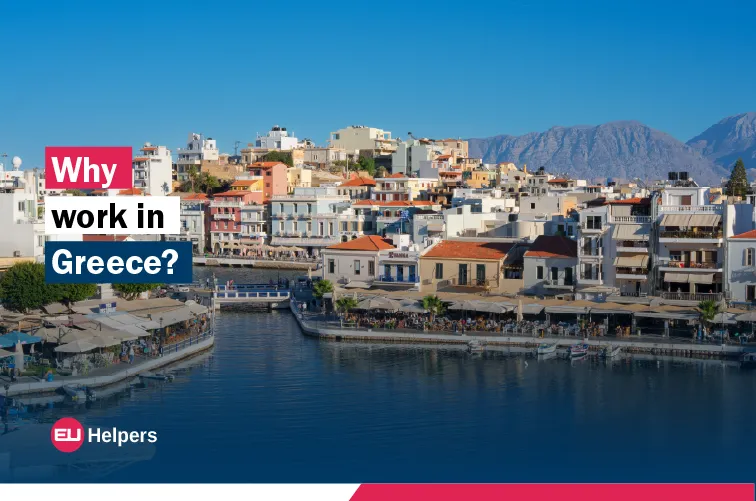

Why Work in Greece? A Complete EU Helpers Guide for International Professionals
Greece, the dynamic Southern European nation at the crossroads of Europe, Asia, and Africa, bordering Albania, North Macedonia, Bulgaria, and Turkey, and facing the Aegean Sea, the Ionian Sea, and the Mediterranean Sea, occupies an exceptionally attractive position in Europe and the world for those seeking the rare combination of being the birthplace of Western civilization (with ancient Greek heritage including democracy founded in Athens around 508 BC, philosophy with Socrates, Plato, and Aristotle establishing foundational Western philosophical traditions, the Olympic Games originating in ancient Olympia in 776 BC and revived in Athens in 1896, mathematics with figures like Pythagoras and Euclid, theater and drama with Aeschylus, Sophocles, and Euripides, science and medicine with Hippocrates, and many other foundational Western contributions that shape global civilization to this day), full EU and Schengen and eurozone integration (Greece joined the European Communities in 1981 as the 10th EU member, Schengen in 2000, the eurozone in 2001/2002, NATO in 1952, and was a founding Council of Europe member in 1949), world-leading shipping industry (Greek shipowners control the largest merchant fleet in the world by deadweight tonnage, with major Greek shipping companies headquartered particularly in Piraeus near Athens — making Greece one of the world's most significant shipping nations), strong tourism industry (Greece is consistently among the world's most visited countries with over 30 million international visitors annually pre-pandemic and continued recovery and growth, drawn to attractions including over 6,000 islands — the famous Greek islands including Mykonos and Santorini in the Cyclades, Crete — Greece's largest island, Rhodes — UNESCO listed Medieval City, Corfu in the Ionian Sea — UNESCO listed Old Town, and many others, the iconic Acropolis of Athens with the Parthenon, ancient sites throughout the country, exceptional beaches, and distinctive Mediterranean lifestyle), exceptional cultural heritage with 19 UNESCO World Heritage Sites (including the Acropolis of Athens — the iconic symbol of ancient Greek civilization, the Archaeological Site of Delphi — site of the famous Oracle of Delphi, the Medieval City of Rhodes — one of the world's best-preserved medieval fortified cities, Mount Athos — autonomous monastic community with strict access regulations limiting visitors and forbidding women, Meteora — the spectacular Eastern Orthodox monasteries perched on dramatic rock pillars, the Old Town of Corfu, the Archaeological Site of Mystras — Byzantine city, the Archaeological Site of Olympia — birthplace of the Olympic Games, the Sanctuary of Asklepios at Epidaurus with its famous theater, the Temple of Apollo Epicurius at Bassae — first UNESCO site in Greece, the Pythagoreion and Heraion of Samos, the Archaeological Sites of Mycenae and Tiryns, the Historic Centre — Chorá — of Patmos including the Monastery of Saint John the Theologian and the Cave of the Apocalypse, the Paleochristian and Byzantine Monuments of Thessaloniki, the Monasteries of Daphni, Hosios Loukas, and Nea Moni of Chios, the Archaeological Site of Aigai — modern name Vergina, the Archaic and Classical Acropolis of Lindos, and the Archaeological Site of Philippi), distinctive Greek language (with the Greek alphabet being one of the oldest continuously used alphabets in the world dating from around the 9th century BC and being the source of the Latin alphabet, and Greek being one of the longest-documented languages in human history with continuous attestation from over 3,400 years ago — making Greek one of the world's most historically significant languages), the distinctive Greek Orthodox Church heritage (with Greek Orthodoxy being central to Greek cultural identity, with Greece being one of the historic centers of Orthodox Christianity), exceptional Mediterranean cuisine (with Greek cuisine being recognized internationally for moussaka, souvlaki, gyros, tzatziki, feta cheese — protected geographical indication, olive oil — Greece is one of the world's largest olive oil producers and the world's largest per capita olive oil consumer, Greek yogurt — globally famous, dolmades, spanakopita, baklava, and many other distinctive dishes), exceptional Mediterranean lifestyle (with the famous Greek "philoxenia" — love of strangers/hospitality being central to Greek culture, the famous Mediterranean diet recognized by UNESCO as Intangible Cultural Heritage, exceptional climate, the famous Greek "parea" culture of friend gatherings, and the distinctive Greek approach to life valuing relationships, food, family, and culture), beautiful Mediterranean landscapes (with the famous Greek islands — over 6,000 islands and islets of which 227 are inhabited — including the spectacular Cyclades with Mykonos and Santorini, the lush Ionian Islands with Corfu and Zakynthos, the Dodecanese including Rhodes and Patmos, the Eastern Aegean islands, and Crete — Greece's largest island), distinctive Greek mainland (with notable mountain ranges including Mount Olympus — the mythological home of the Greek gods at 2,917 meters and Greece's highest peak, the Peloponnese peninsula, the Pindus mountain range, and beautiful coastal areas), exceptional Greek hospitality (philoxenia — meaning "love of strangers" or hospitality, has been central to Greek culture since ancient times), and significant Greek diaspora connections (with substantial Greek communities worldwide including in the United States — particularly large Greek-American community of around 3 million, Australia — with the largest Greek diaspora outside Greece, Canada, the United Kingdom, Germany, and many other countries, creating international networks). With a population of approximately 10.4 million and covering about 131,957 square kilometers, Greece has firmly established itself as one of the most attractive Southern European EU destinations. The capital Athens (Athina — the vibrant historic capital and main business, IT, and cultural hub, one of the world's oldest cities with over 3,400 years of recorded history, with iconic landmarks including the Acropolis with the Parthenon — the iconic symbol of ancient Greek civilization built in the 5th century BC, the Erechtheion with its famous Caryatids, the Temple of Athena Nike, the Ancient Agora — the heart of ancient Athenian democracy where Socrates taught, the Temple of Olympian Zeus, the Panathenaic Stadium — where the first modern Olympic Games were held in 1896 and the only stadium in the world built entirely of marble, the historic Plaka neighborhood — the "Neighborhood of the Gods" at the foot of the Acropolis, the Acropolis Museum — one of the world's most important museums opened in 2009, the National Archaeological Museum, Hadrian's Arch, the Tower of the Winds, Lycabettus Hill with stunning views, and broader Athens metropolitan area extending to Piraeus — one of the world's largest passenger ports and headquarters for Greek shipping industry), along with Thessaloniki (Greece's second-largest city in northern Greece, with notable Byzantine heritage including the famous White Tower — Lefkos Pyrgos — the city's iconic symbol, the UNESCO-listed Paleochristian and Byzantine Monuments, various Byzantine churches, Aristotle Square, and growing tech presence), Patras (in western Greece with the famous Patras Carnival), Heraklion (the largest city on Crete — Greece's largest island, with the famous Knossos Palace — center of the ancient Minoan civilization just outside the city), Larissa, Volos (gateway to the Pelion peninsula), Ioannina (in Epirus region with notable historical heritage), Kavala, Chania (in Crete with notable Venetian heritage), and Rhodes (on the famous island of Rhodes — UNESCO listed Medieval City and one of the world's best-preserved medieval fortified cities), host major Greek and multinational companies, technology hubs, financial institutions, shipping operations, and innovative start-ups. For applicants from anywhere considering Greece, the country offers structured immigration pathways including the distinctive Golden Visa (one of Europe's most popular investor residence programs), the Digital Nomad Visa (introduced 2021), the FIP — Financially Independent Person residence permit (particularly attractive for retirees), the EU Blue Card, the D visa, the employment-based residence permit, the self-employment residence permit, the researcher route, family reunification provisions, and a clear long-term route toward Greek permanent residence and eventually Greek citizenship with full EU citizenship benefits. At EU Helpers, candidates regularly ask the fundamental question: why should I consider Greece specifically?
This complete EU Helpers guide answers that question in depth and walks you through the genuine, practical, and long-term reasons that make Greece one of Europe's — and the world's — most uniquely attractive destinations.
Why Greece Is Genuinely Unique Among European Destinations
Greece occupies an exceptionally distinctive position in Europe and the world — the birthplace of Western civilization, full EU/Schengen/eurozone integrated, with world-leading shipping industry, exceptional cultural heritage, exceptional Mediterranean lifestyle, beautiful islands, and distinctive immigration frameworks attracting foreign investment, remote workers, and lifestyle migrants.
Birthplace of Western Civilization
Greece is the birthplace of Western civilization with ancient Greek heritage including democracy founded in Athens around 508 BC, philosophy with Socrates, Plato, and Aristotle, the Olympic Games originating in 776 BC, mathematics with Pythagoras and Euclid, theater and drama, science and medicine with Hippocrates, and many other foundational contributions that shape global civilization to this day.
Full EU, Schengen, and Eurozone Membership
Greece is an EU member (since 1981), Schengen member (since 2000), eurozone member (adopted euro in 2001/2002), NATO member (since 1952), and Council of Europe founding member (1949), providing comprehensive European integration benefits.
World-Leading Shipping Industry
Greek shipowners control the largest merchant fleet in the world by deadweight tonnage. Major Greek shipping companies are headquartered particularly in Piraeus near Athens. This makes Greece one of the world's most significant shipping nations and creates substantial shipping industry opportunities.
Strong Tourism Industry
Greece is consistently among the world's most visited countries with over 30 million international visitors annually pre-pandemic. With over 6,000 islands, the iconic Acropolis, ancient sites, and exceptional Mediterranean lifestyle, Greece attracts global tourism interest.
Exceptional Cultural Heritage With 19 UNESCO Sites
Greece has 19 UNESCO World Heritage Sites including the Acropolis, Delphi, Rhodes, Mount Athos, Meteora, Olympia, Mycenae, Mystras, Patmos, Thessaloniki monuments, and many others — making Greece one of Europe's most culturally rich destinations.
Distinctive Golden Visa Program
Greece's Golden Visa is one of Europe's most popular investor residence programs offering residence to foreign nationals making qualifying investments in Greek real estate or other qualifying activities. The program has been highly successful in attracting foreign investment.
Distinctive Digital Nomad Visa
Greece introduced its Digital Nomad Visa in 2021, supporting foreign nationals working remotely for non-Greek employers while residing in Greece with its exceptional Mediterranean lifestyle.
Distinctive FIP for Retirees and Financially Independent Persons
The FIP (Financially Independent Person) framework is particularly attractive for retirees and those with substantial passive income seeking residence in Greece's exceptional Mediterranean environment.
Beautiful Greek Islands and Mediterranean Landscapes
Greece has over 6,000 islands and islets (227 inhabited), including the spectacular Cyclades (Mykonos, Santorini), the lush Ionian Islands (Corfu, Zakynthos, Kefalonia), the Dodecanese (Rhodes, Patmos, Kos), Crete (Greece's largest island), and many others.
Exceptional Mediterranean Cuisine
Greek cuisine is internationally recognized for moussaka, souvlaki, gyros, tzatziki, feta cheese (protected geographical indication), olive oil (Greece is one of the world's largest producers), Greek yogurt (globally famous), and many other distinctive dishes. The Mediterranean diet is recognized by UNESCO as Intangible Cultural Heritage.
Distinctive Greek Language Heritage
Greek is one of the longest-documented languages in human history with continuous attestation from over 3,400 years ago. The Greek alphabet is one of the oldest continuously used alphabets in the world and is the source of the Latin alphabet, making Greek one of the world's most historically significant languages.
Greek Orthodox Christianity Heritage
The Greek Orthodox Church is central to Greek cultural identity, with Greece being one of the historic centers of Orthodox Christianity. The distinctive religious and cultural heritage shapes Greek life and traditions.
Exceptional Greek Philoxenia (Hospitality)
Greek philoxenia (meaning "love of strangers" or hospitality) has been central to Greek culture since ancient times. Greeks are known for warm hospitality, welcoming attitude toward foreigners, and generous treatment of guests.
Mediterranean Climate
Greece enjoys exceptional Mediterranean climate with warm dry summers and mild winters, supporting outdoor lifestyle and tourism throughout much of the year.
Top Financial Reasons to Consider Greece
The financial rationale for working in Greece centers around accessible cost of living combined with full EU/eurozone benefits and recovering salary levels.
Accessible Cost of Living
Greece has generally accessible cost of living compared to many Western European EU averages, particularly outside central Athens, Mykonos, and Santorini. This provides exceptional purchasing power, particularly attractive for retirees through the FIP and digital nomads through the Digital Nomad Visa.
Recovering and Rising Salary Levels in Growth Sectors
Greek salaries have been recovering from the crisis years with continued improvement expected in IT, shipping, senior management, and growth sectors.
Eurozone Currency Convenience
Greece uses the euro (adopted in 2001/2002), providing currency stability and convenience for European business and personal matters.
Strong Worker Protections
Greece has labor laws providing paid vacation, public holidays, parental leave, and other worker protections within EU frameworks.
Comprehensive Healthcare
Greece has healthcare system providing coverage for residents.
Distinctive Investment Returns Through Golden Visa
For Golden Visa investors, Greek real estate has shown notable returns in recent years, particularly in prime tourism areas. The combination of residence benefits and investment potential creates distinctive value.
Lifestyle and Quality-of-Life Benefits
Beyond money, Greece offers an exceptional lifestyle combining Mediterranean character, exceptional cultural heritage, distinctive Greek hospitality, and the famous Greek approach to life.
Vibrant Capital Athens
Athens combines extraordinary historical heritage (the iconic Acropolis with the Parthenon — built in the 5th century BC and the symbol of ancient Greek civilization, the Erechtheion with its famous Caryatids, the Ancient Agora — heart of ancient Athenian democracy where Socrates taught, the Temple of Olympian Zeus, the Panathenaic Stadium — site of the first modern Olympic Games in 1896, the historic Plaka neighborhood — "Neighborhood of the Gods" at the foot of the Acropolis, the Acropolis Museum — opened in 2009 as one of the world's most important museums, the National Archaeological Museum, Hadrian's Arch, the Tower of the Winds, and broader ancient and Byzantine heritage), with vibrant modern character (the growing tech ecosystem, exceptional café and dining culture, vibrant nightlife in neighborhoods like Psyrri, Gazi, and Exarcheia, the modern Stavros Niarchos Foundation Cultural Center), exceptional climate, and Mediterranean lifestyle. Athens combines historic depth and modern energy.
Charming Thessaloniki
Thessaloniki, Greece's second-largest city in northern Greece, offers notable Byzantine heritage (UNESCO listed Paleochristian and Byzantine Monuments including various Byzantine churches), the famous White Tower (Lefkos Pyrgos — the city's iconic symbol), Aristotle Square, exceptional culinary reputation (Thessaloniki is considered one of Greece's gastronomic capitals), vibrant cultural scene, growing tech presence, and distinctive northern Greek character.
Famous Greek Islands
Greece's islands offer extraordinary diversity. The Cyclades feature Mykonos (famous for cosmopolitan nightlife and luxury tourism) and Santorini (famous for spectacular caldera views, white-washed villages, and stunning sunsets in Oia). The Ionian Islands feature Corfu (UNESCO listed Old Town with Venetian heritage) and Zakynthos (famous for Navagio Beach with its iconic shipwreck). The Dodecanese feature Rhodes (UNESCO listed Medieval City — one of the world's best-preserved medieval fortified cities), Patmos (UNESCO listed sacred religious site where St. John wrote the Book of Revelation), and Kos. Crete, Greece's largest island, offers the ancient Knossos Palace (center of the Minoan civilization), beautiful beaches, and distinctive Cretan culture. The Eastern Aegean islands include Lesbos, Chios, and Samos. Each island region offers distinctive character.
Other Distinctive Greek Cities
Patras (with the famous Patras Carnival), Heraklion (gateway to Knossos), Volos (gateway to the Pelion peninsula with charming villages), Ioannina (with notable historical heritage in Epirus), and many others.
Spectacular Greek Mainland
Mount Olympus (the mythological home of the Greek gods at 2,917 meters — Greece's highest peak), Meteora (the spectacular Eastern Orthodox monasteries perched on dramatic rock pillars — UNESCO listed), Delphi (ancient site of the famous Oracle of Delphi — UNESCO listed), Olympia (birthplace of the Olympic Games — UNESCO listed), Mycenae and Tiryns (ancient Mycenaean sites — UNESCO listed), the Peloponnese peninsula with the Mani region, and the Pindus mountain range.
Rich Cultural Heritage
Greece has rich cultural heritage spanning ancient Greek civilization (Mycenaean, Minoan, Classical, Hellenistic periods), Byzantine Empire (Greek-speaking Byzantine Empire centered on Constantinople for over 1,000 years), Ottoman period (about 400 years of Ottoman rule until Greek independence in 1830), and modern independent Greek state (since 1830). The peaceful Greek Independence Day on March 25 commemorates independence from Ottoman rule.
Distinctive Greek Cuisine
Greek cuisine combines Mediterranean and broader influences with distinctive specialties including moussaka (layered eggplant and meat casserole), souvlaki (grilled meat skewers), gyros, tzatziki (yogurt-cucumber-garlic sauce), feta cheese (protected geographical indication), olive oil (Greece is one of the world's largest producers and the world's largest per capita consumer), Greek yogurt (globally famous), dolmades (stuffed grape leaves), spanakopita (spinach pie), pastitsio (Greek baked pasta), Greek salad (Horiatiki), grilled octopus, baklava (sweet pastry), loukoumades (honey-dipped donuts), and many distinctive dishes. The Mediterranean diet is UNESCO recognized as Intangible Cultural Heritage.
Greek Wine Tradition
Greece has notable wine tradition with regions including Santorini (famous for Assyrtiko white wine), Nemea (in Peloponnese), Naoussa (in Macedonia), and many others. Greek wines including Retsina (distinctive resinated wine) and various indigenous Greek varietals are gaining international recognition.
Famous Ouzo Tradition
Greece has notable spirits tradition with ouzo (the famous anise-flavored aperitif that turns cloudy white when water is added) being particularly significant and a foundational part of Greek social culture. Other distinctive Greek spirits include tsipouro (grape-based brandy) and Cretan raki.
Famous Greek Hospitality (Philoxenia)
Greek philoxenia — meaning "love of strangers" or hospitality — has been central to Greek culture since ancient times. Greeks are known for warm hospitality, generous treatment of guests, and welcoming attitude toward foreigners.
Mediterranean Climate
Greece has Mediterranean climate with warm dry summers (with average highs around 32-35°C in Athens in July) and mild winters (with snow primarily in mountain areas). The exceptional climate supports outdoor lifestyle throughout much of the year.
Generally Safe
Greece has overall reasonable safety levels, with the country generally considered safe for foreign residents and tourists, particularly in major destinations.
Strong Family Culture
Greek family culture is exceptionally strong, with close family ties, multi-generational connections, and strong family-oriented values being central to Greek life.
Famous Greek Parea Culture
The Greek "parea" culture refers to the distinctive Greek tradition of gathering with friends for shared meals, drinks, and conversation. This cultural practice is foundational to Greek social life.
Vibrant Cultural Life
Greece has vibrant cultural life including the famous Epidaurus Festival (ancient theater performances at the UNESCO-listed Sanctuary of Asklepios at Epidaurus), the Athens Festival, exceptional museums, vibrant arts scene, and rich folk traditions.
Mediterranean Diet UNESCO Heritage
The Mediterranean diet is recognized by UNESCO as Intangible Cultural Heritage. Greek cuisine is foundational to the Mediterranean diet, contributing to longevity and quality of life.
Distinctive Greek Festivals and Traditions
Greece has rich festival tradition including Greek Easter (Pascha — the most important religious holiday with distinctive traditions), Greek Independence Day (March 25), various saint name days celebrated throughout the year, Carnival (Apokries — with the famous Patras Carnival), and many local festivals.
Growing International Community
Greece's distinctive immigration frameworks (Golden Visa, Digital Nomad Visa, FIP) have created growing international communities, particularly in Athens, the islands (especially Mykonos and Santorini), and Crete.
Family-Friendly Society
Greek family-oriented culture creates family-friendly society with family allowances, parental support, and family-friendly workplace policies.
Healthcare and Education
Greece has healthcare system providing coverage for residents and public education system including universities (with the National and Kapodistrian University of Athens being one of the oldest in the modern Mediterranean, founded in 1837).
Career Growth and Professional Opportunities
Greece's career environment is improving, with particularly strong opportunities in growing sectors.
Strong Career Pathways in Shipping
For shipping industry professionals, Greece's world-leading shipping industry (largest merchant fleet in the world by deadweight tonnage) creates substantial opportunities at Greek shipping companies headquartered particularly in Piraeus near Athens.
Growing Career Pathways in Technology
For IT and tech professionals, Greece offers growing opportunities through Athens' developing tech ecosystem with international tech companies and Greek startups, supported by the Digital Nomad Visa for remote workers.
Strong Tourism and Hospitality Opportunities
For tourism and hospitality professionals, Greece's strong tourism industry creates substantial opportunities, particularly in luxury hospitality.
Opportunities for Investors Through Golden Visa
For investors with significant capital, the distinctive Golden Visa supports establishment in Greek real estate and broader investment opportunities.
Opportunities for Remote Workers Through Digital Nomad Visa
For remote workers and digital nomads, Greece's distinctive Digital Nomad Visa (introduced 2021) combined with exceptional Mediterranean lifestyle creates particularly attractive arrangements.
Opportunities for Retirees Through FIP
For retirees and those with passive income, the FIP framework combined with Greece's exceptional Mediterranean lifestyle, accessible cost of living, and cultural heritage creates particularly attractive retirement opportunities.
Strong Foundation for European Careers
As an EU, Schengen, and eurozone member, Greece provides a strong foundation for European careers.
Residency, Work Permit, and Legal Benefits
Working legally in Greece comes with structured immigration pathways and strong legal protections within the EU framework.
Structured Permit System
Foreign workers obtain residence through dedicated schemes including the employment-based residence permit, EU Blue Card, distinctive Golden Visa (popular investor program), Digital Nomad Visa, FIP (Financially Independent Person), self-employment routes, researcher route, family reunification provisions, and other pathways.
Distinctive Golden Visa Program
Greece's Golden Visa is one of Europe's most popular investor residence programs.
Distinctive Digital Nomad and FIP Frameworks
The Digital Nomad Visa and FIP frameworks support remote workers and retirees respectively.
Family Reunification
Greece allows qualifying workers and residents to bring close family members.
Pathway to Greek Citizenship and EU Benefits
After qualifying continuous residence in Greece (typically 7 years and meeting other requirements including Greek language and integration), foreign nationals may become eligible for Greek citizenship by naturalization. Greek citizenship grants full EU citizenship benefits.
Healthcare, Education, and Social Benefits
Greek public services provide coverage for residents.
Healthcare System
Greece has a healthcare system providing coverage for residents, with both public and private healthcare options. Private healthcare in major cities offers quality services.
Educational System
Greece offers a public education system, with international schools available in Athens and other major cities serving the foreign community. Greek universities include the National and Kapodistrian University of Athens (founded in 1837 — one of the oldest in the modern Mediterranean), Aristotle University of Thessaloniki, and others.
Social Protections
Registered workers benefit from contributions toward pensions, healthcare, and other social protections.
Practical Considerations for Working in Greece
While Greece offers compelling benefits, applicants should also understand some practical considerations.
Greek Language Importance
Greek is the official language. While English use is widespread in tourism, shipping, and international business contexts, particularly in major cities, Greek language skills support broader integration and most career opportunities beyond English-using sectors.
Greek Administrative Variability
Greek administrative processing has historically been variable, though improvements through digitalization and reforms are ongoing.
Economic Recovery Context
Greece is still in continued recovery from the 2010s sovereign debt crisis. While economic indicators have been improving notably, some sectors may have lower salary levels than Western European averages.
Demographic Challenges
Greece has faced demographic challenges with population aging and emigration during crisis years.
Cultural Adjustments
Greek culture has distinctive features including strong family orientation, Mediterranean approach to time and scheduling (which can be more flexible than Northern European cultures), passionate communication style, and rich seasonal celebrations.
Required Documents and Step-by-Step Overview
While exact requirements depend on the specific permit and applicant profile, the general route involves coordination with the Greek Ministry of Migration and Asylum, Greek embassies and consulates abroad, Decentralized Administrations, and other authorities depending on the specific route.
Practical Tips for International Applicants Considering Greece
Tips From EU Helpers for Considering Greece
Carefully evaluate which permit category fits your profile — employment-based residence permit, EU Blue Card, Golden Visa, Digital Nomad Visa, FIP, or others. For investors with significant capital, evaluate the Golden Visa carefully including specific area investment thresholds. For remote workers, evaluate the Digital Nomad Visa. For retirees and those with passive income, evaluate the FIP. Target Greek employers in growing sectors — shipping (Piraeus), IT (Athens tech ecosystem), tourism and hospitality (luxury segment in particular). Take advantage of Greece's exceptional Mediterranean lifestyle and cultural heritage. Plan around Greek islands carefully if considering island residence — different islands have different lifestyle, cost, and connectivity characteristics. Develop basic Greek language skills for daily life and integration, while leveraging English (widely used in tourism, shipping, and international business). Embrace Greek culture — philoxenia hospitality, exceptional cuisine, rich cultural heritage. Always rely on the latest official guidance.
Final Guidance
Why work in Greece? Because few countries in Europe — or in the world — combine such a unique mix of being the birthplace of Western civilization (with foundational ancient Greek contributions including democracy founded in Athens around 508 BC, philosophy with Socrates, Plato, and Aristotle, the Olympic Games originating in 776 BC, mathematics, theater, and many other contributions that shape global civilization to this day), full EU/Schengen/eurozone integration (EU member since 1981, Schengen since 2000, eurozone since 2001/2002, NATO since 1952, and Council of Europe founding member 1949), world-leading shipping industry (Greek shipowners control the largest merchant fleet in the world by deadweight tonnage with major shipping companies headquartered in Piraeus), strong tourism industry (Greece is consistently among the world's most visited countries with over 30 million international visitors annually pre-pandemic), exceptional cultural heritage with 19 UNESCO World Heritage Sites (Acropolis, Delphi, Rhodes, Mount Athos, Meteora, Olympia, Mycenae, and many others), distinctive Greek language (one of the longest-documented languages in human history with continuous attestation from over 3,400 years ago), exceptional Mediterranean cuisine (with moussaka, souvlaki, gyros, feta cheese, olive oil — Greece is one of the world's largest producers, Greek yogurt globally famous, and the Mediterranean diet UNESCO recognized as Intangible Cultural Heritage), beautiful Greek islands (over 6,000 islands including the famous Mykonos, Santorini, Crete, Rhodes, Corfu, and many others), exceptional Mediterranean lifestyle (with the famous Greek philoxenia hospitality, parea culture of friend gatherings, and distinctive Greek approach to life), distinctive immigration frameworks particularly attractive for foreign capital and lifestyle migrants (popular Golden Visa investor program, Digital Nomad Visa introduced 2021, FIP for retirees and financially independent persons), exceptional Greek hospitality (philoxenia — central to Greek culture since ancient times), Mediterranean climate (with warm dry summers and mild winters supporting outdoor lifestyle), accessible cost of living relative to many Western European EU averages, and a clear pathway to Greek citizenship with full EU benefits. For international shipping industry professionals attracted to Greece's world-leading shipping industry, IT and tech professionals drawn to Athens' growing tech ecosystem, tourism and hospitality professionals attracted to Greece's strong tourism industry, investors using the popular Golden Visa, remote workers using the Digital Nomad Visa, retirees using the FIP for exceptional Mediterranean retirement lifestyle, or lifestyle migrants attracted to Greece's exceptional cultural heritage, Mediterranean lifestyle, and beautiful islands, Greece stands out as one of Europe's — and the world's — most uniquely attractive destinations. EU Helpers supports international applicants at every stage — from evaluating eligibility and selecting the right permit route (employment-based residence permit, EU Blue Card, Golden Visa, Digital Nomad Visa, FIP, self-employment routes, researcher route, family-based residence, or others) to preparing documents, employer coordination, embassy navigation, and planning a smooth transition. If Greece is on your radar as a future work destination, EU Helpers can help you move forward with clarity, confidence, and the latest accurate information.
FAQs
Greece offers a unique combination of being the birthplace of Western civilization, full EU/Schengen/eurozone integration, world-leading shipping industry, strong tourism, exceptional cultural heritage (19 UNESCO sites), exceptional Mediterranean lifestyle, beautiful islands (over 6,000), distinctive immigration frameworks (Golden Visa, Digital Nomad Visa, FIP), and a clear pathway to Greek citizenship with full EU benefits.
Greece is the birthplace of Western civilization with ancient Greek contributions including democracy founded in Athens around 508 BC, philosophy with Socrates, Plato, and Aristotle establishing foundational Western philosophical traditions, the Olympic Games originating in 776 BC, mathematics with Pythagoras and Euclid, theater and drama, and many other foundational Western contributions.
Yes. Greece is an EU member (since 1981), Schengen member (since 2000), eurozone member (adopted euro in 2001/2002), NATO member (since 1952), and Council of Europe founding member (1949).
Greece uses the euro as its currency, having adopted it in 2001 for accounting purposes and in 2002 in physical form.
Greek shipowners control the largest merchant fleet in the world by deadweight tonnage. Major Greek shipping companies are headquartered in Piraeus near Athens, making Greece one of the world's most significant shipping nations.
Greece's Golden Visa is one of Europe's most popular investor residence programs offering residence to foreign nationals making qualifying investments in Greek real estate or other qualifying activities. The program has been highly successful in attracting foreign investment.
Greece introduced its Digital Nomad Visa in 2021, supporting foreign nationals working remotely for non-Greek employers or freelancing for non-Greek clients while residing in Greece with its exceptional Mediterranean lifestyle.
The FIP (Financially Independent Person) residence permit is Greece's framework for foreign nationals with sufficient financial means seeking residence without employment in Greece. The route is particularly attractive for retirees and those with substantial passive income.
Greece has 19 UNESCO World Heritage Sites including the Acropolis of Athens, the Archaeological Site of Delphi, the Medieval City of Rhodes, Mount Athos, Meteora, the Archaeological Site of Olympia (birthplace of Olympic Games), Mycenae and Tiryns, the Old Town of Corfu, the Paleochristian and Byzantine Monuments of Thessaloniki, and many others.
Philoxenia is the Greek concept meaning "love of strangers" or hospitality. It has been central to Greek culture since ancient times. Greeks are known for warm hospitality, generous treatment of guests, and welcoming attitude toward foreigners.
Athens is Greece's vibrant historic capital and one of the world's oldest cities (over 3,400 years of recorded history). The city features iconic landmarks including the Acropolis with the Parthenon, the Ancient Agora, the Temple of Olympian Zeus, the Panathenaic Stadium (where the first modern Olympic Games were held in 1896), the historic Plaka neighborhood, the Acropolis Museum, and exceptional café and dining culture.
Greece has over 6,000 islands and islets (227 inhabited) including the Cyclades with Mykonos and Santorini (famous for spectacular caldera views), the Ionian Islands with Corfu (UNESCO listed) and Zakynthos, the Dodecanese with Rhodes (UNESCO listed Medieval City) and Patmos, Crete (Greece's largest island with the ancient Knossos Palace), and many others.
Greek cuisine is internationally recognized for moussaka, souvlaki, gyros, tzatziki, feta cheese (protected geographical indication), olive oil (Greece is one of the world's largest producers and the world's largest per capita consumer), Greek yogurt (globally famous), dolmades, spanakopita, pastitsio, Greek salad, grilled octopus, baklava, and many other distinctive dishes.
The Mediterranean diet is recognized by UNESCO as Intangible Cultural Heritage. Greek cuisine is foundational to the Mediterranean diet, contributing to longevity and quality of life. The diet emphasizes olive oil, vegetables, fruits, fish, whole grains, and moderate wine consumption.
Greek is one of the longest-documented languages in human history with continuous attestation from over 3,400 years ago. The Greek alphabet is one of the oldest continuously used alphabets in the world (dating from around the 9th century BC) and is the source of the Latin alphabet, making Greek one of the world's most historically significant languages.
Greek is the official language. English is widely used in tourism, shipping, and international business contexts, particularly in major cities. Greek language skills support broader integration and most career opportunities beyond English-using sectors.
Yes, generally. Greece has overall reasonable safety levels and is considered generally safe for foreign residents and tourists. Stable political conditions support reasonable safety, particularly in major tourist destinations.
Greece has a Mediterranean climate with warm dry summers (with average highs around 32-35°C in Athens in July) and mild winters (with snow primarily in mountain areas like Mount Olympus). The exceptional climate supports outdoor lifestyle throughout much of the year.
Greece's cost of living is generally accessible compared to many Western European EU averages, particularly outside central Athens, Mykonos, and Santorini. This provides exceptional purchasing power, particularly attractive for retirees through the FIP and digital nomads.
Yes, exceptionally. Greece is attractive for retirees through the FIP (Financially Independent Person) framework combined with exceptional Mediterranean lifestyle, climate, beautiful islands and landscapes, rich cultural heritage as the birthplace of Western civilization, accessible cost of living, and full EU/Schengen/eurozone integration.
Yes. Qualifying workers and residents can usually apply for family reunification for spouses, registered partners, and dependent children. Golden Visa investors can typically include family members in the investment-based residence.
After qualifying continuous residence in Greece (typically 7 years and meeting other requirements including Greek language and integration), foreign nationals may become eligible for Greek citizenship by naturalization. Greek citizenship grants full EU citizenship benefits.
EU Helpers supports international applicants with eligibility assessment, permit category selection (including Golden Visa for investors, Digital Nomad Visa for remote workers, and FIP for retirees and financially independent persons), document preparation, employer or sponsor coordination, embassy navigation, and clarity on the latest official requirements tailored to your career goals.