
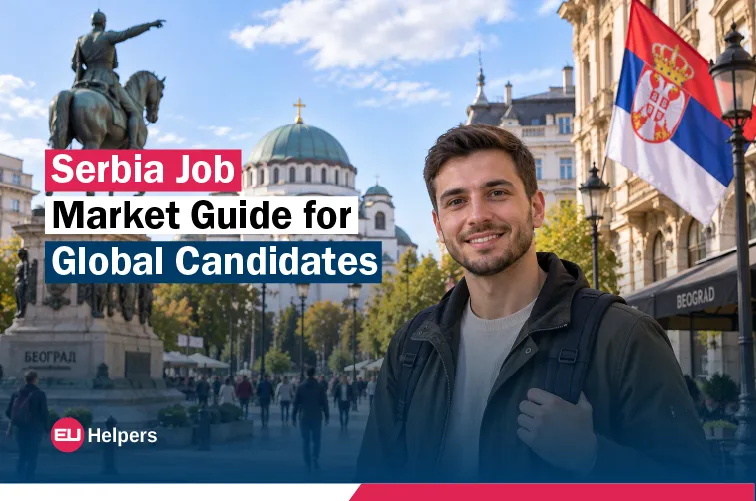

Serbia Job Market Guide for Global Candidates
Serbia's job market offers distinctive opportunities for global candidates seeking Western Balkans career development in an EU candidate country with growing IT export sector, established automotive manufacturing, rich Serbian cultural heritage, and moderate cost of living creating attractive value proposition. This EU Helpers guide walks through Serbia's job market landscape covering sectors, salary expectations, and employment prospects for international professionals — global candidates can explore Serbian opportunities through EU Helpers. Serbia is EU candidate since 2012 (accession negotiations opened January 2014), Council of Europe member since 2003, and Partnership for Peace member since 2006, but NOT EU member (yet), NOT Schengen member, NOT NATO member (constitutional neutrality declared 2007), and NOT eurozone (uses Serbian Dinar — RSD).
Understanding Serbia's Job Market
Serbia's job market has distinctive Western Balkans character with EU candidate positioning.
| Consideration | Job Market Reality |
|---|---|
| Population | Approximately 6.6 million |
| EU status | Candidate since 2012 |
| Schengen status | NOT member |
| NOT eurozone | Serbian Dinar (RSD) |
| NATO status | NOT member (constitutional neutrality 2007) |
| Language | Serbian (Cyrillic and Latin scripts) |
| Economic character | Growing, diverse |
| IT sector | Growing (Belgrade, Novi Sad) |
| Automotive | Established (Fiat Kragujevac) |
| Traditional sectors | Agriculture, mining, food processing |
| Cost of living | Moderate |
| Orthodox heritage | Distinctive Serbian character |
Serbia's combination of EU candidate status with active accession negotiations, distinctive Western Balkans position bordering Hungary Romania Bulgaria North Macedonia Kosovo (contested) Montenegro Bosnia and Herzegovina and Croatia, rich Serbian Orthodox Christian heritage, growing IT export sector, established automotive sector, traditional sectors, moderate cost of living, and distinctive Serbian cultural identity making it distinctive Western Balkans job market for global candidates.
Job Market Sectors Overview
Serbia's job market spans several distinctive sectors.
| Sector | Market Character | Key Locations |
|---|---|---|
| Information technology | Growing | Belgrade, Novi Sad, Niš |
| Automotive | Established | Kragujevac (Fiat) |
| Agriculture | Traditional | Vojvodina |
| Food processing | Established | Nationwide |
| Mining and metals | Traditional | Bor (copper), various |
| Energy | Traditional and renewable transition | Various |
| Textiles | Traditional | Nationwide |
| Tourism | Growing | Belgrade, Novi Sad, various |
| Financial services | Belgrade concentration | Belgrade |
Each sector offers distinctive job market characteristics with different prospects for global candidates.
Information Technology Job Market
Serbia's IT job market is growing sector particularly Belgrade and Novi Sad.
IT market considerations include distinctive Serbian tech ecosystem particularly Belgrade (major IT hub with international companies and Serbian tech companies — Serbia has significant IT export sector with strong programming talent) and Novi Sad (distinctive Serbian tech concentration with University of Novi Sad providing skilled workforce), plus Niš with growing tech ecosystem, competitive compensation reflecting Serbian standards (lower than EU but growing significantly often competing with EU IT salaries in specialized areas), English usage in international IT context, distinctive Serbian technical talent particularly in software development, and skilled workforce. Global candidates with IT skills find distinctive opportunities in Serbian IT ecosystem.
Automotive Job Market
Automotive represents established Serbian market.
Automotive market considerations include distinctive Serbian automotive manufacturing with Fiat operations at Kragujevac plant (historically significant Serbian automotive operations) and various automotive parts suppliers. Global candidates with automotive expertise find opportunities across Serbian automotive manufacturing landscape.
Agriculture Job Market
Agriculture represents traditional Serbian market particularly Vojvodina.
Agriculture market considerations include traditional Serbian agriculture particularly Vojvodina (Pannonian Plain agricultural region providing distinctive Serbian agricultural strength — flat fertile agricultural land in northern Serbia), various Serbian agricultural products (grains, sunflower, various crops), livestock, and food production. Global candidates with agricultural expertise find opportunities particularly in Vojvodina.
Food Processing Job Market
Food processing represents established Serbian market.
Food processing market considerations include established Serbian food processing industry building on agricultural foundation, distinctive Serbian food products, and various food processing operations. Global candidates with food processing expertise find opportunities across Serbian food industry.
Mining and Metals Job Market
Mining and metals represent traditional Serbian market.
Mining and metals market considerations include distinctive Serbian mining heritage including copper mining (Bor — historic Serbian copper mining center), various other minerals, and emerging lithium interest (with various considerations). Global candidates with mining and metallurgy expertise find opportunities in Serbian traditional industrial sector.
Geographic Job Market Distribution
Serbia's job market has distinctive geographic distribution.
| Location | Job Market Character |
|---|---|
| Belgrade (Beograd) | Capital, most diverse market |
| Novi Sad | Vojvodina capital, IT and multicultural |
| Niš | Southern historic city, growing sectors |
| Kragujevac | Central Serbia, automotive (Fiat) |
| Subotica | Northern city, Hungarian border |
| Novi Pazar | Sandžak region |
| Zrenjanin | Vojvodina city |
| Čačak | Central Serbia |
| Leskovac | Southern Serbia |
Belgrade concentrates diverse opportunities. Novi Sad concentrates IT and offers multicultural Vojvodina character. Niš offers southern historic character. Kragujevac concentrates automotive.
Salary Expectations for Global Candidates
Serbian salary expectations reflect Western Balkans economic context.
Salary considerations: Serbian salaries reflect Western Balkans context though generally lower than EU countries in absolute terms. However, cost of living is also lower creating attractive relative value proposition. Skilled professionals particularly in IT (growing significantly with Serbian IT sector often competing with EU IT salaries in specialized areas) receive competitive compensation. Sector variations apply. Belgrade and Novi Sad typically offer highest compensation. Regional variation applies significantly. Global candidates typically find compensation moderate with attractive value proposition.
Cost of Living Impact on Job Market
Serbia's moderate cost of living significantly affects job market economics.
Cost considerations: Serbia has moderate costs compared to Western Europe. Belgrade as capital has highest Serbian costs though remains affordable relative to Western European standards. Novi Sad, Niš, Kragujevac, Subotica, and various cities have varying moderate costs. Interior Serbia generally more affordable. Serbian public healthcare through Republic Health Insurance Fund (Republički fond za zdravstveno osiguranje — RFZO) provides coverage. Combined with growing Serbian salaries particularly in IT and international sectors, moderate cost of living creates attractive value proposition.
Language Requirements in Job Market
Language capabilities significantly affect job market access.
Language considerations: Serbian (Srpski) as official language becomes important for long-term integration and broader job market access particularly for management progression. Serbian is South Slavic language with distinctive Serbian standard using both Cyrillic (official script used in official documents and government contexts) and Latin scripts. Serbian is largely mutually intelligible with Croatian, Bosnian, and Montenegrin (formerly considered Serbo-Croatian during Yugoslav period 1918-1993). English is widely used in Serbian international business, IT sector particularly (given Serbia's significant IT export sector), tourism, and among younger generations particularly Belgrade and Novi Sad. Hungarian, Slovak, Romanian, Ruthenian, and various minority languages have official status in Vojvodina reflecting distinctive multicultural heritage. Learning Serbian significantly enhances broader market access.
Skills Demand in Job Market
Certain skills are particularly demanded in Serbian job market.
High-demand skills include IT skills (software development in various specializations, cloud, data science, cybersecurity, and various specialized IT areas — Serbian IT sector has strong export orientation with distinctive technical talent), automotive expertise, agricultural expertise particularly Vojvodina, mining and metallurgy expertise, and various specialized skills.
Employment Types in Job Market
Serbia's job market offers various employment types.
Employment type considerations include full-time employment as standard type, part-time employment, temporary employment, seasonal employment particularly agriculture and tourism sectors, freelance/consulting opportunities, and various other arrangements. Serbian labor law provides worker protections.
Job Market Trends
Several trends characterize Serbia's job market.
Trend considerations include continued IT sector growth (Belgrade and Novi Sad expansion), renewable energy expansion (Serbia transitioning from traditional coal-based generation with renewable development), tourism continued growth, fintech emergence, sustainability roles growing across sectors, digital transformation across sectors, and increasing international company presence. These trends create opportunities for global candidates.
EU Candidate Job Market Positioning
Serbia's EU candidate status provides distinctive positioning.
EU candidate positioning: Serbia is EU candidate country since 2012 with accession negotiations opened January 2014 reflecting active EU integration process. Serbia is Council of Europe member since 2003 providing European integration in various institutions. Serbia is Partnership for Peace member since 2006 but NOT NATO member as Serbia declared constitutional neutrality in 2007 reflecting distinctive geopolitical positioning. Serbia is NOT eurozone (uses Serbian Dinar — RSD). Serbia's EU accession pathway involves complex considerations including relations with Kosovo (Serbia does not recognize Kosovo independence) and various reform requirements. This positioning provides distinctive Western Balkans character with EU aspiration influencing Serbian economic development.
Recruitment Practices
Understanding Serbian recruitment practices supports job market navigation.
Recruitment practice considerations include LinkedIn as primary professional networking platform in Serbia, Serbian-specific job platforms (Infostud as major Serbian job platform, HelloWorld particularly for IT positions, various sector-specific platforms), direct company applications, recruitment agency utilization, professional networking importance, and international company recruitment often through international channels. Serbian professional culture appreciates authentic communication combined with warmth.
Work Permit Considerations for Global Candidates
Global candidates need work permit for Serbian employment.
Work permit considerations include Employment Work Permit (standard employer-sponsored — most common) processed through National Employment Service (Nacionalna služba za zapošljavanje — NSZ) handling labor market considerations and Ministry of Interior (Ministarstvo unutrašnjih poslova) Administration for Foreigners handling residence permits, Personal Work Permit for individual circumstances, Special Cases Work Permit for intra-corporate transfers and seconded workers, Highly Qualified Professional for specialized qualifications, Seasonal Work, Family Reunification for family members, and typical processing 30-60 days. Understanding work permit requirements supports realistic job market engagement.
Long-term Job Market Considerations
Long-term job market considerations affect global candidate planning.
Long-term considerations include pathway to Serbian permanent residence typically after 5 years, and Serbian citizenship pathway (typically after 3 years continuous residence with permanent residence status, Serbian language proficiency, integration, and other requirements). Serbia generally allows dual citizenship in various circumstances. Potential future EU membership as candidate country with active accession negotiations would provide EU citizenship benefits. Long-term job market engagement provides distinctive Western Balkans positioning.
Practical Job Market Considerations
Several practical considerations affect global candidates in Serbian job market.
Practical considerations include understanding work permit route through Employment Work Permit or other categories, documentation preparation with Serbian translations by authorized court translator (sudski tumač) with Cyrillic script typically preferred for official documents, housing arrangements in target city, healthcare through Republic Health Insurance Fund (RFZO), banking arrangements, tax registration with Serbian tax authority (Poreska uprava), personal identification card (Lična karta) if required, and understanding Serbian labor market conditions.
Cultural Considerations for Job Market
Cultural understanding supports job market success.
Cultural considerations include understanding distinctive Serbian character with Balkan and Southeastern European values, Serbian Orthodox Christian majority tradition (Serbian Orthodox Church as major Serbian institution with distinctive monastery heritage), warm and hospitable culture, distinctive Serbian identity within Western Balkans context, appreciation of Serbian gastronomy (ćevapi — grilled meat rolls, sarma — stuffed cabbage rolls, pljeskavica — grilled meat patty, gibanica — cheese pie, rakija — traditional Serbian brandy, Serbian wines particularly from Fruška Gora and other regions), rich cultural heritage (Nikola Tesla — born in Croatia to Serbian family, Mihajlo Pupin — inventor and physicist, Ivo Andrić Nobel Prize in Literature 1961, distinctive Serbian literature and cinema), and various UNESCO sites including Studenica Monastery, Stari Ras and Sopoćani, Gamzigrad-Romuliana Palace of Galerius, and Medieval Monuments in Kosovo (Serbian Orthodox sites which Serbia considers integral part of Serbia while Kosovo has declared independence — Serbia does not recognize Kosovo independence).
Final Guidance
Serbia job market guide for global candidates covers distinctive Western Balkans job market with EU candidate status since 2012 (accession negotiations opened January 2014) Council of Europe membership since 2003 Partnership for Peace since 2006 but NOT EU yet NOT Schengen NOT NATO (constitutional neutrality declared 2007) and NOT eurozone (uses Serbian Dinar — RSD). Job market sectors include information technology (growing particularly Belgrade and Novi Sad with distinctive Serbian technical talent Serbia's significant IT export sector English usage in international IT context and competitive compensation often competing with EU IT salaries in specialized areas plus Niš), automotive (established manufacturing with Fiat operations at Kragujevac plant), agriculture (traditional sector particularly Vojvodina Pannonian Plain agricultural region), food processing (established sector building on agricultural foundation), mining and metals (traditional Serbian sector including copper Bor historic mining center and various minerals plus emerging lithium interest), energy (traditional coal-based with renewable transition), textiles (traditional sector), tourism (growing sector), and financial services (Belgrade concentration). Geographic distribution includes Belgrade concentrating diverse opportunities as dynamic Balkan crossroads with distinctive character, Novi Sad concentrating IT with distinctive Vojvodina Habsburg heritage and multicultural character, Niš southern historic city, Kragujevac central Serbia automotive Fiat center, Subotica northern city with Art Nouveau architecture, and various other cities. Salary expectations reflect Western Balkans economic context (generally lower than EU but growing particularly in IT) combined with moderate cost of living creating attractive value proposition. Language considerations with Serbian as official language (South Slavic using both Cyrillic — official script preferred for official documents — and Latin scripts largely mutually intelligible with Croatian Bosnian and Montenegrin) plus widespread English usage in international sectors particularly IT and Vojvodina multilingual heritage (Hungarian Slovak Romanian Ruthenian). High-demand skills include IT skills (with Serbian IT sector's strong export orientation) automotive expertise agricultural expertise mining and metallurgy expertise. Employment types include full-time as standard part-time temporary seasonal and freelance/consulting. Job market trends include continued IT sector growth renewable energy expansion tourism continued growth fintech emergence sustainability roles digital transformation and increasing international presence. EU candidate positioning provides distinctive Western Balkans character with EU aspiration influencing Serbian economic development. Recruitment practices include LinkedIn as primary networking Serbian platforms Infostud and HelloWorld direct applications recruitment agencies and international company channels. Work permit for global candidates involves Employment Work Permit (standard employer-sponsored — most common) through National Employment Service (Nacionalna služba za zapošljavanje — NSZ) with coordination with Ministry of Interior (Ministarstvo unutrašnjih poslova) Administration for Foreigners plus Personal Work Permit Special Cases Work Permit Highly Qualified Professional Seasonal Work and Family Reunification. Long-term considerations include pathway to Serbian permanent residence after 5 years Serbian citizenship after 3 years continuous residence with permanent residence and Serbian language proficiency (dual citizenship allowed in various circumstances) and potential future EU citizenship benefits through EU accession. Cultural considerations include distinctive Serbian character with Balkan Southeastern European values Serbian Orthodox Christian tradition warm hospitable culture appreciation of Serbian gastronomy (ćevapi sarma pljeskavica gibanica rakija Serbian wines) rich cultural heritage (Nikola Tesla Mihajlo Pupin Ivo Andrić Nobel Literature 1961) and various UNESCO sites (Studenica Monastery Stari Ras and Sopoćani Gamzigrad-Romuliana Palace of Galerius Medieval Monuments in Kosovo). Global candidates evaluating Serbia job market can start their exploration through EU Helpers. EU Helpers supports global candidates with Serbia job market guidance across sectors including IT (Belgrade Novi Sad Niš with Serbia's significant IT export sector) automotive (Fiat Kragujevac) agriculture (Vojvodina) food processing mining and metals energy textiles tourism and financial services, sector market analysis, salary expectation guidance, work permit route guidance through Employment Work Permit Personal Work Permit Special Cases Work Permit Highly Qualified Professional Seasonal Work and Family Reunification, document preparation coordination including Serbian translations by authorized court translator (sudski tumač) with Cyrillic script typically preferred for official documents, employer coordination throughout the application process, National Employment Service (NSZ) coordination, Ministry of Interior Administration for Foreigners coordination, and clarity on the latest official requirements from Serbian immigration authorities as EU candidate country with active accession process.
FAQs
Serbia's job market has distinctive Western Balkans character with EU candidate status since 2012 (accession negotiations opened January 2014) providing active EU integration process, Council of Europe membership since 2003 providing European integration, Partnership for Peace since 2006 but NOT NATO member (constitutional neutrality declared 2007) reflecting distinctive geopolitical positioning, and NOT eurozone (uses Serbian Dinar — RSD). Market includes distinctive IT sector (growing particularly Belgrade and Novi Sad with Serbia's significant IT export sector), established automotive sector (Fiat Kragujevac), traditional sectors (agriculture particularly Vojvodina, mining including copper Bor, food processing, textiles), energy (traditional and renewable transition), tourism, and financial services (Belgrade). Moderate cost of living creates attractive value proposition combined with growing Serbian salaries particularly in IT.
Sectors dominating Serbia's job market include information technology (growing particularly Belgrade and Novi Sad with distinctive Serbian technical talent — Serbia has significant IT export sector with strong programming talent — plus Niš), automotive (established manufacturing with Fiat operations at Kragujevac plant), agriculture (traditional sector particularly Vojvodina Pannonian Plain agricultural region), food processing (established sector building on agricultural foundation), mining and metals (traditional Serbian sector including copper Bor historic mining center and various minerals plus emerging lithium interest), energy (traditional coal-based with renewable transition), textiles (traditional sector), tourism (growing sector), and financial services (Belgrade concentration).
Salary expectations in Serbia job market reflect Western Balkans economic context (generally lower than EU countries in absolute terms). Skilled professionals particularly in IT (Belgrade and Novi Sad IT ecosystems with Serbian IT salaries often competing with EU IT salaries in specialized areas given Serbia's significant IT export sector) receive competitive compensation. Sector variations apply. Belgrade and Novi Sad typically offer highest compensation. Regional variation applies significantly. Combined with moderate Serbian cost of living, overall economics reflect attractive value proposition. Global candidates typically find compensation moderate with attractive value proposition. Serbian Dinar (RSD) as currency reflects Serbia's non-eurozone positioning.
Serbia job market opportunities concentrate in Belgrade as capital and largest city with most diverse market across sectors (IT major hub, financial services with Belgrade Stock Exchange and major Serbian banks, government, cultural sector, various services — Belgrade is dynamic Balkan crossroads with distinctive character combining Habsburg, Ottoman, Austro-Hungarian, and modern heritage — "White City" from Beograd). Novi Sad as Vojvodina capital and second-largest city concentrates IT (distinctive Novi Sad tech concentration with University of Novi Sad providing skilled workforce), distinctive Habsburg heritage character, multicultural character with substantial minority communities, and European Capital of Culture 2022 distinction. Niš offers southern historic character (Emperor Constantine's birthplace). Kragujevac concentrates automotive (Fiat). Belgrade and Novi Sad represent primary destinations for global candidates.
Serbia's IT job market is growing sector particularly Belgrade (major IT hub with international companies and Serbian tech companies — Serbia has significant IT export sector with strong programming talent) and Novi Sad (distinctive Serbian tech concentration with University of Novi Sad providing skilled workforce), plus Niš with growing tech ecosystem. Various international IT companies with Serbian operations. Distinctive Serbian technical talent particularly in software development. Competitive compensation reflecting Serbian standards often competing with EU IT salaries in specialized areas. English usage in international IT context providing accessibility for English-speaking global candidates. Various specializations including software development, DevOps, cloud, data science, cybersecurity, and various specialized IT areas.
Serbia's cost of living for global candidates is moderate compared to Western Europe. Belgrade as capital has highest Serbian costs though remains affordable relative to Western European standards. Novi Sad, Niš, Kragujevac, Subotica, and various cities have varying moderate costs. Interior Serbia generally more affordable. Serbian public healthcare through Republic Health Insurance Fund (Republički fond za zdravstveno osiguranje — RFZO) provides coverage after appropriate registration. Combined with growing Serbian salaries particularly in IT and international sectors, moderate cost of living creates attractive value proposition for global candidates. Serbian Dinar (RSD) as currency reflects Serbia's non-eurozone positioning.
Language skills helping Serbia job market access include Serbian (Srpski) as official language becoming important for long-term integration and broader job market access particularly for management progression. Serbian is South Slavic language using both Cyrillic (official script used in official documents and government contexts) and Latin scripts. Serbian is largely mutually intelligible with Croatian, Bosnian, and Montenegrin (formerly considered Serbo-Croatian during Yugoslav period 1918-1993). English is widely used in Serbian international business, IT sector particularly (essential given Serbia's significant IT export sector), tourism, and among younger generations particularly Belgrade and Novi Sad. Hungarian, Slovak, Romanian, Ruthenian, and various minority languages have official status in Vojvodina reflecting distinctive multicultural heritage. English-speaking global candidates find substantial opportunities in international sectors particularly IT while Serbian capability significantly enhances broader market access.
Serbia job market trends include continued IT sector growth (Belgrade and Novi Sad expansion with distinctive Serbian technical talent), renewable energy expansion (Serbia transitioning from traditional coal-based generation with renewable development), tourism continued growth (Serbia offers distinctive tourism including Belgrade, Novi Sad, Serbian Orthodox monasteries, natural attractions including national parks), fintech emergence, sustainability roles growing across sectors, digital transformation across sectors, and increasing international company presence. These trends create opportunities for global candidates particularly in emerging areas combined with established sectors.
Serbia's EU candidate status impact on job market reflects Serbia's EU candidate status since 2012 with accession negotiations opened January 2014 reflecting active EU integration process. This candidate status creates distinctive Western Balkans character with EU aspiration influencing Serbian economic development. However, Serbia is NOT EU member (yet — accession process ongoing), NOT Schengen member, NOT NATO member (constitutional neutrality declared 2007 reflecting distinctive geopolitical positioning), and NOT eurozone (uses Serbian Dinar — RSD). Serbia's EU accession pathway involves complex considerations including relations with Kosovo (Serbia does not recognize Kosovo independence) and various reform requirements. Potential future EU membership would provide EU citizenship benefits for Serbian citizens and enhance career mobility. Current EU candidate status provides distinctive positioning with EU aspiration alongside constitutional neutrality.
EU Helpers supports global candidates with Serbia job market guidance across sectors including information technology (Belgrade Novi Sad Niš with distinctive Serbian technical talent — Serbia's significant IT export sector), automotive (Fiat Kragujevac and various automotive parts suppliers), agriculture (Vojvodina Pannonian Plain), food processing, mining and metals (Bor historic copper mining), energy (traditional and renewable transition), textiles, tourism, and financial services (Belgrade), sector market analysis, salary expectation guidance reflecting Western Balkans economic context with attractive value proposition combining moderate costs and growing salaries particularly in IT, work permit route guidance through Employment Work Permit (standard employer-sponsored) Personal Work Permit (individual circumstances) Special Cases Work Permit (intra-corporate transfers seconded workers) Highly Qualified Professional Seasonal Work and Family Reunification, document preparation coordination including Serbian translations by authorized court translator (sudski tumač) with Cyrillic script typically preferred for official documents, employer coordination throughout the application process, National Employment Service (Nacionalna služba za zapošljavanje — NSZ) coordination, Ministry of Interior (Ministarstvo unutrašnjih poslova) Administration for Foreigners coordination, and clarity on the latest official requirements from Serbian immigration authorities as EU candidate country with active accession process since 2012 with accession negotiations opened January 2014.
Still have questions? Get in touch
Ready to work in Serbia?
EU Helpers guides global candidates through Serbia's job market. From sector opportunities to salary expectations, we support your Western Balkans career journey with distinctive EU candidate positioning.