
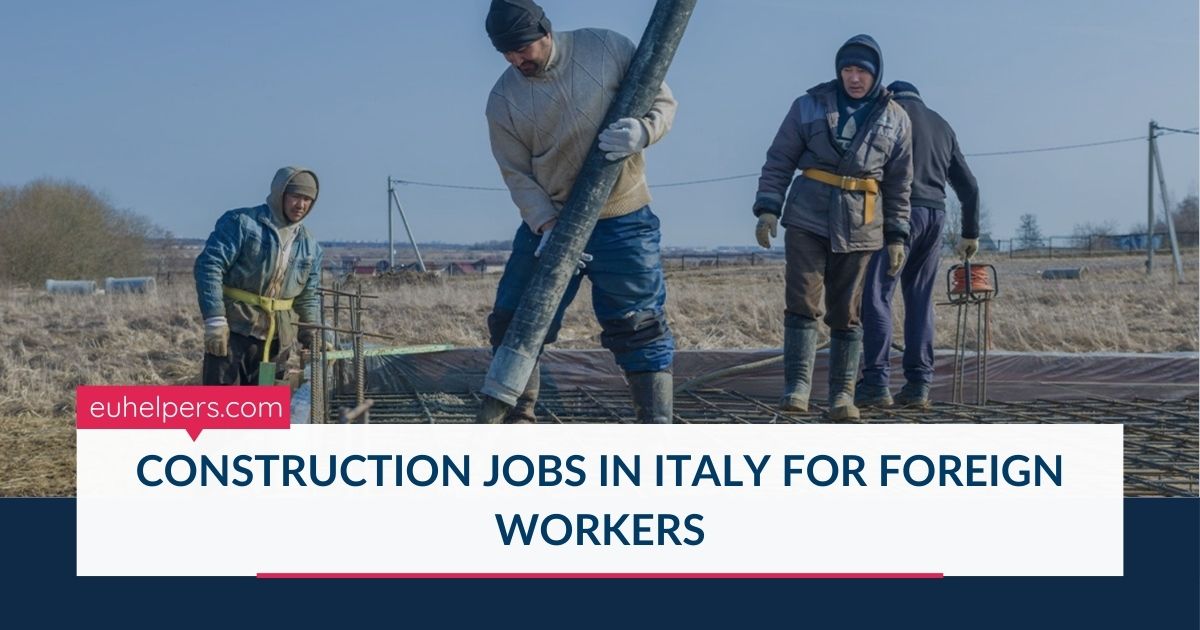

Italy’s construction sector continues to grow due to infrastructure development, renovation projects, and urban expansion. The country regularly needs skilled and semi-skilled workers to support residential, commercial, and public construction projects. Because of labor shortages in certain trades, many construction companies hire foreign workers through legal work permit programs.
For international job seekers, construction jobs in Italy can offer stable employment opportunities, especially for workers with experience in building, technical trades, or manual labor.
Why Construction Workers Are in Demand in Italy
Italy has ongoing construction projects related to housing, infrastructure upgrades, and building restoration. The government also invests in development programs that require a large workforce in the construction industry.
At the same time, many local workers are moving into other industries or retiring, which creates labor gaps in skilled trades. This has increased demand for foreign workers who can support construction activities across the country.
Common Construction Job Roles in Italy
Construction work includes a wide range of roles depending on the type of project and skill level.
Popular construction jobs include:
-
Bricklayers and masons
-
Carpenters
-
Electricians
-
Plumbers
-
Welders
-
Concrete workers
-
Construction laborers
Workers may be involved in building structures, installing electrical systems, plumbing work, or assisting with general construction tasks on job sites.
Salary for Construction Workers in Italy
Salaries in the construction sector depend on experience, skill level, and the type of project.
Typical salary ranges include:
-
Entry-level construction laborers: around €1,500 to €2,000 per month
-
Skilled workers such as electricians or plumbers: €2,000 to €2,800 per month
-
Experienced specialists or supervisors: €3,000 or more per month
Workers may also receive additional pay for overtime or specialized work.
Working Hours in the Construction Industry
Construction jobs in Italy usually follow structured working schedules based on project timelines.
Common working conditions include:
-
Around 40 hours per week
-
5 to 6 working days per week
-
Daytime shifts depending on the project
-
Possible overtime during busy construction periods
Working hours may vary depending on weather conditions and project deadlines.
Requirements for Foreign Workers
Foreign workers who want to work in construction in Italy must meet certain employment and immigration requirements.
Typical requirements include:
-
Valid passport
-
Job offer from an Italian employer
-
Work visa or residence permit for non-EU citizens
-
Relevant construction experience or skills
-
Basic knowledge of Italian or English
Employers usually apply for a work permit as part of the hiring process for non-EU workers.
Skills Employers Look For
Construction companies prefer workers who have practical experience and technical skills related to building work.
Important skills include:
-
Ability to use construction tools and equipment
-
Knowledge of building safety procedures
-
Physical strength and endurance
-
Teamwork and communication skills
-
Attention to detail in construction tasks
Having experience in a specific trade such as plumbing, welding, or electrical work can improve job opportunities.
Cities in Italy with Construction Job Opportunities
Construction activity takes place across many parts of Italy, particularly in major cities and growing urban areas.
Cities with frequent construction work include:
-
Rome
-
Milan
-
Naples
-
Turin
-
Bologna
-
Florence
Large infrastructure and housing projects in these areas often require additional workers.
Benefits of Construction Jobs in Italy
Working in construction in Italy can provide several advantages for foreign workers.
Key benefits include:
-
Stable demand for skilled trade workers
-
Opportunities to gain international construction experience
-
Legal employment with work contracts
-
Potential for overtime earnings
-
Career advancement into supervisory roles
Experienced workers may also move into specialized construction fields or project management roles over time.
Final Thoughts
Construction jobs in Italy offer promising opportunities for foreign workers with practical skills and experience in the building industry. As the country continues to develop infrastructure and housing projects, demand for construction labor remains strong.
With the right qualifications, a valid job offer, and proper documentation, foreign workers can find stable employment and build long-term careers in Italy’s construction sector.