
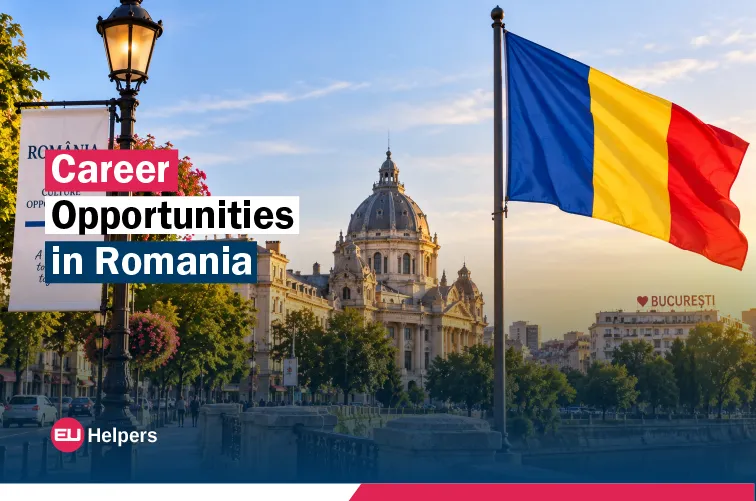

Career Opportunities in Romania
Romania offers distinctive career opportunities for international professionals seeking Southeastern European EU career development in a country with growing tech ecosystem, established automotive sector, major shared services concentration, and attractive value proposition. This EU Helpers guide walks through Romania's career opportunities landscape covering sectors, professional development pathways, and international prospects — international candidates can explore Romanian career opportunities through EU Helpers. Romania is EU member (since 2007), Schengen member (fully integrated by air and sea March 2024, land borders March 2025), NATO member (since 2004), and Council of Europe member (since 1993), but NOT eurozone (uses Romanian Leu — RON).
Understanding Romania's Career Landscape
Romania's career landscape offers distinctive Southeastern European EU character with attractive value proposition.
| Consideration | Career Impact |
|---|---|
| EU member | EU single market and (recently) Schengen mobility |
| Recent Schengen full integration | Border-free European travel |
| NOT eurozone | Romanian Leu currency |
| NATO member | Security integration |
| Southeastern European position | Distinctive Balkan character |
| Latin-language island | Distinctive Romanian character in Slavic Balkans |
| Growing IT sector | Bucharest and Cluj-Napoca |
| Established automotive | Dacia (Renault), Ford |
| Major shared services | Bucharest, Cluj-Napoca |
| Moderate cost of living | Attractive value proposition |
| Multilingual advantage | Distinctive market advantage |
Romania's combination of EU membership, recent Schengen full integration, NATO membership, largest Southeastern European EU country by population (approximately 19 million), distinctive Latin-language island heritage in Slavic Balkans, growing tech ecosystem, established automotive sector, major shared services concentration, moderate cost of living, and multilingual capabilities makes Romania distinctive Southeastern European EU destination for international career development.
Career Opportunities by Sector
Romania offers career opportunities across several distinctive sectors.
| Sector | Career Character |
|---|---|
| Information technology | Growing sector |
| Automotive | Established manufacturing |
| Shared services | Major sector |
| Financial services | Bucharest concentration |
| Energy | Traditional and renewable |
| Agriculture | Traditional sector |
| Manufacturing | Diverse |
| Tourism | Growing sector |
| Research | Growing |
Each sector offers distinctive career characteristics with different professional development pathways.
Information Technology Career Opportunities
Information technology represents growing and prominent career opportunity in Romania.
IT career features include distinctive Romanian tech ecosystem particularly Bucharest (major IT hub with international companies including Microsoft, IBM, Oracle, various, plus Romanian tech companies) and Cluj-Napoca ("Silicon Valley of Eastern Europe" with distinctive Romanian tech concentration supported by Technical University of Cluj-Napoca and Babeș-Bolyai University), plus Timișoara and Iași with growing tech ecosystems, competitive compensation reflecting Romanian EU standards (lower than Western Europe but growing significantly often competing with Western European IT salaries in specialized areas), English usage in international tech companies providing accessibility, distinctive Romanian technical talent particularly in software development, and skilled workforce with strong technical universities. IT career progression includes software development (various specializations), systems engineering, product management, technical leadership, and various specialized roles.
Automotive Career Opportunities
Automotive represents established career opportunity with distinctive Romanian character.
Automotive career considerations include distinctive Romanian automotive manufacturing with Dacia (Renault) as major Romanian automotive brand at Mioveni plant (Dacia has distinctive Romanian character now as part of Renault group — Renault acquired Dacia in 1999 relaunching brand with distinctive Logan and Duster success), Ford at Craiova plant (established Romanian Ford operations), and various automotive parts suppliers. Career progression includes automotive engineering, manufacturing management, product development, quality assurance, and various specialized roles. Romanian automotive sector offers distinctive career opportunities.
Shared Services Career Opportunities
Shared services offer major career opportunities with distinctive multilingual advantages.
Shared services career features include Bucharest and Cluj-Napoca as major shared services hubs with international companies (Accenture, Genpact, various major shared services companies), Timișoara with growing shared services, Iași with shared services presence, distinctive Romanian multilingual capabilities (Romanian plus English essential plus various European languages) making Romania particularly attractive for shared services serving European markets, various services including customer service, IT support, finance, HR, and various business functions, competitive compensation, and career progression across operational roles, team leadership, subject matter expertise, and management. Romanian shared services sector offers substantial career opportunities.
Financial Services Career Opportunities
Financial services offer career opportunities concentrated in Bucharest.
Financial services career considerations include Bucharest as Romania's financial hub with major Romanian banks (Banca Transilvania as largest Romanian bank, Banca Comercială Română — BCR, BRD Groupe Société Générale, ING Bank Romania, Raiffeisen Bank Romania, various others), international banking presence, Bucharest Stock Exchange, insurance sector, and growing fintech ecosystem. Career progression includes banking careers, investment management, financial analysis, risk management, corporate finance, insurance, and various financial roles. Bucharest concentrates financial services careers.
Energy Career Opportunities
Energy represents career opportunity with distinctive Romanian energy heritage.
Energy career considerations include traditional Romanian energy sector (Romania has distinctive oil heritage as one of world's early oil producers — Ploiești historic oil center dating from 19th century — Romania was among world's earliest oil producers, and Romania has various petroleum operations), nuclear energy (Cernavodă nuclear plant), renewable energy expansion, and various energy projects. Career progression includes energy engineering, project development, technology development, energy trading, and various energy roles. Romanian energy sector offers distinctive career opportunities with historical significance.
Bucharest Career Concentration
Bucharest as capital concentrates diverse career opportunities.
Bucharest career considerations include capital and largest city concentration with diverse sectors including IT (major Romanian IT hub), financial services (Romania's financial hub with major banks and Bucharest Stock Exchange), shared services (major sector), government and public sector, international organizations, cultural sector, and various services. Bucharest represents primary career destination for international professionals with diverse opportunities and international company presence.
Cluj-Napoca Career Concentration
Cluj-Napoca as second-largest city offers distinctive IT career concentration.
Cluj-Napoca career considerations include "Silicon Valley of Eastern Europe" with distinctive Romanian tech concentration (major international tech companies with Cluj operations plus distinctive Romanian tech companies), Technical University of Cluj-Napoca and Babeș-Bolyai University providing skilled workforce and research, major shared services concentration, and growing sectors. Cluj-Napoca represents distinctive career destination combining professional opportunities with distinctive Transylvanian character and lower costs than Bucharest.
Timișoara Career Concentration
Timișoara offers western Romania career opportunities.
Timișoara career considerations include distinctive western Romania character (historic Habsburg heritage, distinctive multicultural character), growing tech ecosystem, manufacturing sector, University of Timișoara (major Romanian university), and various sectors. Timișoara represents distinctive western Romania career destination.
Iași Career Concentration
Iași offers northeastern Romania career opportunities focused on tech and academic.
Iași career considerations include growing tech ecosystem (northeastern Romania IT concentration), Alexandru Ioan Cuza University (oldest Romanian university founded 1860), various academic institutions, and various sectors. Iași represents distinctive northeastern Romania career destination.
Language Considerations for Career Development
Language significantly affects career development in Romania.
Language considerations: Romanian (Română) as official language becomes important for long-term career advancement particularly beyond international sectors and for management progression. Romanian is Romance language (distinctive Latin-language island in Slavic Balkans) related to Italian, French, Spanish, and Portuguese providing distinctive linguistic connection. English proficiency is high in Romania and widely used in international business, IT sector, shared services, and among younger generations particularly Bucharest and Cluj-Napoca. French is widely understood given historical Francophone influences. German is used given historical influences particularly Transylvania. Learning Romanian significantly enhances career opportunities and integration.
Cultural Integration for Career Success
Cultural integration supports career success in Romania.
Cultural integration considerations include understanding distinctive Romanian character with Latin-language island heritage in Slavic Balkans (reflecting Roman heritage in ancient Dacia dating from Roman conquest 106 AD), Romanian Orthodox Christian majority tradition, warm and hospitable culture, distinctive Romanian identity within European context, professional culture combining relationship-building with professional competence, appreciation of Romanian gastronomy (sarmale — cabbage rolls, mămăligă — cornmeal porridge, mici — grilled sausages, various regional specialties), Romanian wine culture (distinctive Romanian wines from various regions), rich cultural heritage (Romanian literature — Mihai Eminescu as national poet, various Nobel laureates including Herta Müller Literature 2009 who is German-Romanian, distinctive Romanian cinema — Romanian New Wave including Cristian Mungiu 4 Months 3 Weeks and 2 Days Palme d'Or 2007), and various UNESCO sites. Cultural integration supports professional relationships and career development.
Professional Development Considerations
Professional development in Romania includes various considerations.
Professional development considerations include formal education pathways at Romanian universities (University of Bucharest as major Romanian university, Babeș-Bolyai University Cluj-Napoca, Alexandru Ioan Cuza University Iași — oldest Romanian university founded 1860, Politehnica University of Bucharest, Technical University of Cluj-Napoca, various others), professional certifications through various international bodies, informal networking through professional communities, sector-specific associations, chambers of commerce networks (American Chamber of Commerce in Romania — AmCham, various international chambers), and company internal development programs. Romania offers educational tradition supporting continuous professional development.
Networking Opportunities
Networking opportunities support career development in Romania.
Networking considerations include professional associations across various sectors, chambers of commerce networks, sector-specific events and conferences, international business communities particularly Bucharest and Cluj-Napoca, and expatriate networks. LinkedIn is widely used in Romanian professional context. Networking supports career development and opportunity identification.
Multilingual Advantage Career Impact
Romania's multilingual capabilities create distinctive career context.
Multilingual advantage considerations: Romanian professionals often speak Romanian plus English essential plus various European languages (given Romanian's Romance language character providing easier acquisition of French, Italian, Spanish, Portuguese, plus historical German and Hungarian minority languages particularly Transylvania). This multilingual capability creates distinctive career opportunities particularly for companies serving European markets making Romania attractive for shared services, business services, and various international operations. English-speaking international professionals find substantial opportunities while multilingual capability enhances career prospects.
Long-term Career Considerations
Long-term career considerations affect professional development.
Long-term considerations include Romania's EU membership providing EU citizenship pathway, pathway to Romanian permanent residence typically after 5 years, and Romanian citizenship pathway (typically after 8 years continuous residence with Romanian language proficiency — 5 years for certain circumstances including EU citizens). Romanian citizenship provides EU citizenship benefits. Romania generally allows dual citizenship. Long-term career development in Romania provides distinctive Southeastern European EU experience with EU advantages.
Cost of Living Career Impact
Romania's moderate cost of living affects career economics.
Cost impact: Romania has moderate costs compared to Western Europe (typically 40-60% of Western European costs depending on city and category). Bucharest as capital has highest Romanian costs though remains substantially more affordable than Western European capitals. Cluj-Napoca has moderate to higher costs reflecting IT sector demand. Timișoara, Iași, Brașov, and various cities have varying moderate costs. Combined with growing Romanian salaries particularly in tech and international sectors, moderate cost of living creates attractive value proposition.
Emerging Career Opportunities
Romania offers emerging career opportunities.
Emerging opportunities include continuing IT sector growth (Bucharest and Cluj-Napoca expansion), renewable energy expansion, tourism continued growth (Romania offers distinctive tourism including Carpathian Mountains, Danube Delta, medieval Transylvanian cities including Sibiu and Brașov, painted monasteries of northern Moldavia), fintech emergence, sustainability roles growing across sectors, and continuing shared services expansion. Emerging sectors offer opportunities for professionals with relevant expertise.
Practical Career Considerations
Several practical considerations affect career development in Romania.
Practical considerations include understanding work permit route through Employment Work Permit or EU Blue Card, documentation requirements with Romanian translations by authorized translator (traducător autorizat), housing arrangements varying by region, healthcare through Romanian public healthcare (after appropriate registration), banking arrangements, tax registration with Romanian tax authority (ANAF — Agenția Națională de Administrare Fiscală), CNP (Cod Numeric Personal — Romanian personal numeric code) acquisition, and understanding Romanian labor market conditions.
Final Guidance
Career opportunities in Romania offer distinctive Southeastern European EU career development combining EU membership (since 2007) recent Schengen full integration (air/sea March 2024, land March 2025) NATO membership (since 2004) NOT eurozone (Romanian Leu — RON) largest Southeastern European EU country by population (approximately 19 million) distinctive Latin-language island heritage in Slavic Balkans (reflecting Roman heritage in ancient Dacia) and attractive value proposition. Main career sectors include information technology (growing particularly Bucharest and Cluj-Napoca "Silicon Valley of Eastern Europe" plus Timișoara Iași with distinctive Romanian technical talent competitive compensation often competing with Western European IT salaries English usage in international tech companies), automotive (established manufacturing with Dacia Renault Mioveni Ford Craiova and various automotive parts suppliers), shared services / BPO / SSC (major sector particularly Bucharest and Cluj-Napoca with distinctive Romanian multilingual capabilities valued for European markets), financial services (Bucharest concentration with major Romanian banks Banca Transilvania as largest BCR BRD ING Bank Romania Raiffeisen Bank Romania and Bucharest Stock Exchange), energy (traditional oil and gas with distinctive Romanian oil heritage Ploiești historic oil center plus nuclear Cernavodă plus renewable), agriculture, manufacturing, tourism, and research. Career locations include Bucharest as capital concentrating diverse opportunities, Cluj-Napoca as second-largest city with distinctive IT concentration "Silicon Valley of Eastern Europe" plus shared services, Timișoara as western Romania tech and manufacturing hub with historic Habsburg heritage and distinctive multicultural character, Iași as northeastern Romania tech and academic center with Alexandru Ioan Cuza University oldest Romanian university (founded 1860), Brașov as central Romania automotive and tourism with distinctive Transylvanian character, Constanța as Black Sea coast maritime and tourism, Craiova as southwestern Romania automotive Ford center, Ploiești as traditional Romanian oil center, and Sibiu as central Romania cultural city (European Capital of Culture 2007). Language considerations with Romanian as official language (Romance language — distinctive Latin-language island — related to Italian French Spanish Portuguese) plus widespread English usage in international sectors and multilingual advantage making Romania accessible for English-speaking professionals particularly in IT and shared services. Cultural integration supports career success including understanding distinctive Romanian character with Latin-language island heritage Romanian Orthodox Christian tradition warm hospitable culture appreciation of Romanian gastronomy (sarmale mămăligă mici) Romanian wine culture rich cultural heritage (Mihai Eminescu Herta Müller Nobel Literature 2009 Romanian New Wave cinema Cristian Mungiu Palme d'Or 2007) and various UNESCO sites (Sighișoara Horezu Monastery Villages with Fortified Churches in Transylvania Wooden Churches of Maramureș Painted Churches of Northern Moldavia Dacian Fortresses Danube Delta). Professional development combines formal education at Romanian universities (University of Bucharest Babeș-Bolyai University Cluj-Napoca Alexandru Ioan Cuza Iași oldest 1860 Politehnica Bucharest Technical University of Cluj-Napoca) with professional certifications informal networking and company development programs. Multilingual advantage creates distinctive career context for European market service. Long-term considerations include EU citizenship pathway through Romanian citizenship (typically 8 years continuous residence with Romanian language) and dual citizenship allowed. Moderate cost of living creates attractive value proposition. Emerging opportunities include continuing IT sector growth renewable energy expansion tourism continued growth fintech emergence sustainability roles and continuing shared services expansion. International candidates evaluating Romania career opportunities can start their exploration through EU Helpers. EU Helpers supports international professionals with Romania career opportunity guidance across sectors, career development pathway evaluation, professional development guidance, cultural integration support for distinctive Romanian Southeastern European Latin-language island character, work permit route guidance through Employment Work Permit EU Blue Card and other routes, document preparation coordination including Romanian translations by authorized translator (traducător autorizat), employer coordination throughout the career transition, General Inspectorate for Immigration (IGI) coordination, and clarity on the latest official requirements from Romanian authorities.
FAQs
Romania's main career sectors include information technology (growing particularly Bucharest and Cluj-Napoca as "Silicon Valley of Eastern Europe" with distinctive Romanian tech ecosystem plus Timișoara and Iași), automotive (established manufacturing with Dacia Renault at Mioveni plant, Ford at Craiova plant, and various automotive parts suppliers), shared services / BPO (major sector particularly Bucharest and Cluj-Napoca with distinctive Romanian multilingual capabilities valued for European markets), financial services (Bucharest concentration with major Romanian banks — Banca Transilvania as largest, BCR, BRD, ING Bank Romania, Raiffeisen Bank Romania — and Bucharest Stock Exchange), energy (traditional oil and gas with distinctive Romanian oil heritage — Ploiești historic center — plus nuclear Cernavodă plus renewable expansion), agriculture, manufacturing, tourism, and research.
Romania's IT sector offers growing career opportunities reflecting distinctive Romanian tech ecosystem particularly Bucharest (major IT hub with international companies — Microsoft, IBM, Oracle, various — plus Romanian tech companies) and Cluj-Napoca ("Silicon Valley of Eastern Europe" with distinctive Romanian tech concentration supported by Technical University of Cluj-Napoca and Babeș-Bolyai University), plus Timișoara with western Romania tech and Iași with northeastern Romania tech supported by Alexandru Ioan Cuza University. Various international companies with Romanian operations. Distinctive Romanian technical talent particularly in software development. Competitive compensation reflecting Romanian EU standards often competing with Western European IT salaries in specialized areas. English usage in international tech companies providing accessibility. IT career progression includes software development, systems engineering, product management, technical leadership, and various specialized roles.
Bucharest as capital and largest city concentrates diverse career opportunities in Romania including IT (major Romanian IT hub with international companies and Romanian tech companies), financial services (Romania's financial hub with major Romanian banks — Banca Transilvania as largest, BCR, BRD, ING Bank Romania, Raiffeisen Bank Romania — and Bucharest Stock Exchange), shared services (major sector), government and public sector, international organizations, cultural sector, and various services. Bucharest represents primary career destination for international professionals with distinctive Romanian character combining modern career vibrancy with rich historical heritage — Bucharest is known as "Little Paris" reflecting historical French cultural influences and distinctive Belle Époque architecture.
Language skills for Romania career development include Romanian (Română) as official language becoming important for long-term career advancement particularly beyond international sectors and for management progression. Romanian is Romance language (distinctive Latin-language island in Slavic Balkans reflecting Roman heritage in ancient Dacia dating from Roman conquest 106 AD) related to Italian, French, Spanish, and Portuguese providing distinctive linguistic connection to Romance language family. High English proficiency in Romania and widespread English usage in international business, IT sector, shared services, and among younger generations particularly Bucharest and Cluj-Napoca makes Romania accessible for English-speaking professionals. French is widely understood given historical Francophone influences. German is used given historical influences particularly Transylvania. Learning Romanian significantly enhances career opportunities.
Cluj-Napoca as second-largest Romanian city offers distinctive career opportunities as "Silicon Valley of Eastern Europe" with major IT concentration (distinctive Romanian tech ecosystem with international tech companies establishing Cluj operations plus distinctive Romanian tech companies), major shared services concentration, Technical University of Cluj-Napoca and Babeș-Bolyai University providing skilled workforce and research, and growing sectors. Cluj-Napoca combines professional opportunities with distinctive Transylvanian character (historic Habsburg heritage, distinctive cultural richness, multicultural character), lower costs than Bucharest, and quality of life appeal. Cluj-Napoca has emerged as major Romanian tech destination attracting international professionals seeking distinctive Romanian career development combined with Transylvanian lifestyle.
Romania's Latin-language heritage creates distinctive career context reflecting Romanian's Romance language character as distinctive Latin-language island in Slavic Balkans. This linguistic heritage dates from Roman conquest of Dacia in 106 AD by Emperor Trajan with subsequent Romanization creating distinctive Romanian identity within surrounding Slavic linguistic environment. Romanian language provides easier acquisition of French, Italian, Spanish, and Portuguese given Romance language family connection creating distinctive multilingual advantage for Romanian professionals. This creates distinctive career opportunities particularly for shared services, business services, and various international operations serving Romance language European markets (France, Italy, Spain, Portugal) making Romania attractive multilingual base.
Romania's automotive career opportunity reflects established Romanian automotive manufacturing with Dacia (Renault) as major Romanian automotive brand at Mioveni plant (Dacia has distinctive Romanian character — Renault acquired Dacia in 1999 relaunching brand with distinctive Logan Sandero Duster success as affordable European automotive brand), Ford at Craiova plant (established Romanian Ford operations), and various automotive parts suppliers supporting Romanian automotive supply chain. Career progression includes automotive engineering, manufacturing management, product development, quality assurance, procurement, and various specialized automotive roles. Romanian automotive sector offers distinctive career opportunities combining international automotive brand exposure with Romanian operational context.
Romania's cost of living impact on careers reflects moderate costs compared to Western Europe (typically 40-60% of Western European costs depending on city and category). Bucharest as capital has highest Romanian costs though remains substantially more affordable than Western European capitals. Cluj-Napoca has moderate to higher costs reflecting IT sector demand and growth (Cluj-Napoca has experienced substantial cost growth in recent years driven by IT sector development). Timișoara, Iași, Brașov, and various cities have varying moderate costs. Interior Romania and smaller cities generally more affordable. Romanian public healthcare provides coverage. Combined with growing Romanian salaries particularly in IT (Romanian IT salaries often competing with Western European IT salaries in specialized areas), moderate cost of living creates attractive value proposition. Romanian Leu (RON) as currency reflects Romania's non-eurozone positioning.
Emerging career opportunities in Romania include continuing IT sector growth (Bucharest and Cluj-Napoca expansion with distinctive Romanian technical talent and multilingual advantages), renewable energy expansion (Romania has substantial renewable potential including wind, solar, and continuing energy transition from traditional coal), tourism continued growth (Romania offers distinctive tourism opportunities including Carpathian Mountains, Danube Delta UNESCO natural site, medieval Transylvanian cities including Sibiu Brașov and Sighișoara, painted monasteries of northern Moldavia UNESCO, wooden churches of Maramureș UNESCO), fintech emergence, sustainability roles growing across sectors, and continuing shared services expansion serving European markets. Emerging sectors offer opportunities for professionals with relevant expertise.
EU Helpers supports international professionals with Romania career opportunity guidance across sectors including information technology (Bucharest and Cluj-Napoca "Silicon Valley of Eastern Europe" plus Timișoara Iași), automotive (Dacia Renault Ford), shared services (major sector with distinctive Romanian multilingual advantages), financial services (Bucharest), energy (traditional and renewable with distinctive Romanian oil heritage), agriculture, manufacturing, tourism, and research, career development pathway evaluation, professional development guidance, cultural integration support for distinctive Romanian Southeastern European Latin-language island character, work permit route guidance through Employment Work Permit (standard employer-sponsored) EU Blue Card (highly qualified with EU mobility advantages) Intra-Corporate Transfer Seasonal Work Highly Qualified Work and Family Reunification, document preparation coordination including Romanian translations by authorized translator (traducător autorizat), employer coordination throughout the career transition, General Inspectorate for Immigration (Inspectoratul General pentru Imigrări — IGI) coordination under Ministry of Internal Affairs, and clarity on the latest official requirements from Romanian authorities.
Still have questions? Get in touch
Ready to work in Romania?
EU Helpers guides international professionals through Romania's career landscape. From sector opportunities to professional development, we support your Southeastern European EU career journey with distinctive positioning.