
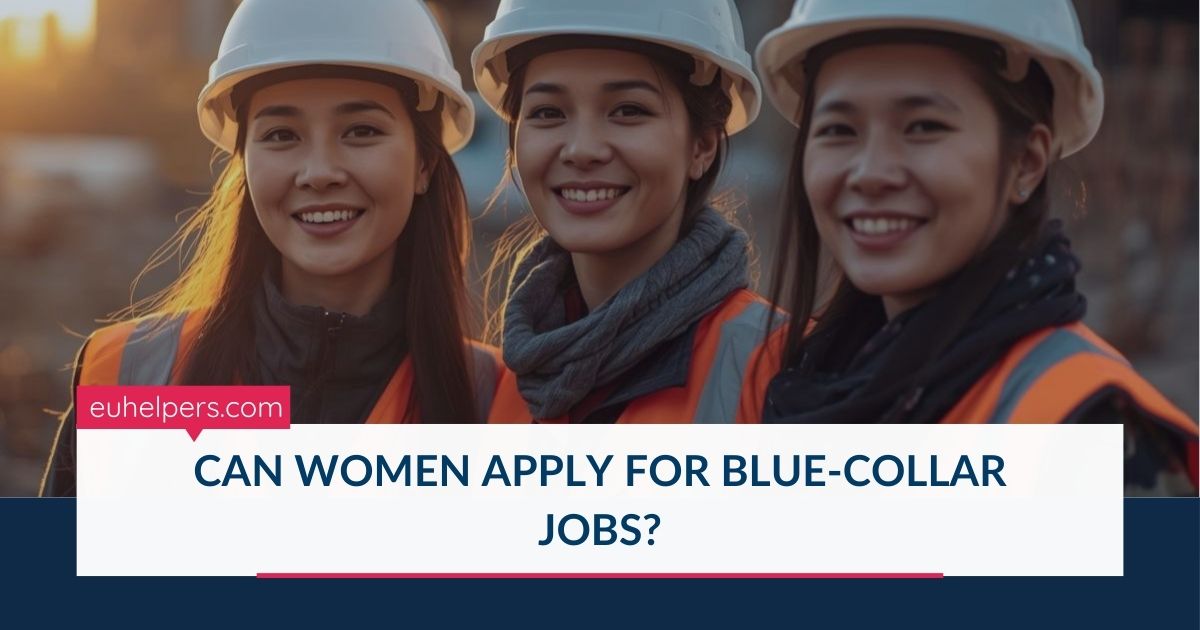

Yes. Women can legally apply for and work in blue-collar jobs across Europe. There is no law in Europe that restricts blue-collar jobs only to men. In fact, many European countries actively encourage female participation in skilled and semi-skilled manual work.
Even within the European Union, gender equality in employment is a core principle. Employers are required to provide equal opportunity, equal pay, and safe working conditions for women.
What Are Blue-Collar Jobs?
Blue-collar jobs are roles that involve manual, technical, or hands-on work. These jobs may require physical effort, but many also rely on skill, training, and experience, not strength alone.
In Europe, blue-collar jobs are found in:
-
Factories
-
Warehouses
-
Farms
-
Construction sites
-
Care facilities
-
Cleaning and maintenance services
Blue-Collar Jobs Commonly Open to Women in Europe
Women already work in many blue-collar roles across Europe, including:
Factory & Manufacturing Jobs
-
Assembly line worker
-
Packaging worker
-
Quality checker
-
Machine assistant
These roles are widely open to women and often have stable year-round demand.
Warehouse & Logistics Jobs
-
Picker and packer
-
Sorting staff
-
Inventory assistant
Many warehouses offer shift-based work, making them suitable for women.
Agriculture & Farm Work
-
Fruit and vegetable picking
-
Greenhouse work
-
Dairy and livestock assistance
These roles often hire both men and women, especially during peak seasons.
Cleaning & Maintenance Jobs
-
Hotel housekeeping
-
Office and industrial cleaning
-
Facility maintenance support
These are among the most common entry-level jobs for women in Europe.
Care & Support Roles
-
Elderly care assistant
-
Home care helper
-
Disability support worker
High demand exists across Europe due to aging populations.
Food Processing Jobs
-
Meat and poultry processing
-
Seafood packing
-
Bakery and food production
Women form a large part of the workforce in this sector.
Are Construction Jobs Open to Women?
Yes, though availability depends on the role and employer.
Women may work as:
-
Construction helpers
-
Painters
-
Tile assistants
-
Site cleaners
-
Technical assistants
Heavy lifting roles may still be male-dominated, but many construction tasks are gender-neutral under European labor law.
Are Women Treated Equally in Blue-Collar Jobs?
By law, yes.
European labor regulations require:
-
Equal pay for equal work
-
No gender-based hiring restrictions
-
Safe working environments
-
Protection from harassment
-
Maternity rights and paid leave
Violations can result in penalties for employers.
Can Women Get Work Visas for Blue-Collar Jobs?
Yes. Work visas are issued based on the job role, not gender.
If a woman:
-
Has a valid job offer
-
Meets age and health requirements
-
Fulfills visa rules
She can legally receive a work visa or residence permit, just like a male worker.
Do Employers Prefer Men or Women?
It depends on the sector:
-
Factories, warehouses, food processing: gender-neutral hiring
-
Care, cleaning, hospitality: often more women hired
-
Heavy construction: still male-dominated, but changing
Performance, reliability, and legal status matter more than gender.
Challenges Women May Face (Realistic View)
While legal rights exist, women may still face:
-
Language barriers
-
Physically demanding tasks
-
Cultural differences
-
Fewer women supervisors in some sectors
However, many employers now provide:
-
Training
-
Safety equipment
-
Mixed-gender teams
-
Clear workplace rules
Tips for Women Applying for Blue-Collar Jobs in Europe
-
Apply only through legal and verified employers
-
Ask clearly about job duties and shifts
-
Check if accommodation is provided
-
Understand working hours and overtime rules
-
Learn basic local language phrases
-
Keep copies of your contract and permit
Final Answer: Can Women Apply for Blue-Collar Jobs?
Yes, absolutely.
-
Women can legally work in blue-collar jobs in Europe
-
Many sectors actively hire women
-
Work visas are gender-neutral
-
Rights and protections apply equally
Europe offers real opportunities for women in blue-collar work, especially when applying legally and with proper information.