
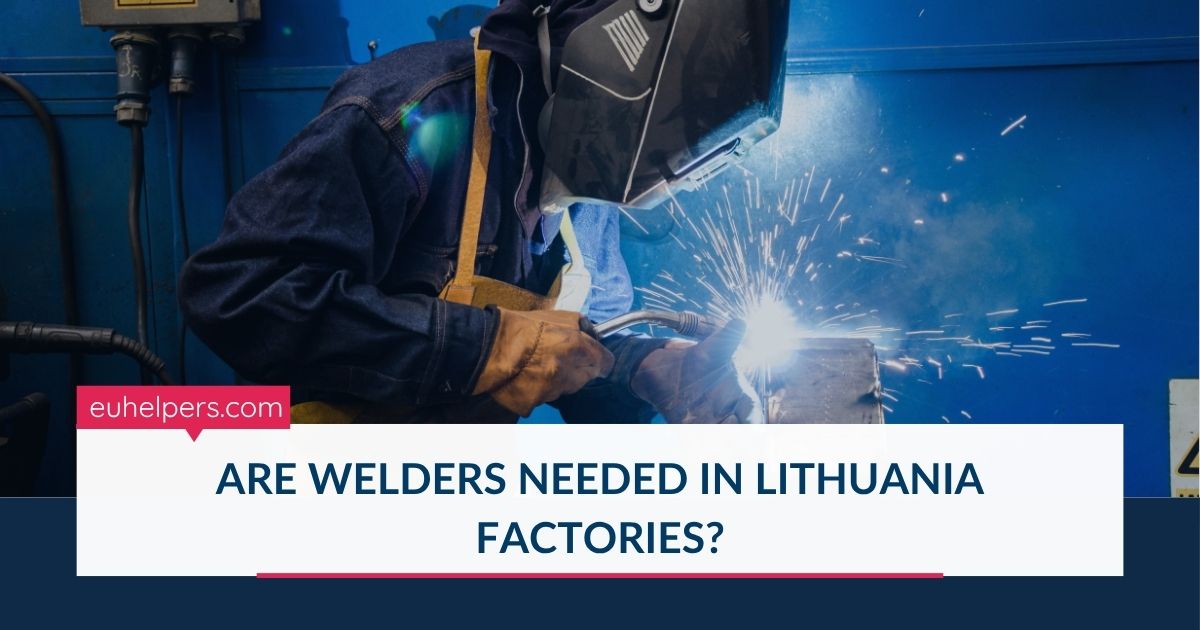

Welder jobs in Lithuanian factories are in high demand, especially for skilled foreign workers looking for stable employment in Europe. Lithuania has a strong and growing manufacturing sector, including metal production, automotive parts, shipbuilding, and industrial fabrication. Due to a shortage of local skilled labour, Lithuanian factories are actively hiring international welders to meet production demands. This creates excellent opportunities for workers with welding skills, including MIG, TIG, and arc welding. Welder jobs in Lithuania offer competitive salaries, legal work opportunities, and long-term career growth in the European job market.
Are Welders Really in Demand in Lithuania?
Yes, welders are in high demand in Lithuania, especially in factories and other industrial sectors. According to European labour market data, manufacturing companies in Lithuania have a high demand for welders and metalworkers due to workforce shortages.
Research also shows that the shortage of welding specialists has been a long-term issue in Lithuania, with companies struggling to find enough skilled workers.
Additionally, Lithuania’s manufacturing and engineering industries continue to expand, increasing the need for skilled trades such as welding.
This evidence demonstrates why welding remains one of the most sought-after blue-collar professions in Lithuania. Next, let's explore why factories, in particular, have a growing need for welders.
Why Factories in Lithuania Need Welders
Factories play a major role in Lithuania’s economy, especially in sectors like metal fabrication, machinery production, and construction materials. Welding is a critical part of these industries because it is required to assemble and repair metal structures and equipment. The demand for welders is increasing due to:
- Growth in manufacturing and industrial production
- Expansion of the metal and engineering industries
- Lack of skilled local workers
- Increase in export production
- Ongoing infrastructure and industrial projects
Because of these factors, factories consistently recruit foreign welders to maintain production levels. Now, let’s take a look at what welding roles exist in these industries.
Job Highlights
| Job Role | Welder (Factory / Industrial) |
| Country | Lithuania |
| Monthly Salary | €1,200 – €2,300 |
| Working Hours | 40–50 hours per week |
| Contract Duration | 1 to 2 years |
| Overtime | Available and paid |
| Accommodation | Often provided |
| Transportation | Sometimes included |
| Experience Required | Skilled |
| Language Requirement | Basic English preferred |
| Visa Type | Work Permit / Temporary Residence |
Types of Welding Jobs Available
Lithuania offers different types of welding jobs depending on skills and experience. These include MIG, TIG, arc, structural, and pipe welders, as well as fabrication specialists. Factory welders usually assemble metal parts, machinery, and industrial equipment. Some welders specialise in automotive manufacturing, while others work in heavy industries or shipbuilding. This variety allows workers to choose roles based on their skills and expertise.
Daily Responsibilities of Welders
Welders in Lithuanian factories perform technical and practical tasks daily. Their responsibilities include:
- Reading and understanding technical drawings
- Cutting and joining metal parts using welding techniques
- Operating welding machines (MIG, TIG, ARC)
- Inspecting welded structures for quality
- Repairing damaged metal components
- Maintaining welding equipment
- Following safety and quality standards
- Working with engineers and supervisors
Carrying out these tasks requires attention to detail and technical expertise. Understanding what the job entails naturally leads to questions about compensation and work conditions, which we examine next.
Salary, Overtime, and Earnings
Welder salaries in Lithuania are competitive for skilled workers. Most welders earn between €1,200 and €2,300 per month, depending on experience.
Some specialised welders or experienced professionals can earn even more. Overtime is common in factories and is paid at higher rates. Workers can increase their earnings through extra shifts and bonuses. Since accommodation is often provided, workers can save a significant portion of their income.
Working Conditions in Factories
Lithuania offers safe and regulated working conditions for industrial workers. Factories comply with European safety standards and provide protective equipment, including helmets, gloves, and welding shields. Workers receive proper training and must strictly follow safety guidelines. While welding work can be physically demanding and involves exposure to heat and sparks, safety measures ensure a secure working environment.
Requirements for Welder Jobs in Lithuania
To work as a welder in Lithuania, candidates must meet certain requirements.
Minimum Requirements:
- Basic education
- Welding skills (MIG, TIG, or ARC)
- Physical fitness
- Ability to follow instructions
Preferred Qualifications:
- Welding certification
- Experience in factory or industrial work
- Knowledge of technical drawings
- Basic English communication
Certified welders are more likely to be selected and earn higher salaries.
Benefits of Working as a Welder in Lithuania
Welder jobs in Lithuania come with several benefits:
- Competitive salary
- Overtime pay
- Free or subsidised accommodation
- Health insurance
- Paid leave
- Safe working environment
- Opportunity to extend contract
- Long-term career growth
These advantages make welding roles in Lithuania appealing to workers from abroad. To get the full picture, consider how Lithuania’s cost of living enhances your potential to save while employed in the country.
Cost of Living and Savings Potential
Lithuania features a comparatively low cost of living relative to Western Europe. Typical monthly expenses range from €400 to €700. When employers provide accommodation, workers have additional possibilities to save, making the country an attractive option for those wishing to maximise earnings. The next step is understanding what's required to apply for these positions.
Required Documents for Job Application
To apply for welder jobs in Lithuania, candidates need:
- Valid passport
- Updated CV
- Welding certificates
- Work experience proof
- Medical report
- Police clearance certificate
- Passport-size photos
- Job offer letter
Work Permit and Visa Process
Foreign welders must obtain a work permit to work in Lithuania. The employer usually applies for the permit on behalf of the worker. After approval, the worker applies for a visa and a residence permit. The process usually takes 3 to 6 weeks.
Once approved, workers can legally live and work in Lithuania and may renew their permits based on employment. With the visa and permit process in mind, let’s go through the concrete steps required to apply for a welder job via EU Helpers.
Step-by-Step Application Process
Follow these steps to apply through EU Helpers:
- Visit https://euhelpers.com/jobs-in-europe
- Fill out the application form.
- Upload required documents
- Get matched with employers.
- Attend interview
- Receive a job offer
- Apply for a visa
- Travel to Lithuania
Challenges of Welding Jobs
Welding positions require technical proficiency and physical stamina. Workers regularly manage heat, sparks, and heavy equipment, and may need to undertake longer hours during busy periods. Adjusting to a new country and workplace culture can also present challenges, but these can be addressed with adequate preparation and training. Understanding these realities, it’s helpful to consider why Lithuania stands out as an appealing destination for welders.
Why Lithuania Is a Good Choice for Welders?
Lithuania offers good job opportunities, affordable living, and a growing industrial sector. As part of the European Union, it provides a stable economy, legal work environment, fair wages, and safe workplaces for long-term employment.ent. To secure these opportunities, consider the following expert tips to enhance your application.
Expert Tips to Get Selected Faster
To increase your chances of getting hired:
- Obtain welding certification
- Gain experience in MIG/TIG welding
- Prepare a professional CV.
- Apply through trusted platforms like EU Helpers.
- Be ready for technical tests.
- Submit complete documents
Welder jobs in Lithuanian factories are in high demand and offer excellent opportunities for skilled foreign workers. With competitive salaries, strong benefits, and stable employment, this is the perfect time to apply. EU Helpers provides a trusted platform to help you secure welding jobs and complete your visa process smoothly. Apply now at https://euhelpers.com/jobs-in-europe and start your journey toward a successful career in Europe.
FAQs
1. Are welders in demand in Lithuanian factories?
Yes, welders are highly in demand due to labour shortages in manufacturing.
2. What is the salary for welders in Lithuania?
Typically €1,200 to €2,300 per month.
3. Do I need certification to work as a welder?
Yes, certification is usually required.
4. Can foreigners apply for welding jobs?
Yes, foreign workers are actively hired.
5. Is accommodation provided?
Often provided by employers.
6. What visa is required?
A work permit and residence visa.
7. How long is the visa processing?
3 to 6 weeks.
8. Are welding jobs physically demanding?
Yes, but manageable with training.
9. Is English required?
Basic English is preferred.
10. Can I extend my contract?
Yes, extensions are possible.
11. Are there many job openings?
Yes, especially in factories and other industrial settings.
12. Can I earn overtime?
Yes, overtime is available.
13. Is Lithuania good for welders?
Yes, due to demand and low living costs.
14. Can I save money?
Yes, especially with the provided accommodation.
15. How can I apply?
Apply through the EU Helpers website.
Conclusion
Welder jobs in Lithuanian factories are in high demand and provide strong career opportunities for skilled foreign workers. With growing industrial sectors, labour shortages, and competitive salaries, Lithuania is becoming a popular destination for welders. The country offers stable employment, good benefits, and a safe working environment. EU Helpers is your trusted partner for securing these opportunities and guiding you through the process. Apply today at https://euhelpers.com/jobs-in-europe and take the first step toward your future in Europe.