

Why Work in Switzerland — EU Helpers Complete Guide
Switzerland occupies a truly distinctive position in any discussion of European or global employment destinations, combining a rare combination of factors that make Switzerland genuinely one of the world's most attractive countries for international workers who can access its labor market. As a small country of approximately 8.9 million residents nestled in the heart of Europe surrounded by Germany, France, Italy, Austria, and Liechtenstein, Switzerland has built one of the world's most prosperous, stable, and internationally connected economies while maintaining exceptional quality of life, distinctive cultural identity, and neutrality that has kept the country peaceful for centuries. Understanding why to work in Switzerland requires appreciating the multiple dimensions that make Switzerland genuinely different from most other work destinations — including some dimensions that create genuine challenges alongside the substantial benefits.
The compelling reasons to work in Switzerland span exceptional financial rewards (Swiss salaries are among the world's highest in absolute terms, with substantial premium over most Western European countries), extraordinary quality of life (Swiss cities including Zurich and Geneva consistently top global livability rankings, Swiss public infrastructure functions with legendary precision, Alpine natural environment provides unmatched outdoor lifestyle access, and Swiss social stability creates enviable living conditions), remarkable career opportunities in specialized sectors (Switzerland is the global center of private banking and wealth management, a major pharmaceutical hub with Novartis and Roche among global pharmaceutical leaders, a technology hub with Google's largest engineering office outside the US in Zurich plus major operations from many other technology companies, headquarters city for international organizations including UN European headquarters in Geneva, WHO, WTO, ILO, UNHCR, and Bank for International Settlements in Basel, and home to global companies including Nestlé — one of the world's largest food companies, ABB, Schindler, and many others), unique multilingual environment (four official languages plus English widely used in international contexts creating unusual linguistic diversity), Swiss political stability and neutrality (Switzerland's political stability, direct democracy tradition, and neutrality provide security unmatched in most of the world), exceptional healthcare system (Swiss healthcare consistently ranks among the world's best), quality Swiss education (Swiss schools and universities including ETH Zurich and EPFL Lausanne are globally recognized), and stunning natural environment (Alpine access unmatched globally, world-class skiing and mountain sports, pristine lakes, and exceptional environmental protection).
However, working in Switzerland also involves specific challenges and considerations that any honest analysis must address. Swiss cost of living is among the world's highest, particularly for housing in Zurich, Geneva, and other major cities. Swiss labor market accessibility varies dramatically by nationality — EU/EFTA citizens have relatively straightforward access through bilateral agreement free movement, while non-EU/EFTA citizens face strict quotas that typically limit access to highly specialized workers in shortage occupations. Swiss taxation, while lower than many EU countries at cantonal levels, involves specific considerations. Swiss integration culture, while generally welcoming, has specific expectations about language learning and civic participation. Swiss residence requirements for permanent residence and citizenship are among Europe's longest.
For workers who can access the Swiss labor market and whose situations fit Swiss employment, the country offers a genuinely exceptional combination of opportunities. This EU Helpers guide provides comprehensive analysis of the reasons to consider Switzerland, along with honest recognition of the constraints and challenges. Understanding both sides of the picture supports informed decision-making about whether Swiss employment fits your specific circumstances.
EU Helpers has supported international applicants — including specialized professionals seeking Swiss opportunities — in navigating European immigration and employment systems. Always verify current Swiss employment and immigration information through official Swiss sources.
Exceptional Financial Rewards — Swiss Compensation Advantages
Swiss compensation levels are among the world's highest, providing substantial financial advantages for qualified workers.
Highest salary levels in Europe
Swiss salaries are among the highest in Europe in absolute terms across most sectors and skill levels. Professional and specialist positions typically pay substantially higher than equivalent positions in Germany, France, UK, and other Western European countries. Even middle-skill positions typically pay well by European standards.
Strong Swiss franc and financial stability
The Swiss franc (CHF) is one of the world's most stable currencies with strong long-term value. Swiss financial system is one of the world's most secure and sophisticated. This provides substantial security for accumulated savings and long-term financial planning.
Sector-specific premium compensation
Certain Swiss sectors pay particularly high compensation: Swiss private banking and wealth management (globally leading), pharmaceutical industry (Novartis, Roche premium compensation), technology sector (Google Zurich, various major tech employers), international organizations (UN and other international organization compensation), and various specialized professional services.
Attractive tax arrangements
Swiss taxation, while progressive, includes cantonal variations providing tax advantages. Some cantons offer particularly favorable tax arrangements. Overall taxation is generally lower than many EU countries at comparable income levels.
Employer contributions and benefits
Swiss employers typically provide substantial pension contributions (Swiss 3-pillar system), health insurance contributions (though workers pay their own health insurance), and various other benefits adding to total compensation value.
Purchasing power despite high costs
While Swiss cost of living is high, the substantial compensation levels typically provide reasonable purchasing power for qualified workers with appropriate cost management, particularly for those not in Zurich or Geneva luxury housing markets.
Exceptional Quality of Life — Consistently World-Leading
Swiss quality of life is consistently among the world's best across multiple dimensions.
World-topping livability rankings
Zurich and Geneva consistently rank among the world's most livable cities in Mercer Quality of Living rankings, Economist Intelligence Unit assessments, and similar global rankings. Swiss cities offer exceptional public services, cultural offerings, infrastructure, safety, and overall living conditions.
Legendary Swiss efficiency and precision
Swiss public infrastructure operates with legendary precision. Swiss trains famously run on time. Swiss public services function reliably. Swiss administrative systems, while sometimes involving substantial paperwork, work efficiently.
Exceptional public transportation
Swiss public transportation is one of the world's best. Swiss Federal Railways (SBB) plus regional and local systems provide comprehensive coverage. Alpine train routes are legendary for both efficiency and scenic beauty.
Alpine natural environment
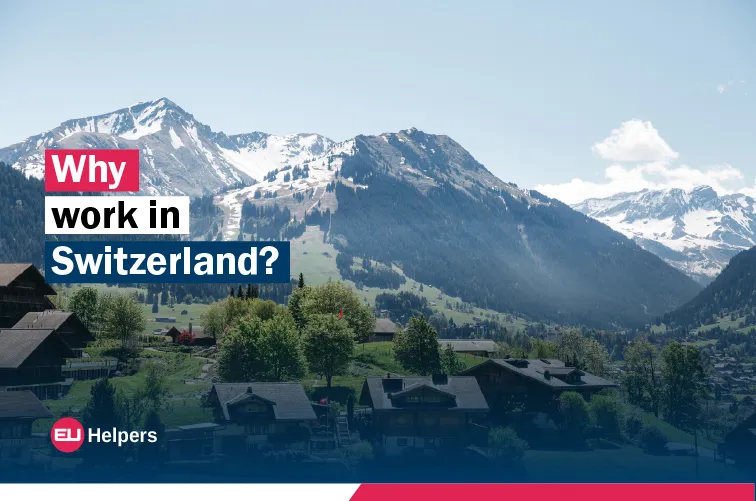
Switzerland's Alpine landscape provides unmatched outdoor lifestyle access. World-class skiing at destinations including Zermatt, St. Moritz, Verbier, Davos, and many others. Hiking and mountaineering opportunities across the country. Pristine mountain lakes including Lake Geneva, Lake Zurich, Lake Lucerne, and many others.
Environmental protection
Switzerland has among Europe's highest environmental standards with clean air, pristine water, protected natural areas, and strong environmental regulations.
Public safety
Switzerland consistently ranks among the world's safest countries with very low crime rates.
Cultural richness
Swiss cultural life spans world-class museums, classical music (Zurich Opera, Lucerne Festival), diverse cuisine reflecting German, French, Italian, and other influences, and rich cultural heritage across all Swiss regions.
World-Class Career Opportunities in Specialized Sectors
Switzerland offers exceptional career opportunities in specific sectors where the country has global competitive advantages.
Global center of private banking and wealth management
Switzerland is the world's leading center for private banking and wealth management with UBS, Credit Suisse (now integrated into UBS following recent developments), Julius Baer, Pictet, Lombard Odier, and many others. This creates exceptional career opportunities for specialized banking and wealth management professionals.
Major pharmaceutical industry hub
Basel and surrounding region hosts Novartis and Roche — two of the world's largest pharmaceutical companies. Various other pharmaceutical operations create substantial specialized employment. Swiss pharmaceutical industry offers premium compensation and world-class research opportunities.
Growing technology sector
Zurich has emerged as a major European technology hub. Google's Zurich office is Google's largest engineering office outside the US. Microsoft, IBM, Amazon, Apple, and many other technology companies operate substantial Swiss operations. Swiss universities (ETH Zurich, EPFL) rank among the world's best for computer science and engineering.
International organization capital
Geneva hosts UN European headquarters (with UNOG), plus WHO (World Health Organization), WTO (World Trade Organization), ILO (International Labour Organization), UNHCR, WIPO (World Intellectual Property Organization), IOM (International Organization for Migration), and many other international organizations. Basel hosts Bank for International Settlements. This creates substantial international civil service employment.
Major multinational corporations
Switzerland hosts headquarters of many major multinational corporations: Nestlé (one of the world's largest food companies based in Vevey), ABB (major electrical equipment and automation), Schindler (elevators and escalators), Adecco, Nespresso, Rolex, Swatch Group, Zurich Insurance Group, Swiss Re, Chubb (insurance), Glencore (commodities), and many others.
Precision manufacturing and watchmaking
Swiss precision manufacturing tradition continues with watchmaking (Rolex, Patek Philippe, Omega, TAG Heuer, and many others), precision instruments, medical devices (Ypsomed, Sonova, and others), and various other precision manufacturing.
Insurance industry concentration
Zurich hosts Zurich Insurance Group, Swiss Re, Chubb, and various other insurance operations making the city one of the world's important insurance centers.
Multilingual Environment and International Community
Swiss multilingualism creates a distinctive employment environment.
Four official languages plus English
Switzerland has four official languages: German (about 63% of population, spoken in German-speaking Switzerland including Zurich, Basel, Bern), French (about 23%, spoken in French-speaking Switzerland including Geneva, Lausanne), Italian (about 8%, spoken in Ticino), and Romansh (small area of Grisons). English is widely used in international operations particularly in Zurich, Basel, and Geneva.
Language accessibility for various backgrounds
The multilingual environment creates language accessibility for workers from various backgrounds. English speakers find substantial opportunities particularly in international operations. German speakers access German-speaking Switzerland. French speakers access French-speaking Switzerland. Italian speakers access Ticino.
Highly educated multilingual workforce
Swiss workforce is generally highly multilingual with education emphasizing language learning. This creates communication accessibility across different sectors.
Substantial international community
Zurich and Geneva have substantial international communities. Geneva particularly has enormous international community given international organizations. Basel has substantial pharmaceutical industry international community.
Swiss Political Stability and Neutrality
Swiss political characteristics provide unmatched security and stability.
Legendary political stability
Switzerland has been continuously stable politically for centuries. Swiss neutrality has kept the country out of European wars since the early modern period. Swiss federal structure and direct democracy tradition support political stability.
Neutral foreign policy
Swiss neutrality provides diplomatic security. Switzerland is not a member of NATO and maintains neutral stance internationally, though the country maintains close ties with EU and Western nations.
Direct democracy tradition
Swiss direct democracy allows citizens to vote on major issues through referendums. This tradition supports political stability and civic engagement.
Strong rule of law
Swiss legal system is highly developed with strong protection of individual rights, contract enforcement, and property rights.
Federalism providing local governance
Swiss federal system means substantial governance occurs at cantonal and communal levels, providing regional variation and local governance responsiveness.
Exceptional Swiss Healthcare and Education
Swiss public services are among the world's best.
World-leading Swiss healthcare system
Swiss healthcare consistently ranks among the world's best. The Swiss system combines mandatory health insurance (which workers purchase individually — a specific Swiss feature) with excellent public and private healthcare providers. Waiting times are minimal for most services. Quality of care is exceptional.
Excellent Swiss education
Swiss public education is among the world's best. Swiss vocational training (apprenticeship system) is world-renowned for combining education with practical work experience. Swiss universities including ETH Zurich, EPFL Lausanne, University of Zurich, University of Geneva, and others rank among the world's best.
International school options
Swiss cities particularly Zurich and Geneva have substantial international schools serving expatriate families.
Alpine Environment and Outdoor Lifestyle
Swiss natural environment is exceptional.
World-class Alpine skiing
Swiss skiing at Zermatt (with the Matterhorn), St. Moritz, Verbier, Davos, Klosters, Grindelwald, Wengen, Mürren, Saas-Fee, Andermatt, and many other destinations offers world-class experiences.
Extensive hiking and mountaineering
Alpine hiking network is extensive and well-maintained. Mountaineering opportunities across the Swiss Alps.
Pristine lakes
Lake Geneva, Lake Zurich, Lake Lucerne, Lake Constance, Lake Maggiore, Lake Neuchâtel, and many other Swiss lakes provide summer recreation and beautiful settings for cities.
Environmental leadership
Switzerland has among Europe's strongest environmental protections with substantial protected natural areas, strict environmental regulations, and general environmental consciousness.
Honest Recognition of Swiss Challenges
Complete understanding requires recognizing Swiss challenges.
High cost of living, particularly housing
Swiss cost of living is among the world's highest, particularly for housing in Zurich, Geneva, and other major cities. Rent, restaurant meals, and services are substantially more expensive than most other European countries.
Limited access for non-EU/EFTA citizens
Swiss labor market access for non-EU/EFTA workers is genuinely constrained by quota systems. Access primarily requires highly specialized status in shortage occupations. General workers or less specialized professionals face genuine challenges accessing Swiss employment as non-EU/EFTA citizens.
Long residence requirements
Swiss residence requirements for permanent residence (typically 10 years) and citizenship (typically 10 years plus various conditions) are among Europe's longest.
Integration expectations
Swiss integration culture has specific expectations about language learning (particularly for residents outside international operations), civic participation, and integration into Swiss society.
Health insurance costs
Swiss workers must purchase their own health insurance (unlike systems where insurance is deducted from salary). Health insurance premiums are substantial though quality of care is exceptional.
Housing market challenges
Swiss housing market particularly in Zurich and Geneva is expensive and competitive. Finding rental housing can require significant search time.
Cultural and social integration
While Swiss society is welcoming, deep integration into Swiss social circles can take time. Swiss friendships and social relationships develop gradually.
How EU Helpers Supports Workers Considering Switzerland
EU Helpers provides honest guidance about Swiss opportunities recognizing both the substantial advantages and genuine constraints. EU Helpers helps workers evaluate whether Swiss opportunities fit their specific circumstances given nationality (EU/EFTA versus non-EU/EFTA affecting access), qualifications, and career goals. For workers with appropriate profiles for Swiss opportunities, EU Helpers supports document preparation and helps identify legitimate Swiss employers. For workers whose situations may not fit Swiss access constraints, EU Helpers helps consider alternative European destinations.
You can explore job seeker support from EU Helpers for guidance on whether Swiss opportunities fit your specific circumstances.
Legal Notes and Important Disclaimers
Swiss employment, immigration, and living conditions continue evolving. This article is informational and educational, not legal advice. Verify current information through official Swiss sources.
Final Guidance
Working in Switzerland offers genuinely exceptional advantages: some of the world's highest salaries, consistently top-ranked quality of life in Zurich and Geneva, world-class career opportunities in Swiss specialized sectors (private banking and wealth management, pharmaceuticals with Novartis and Roche, technology with Google's largest non-US engineering office plus many others, international organizations centered on Geneva, major multinational corporations including Nestlé, ABB, Schindler, and many others), exceptional Alpine natural environment, world-leading healthcare and education, legendary Swiss stability and neutrality, and multilingual environment accommodating various language backgrounds.
However, Swiss access varies fundamentally by nationality. EU/EFTA citizens have relatively straightforward access through bilateral agreement free movement. Non-EU/EFTA citizens face strict Swiss quotas typically limiting access to highly specialized workers in shortage occupations. Swiss cost of living is among the world's highest requiring substantial compensation to maintain reasonable lifestyle. Swiss residence requirements for permanent residence and citizenship are among Europe's longest.
For workers who can access the Swiss labor market — particularly EU/EFTA citizens or highly specialized non-EU/EFTA professionals in shortage occupations — Switzerland offers a genuinely exceptional combination of opportunities that few other countries can match. For workers whose situations may not fit Swiss access constraints, various alternative European destinations offer excellent opportunities with more accessible pathways.
If you are exploring whether Switzerland fits your career goals, you can begin with structured job seeker support from EU Helpers for guidance on whether Swiss opportunities fit your specific circumstances given your nationality, qualifications, and career goals.
FAQs
Switzerland offers a rare combination of advantages: among the world's highest salaries, exceptional quality of life (Zurich and Geneva consistently top global livability rankings), world-class career opportunities in specialized sectors (private banking, pharmaceuticals with Novartis and Roche, technology hub, international organizations centered on Geneva, major multinational corporations), exceptional Alpine natural environment, world-leading healthcare and education, legendary Swiss stability and neutrality, and multilingual environment. These advantages make Switzerland genuinely attractive for workers who can access its labor market.
Swiss salaries are among the world's highest in Europe across most sectors and skill levels. Specialized professionals in Swiss key sectors (private banking, pharmaceuticals, technology, international organizations) earn premium compensation by global standards. Even middle-skill positions typically pay well by European standards. Combined with strong Swiss franc and Swiss financial stability, Swiss compensation provides substantial value for accumulated savings.
Yes, Swiss cost of living is among the world's highest, particularly for housing in Zurich, Geneva, and other major cities. Rent for apartments, restaurant meals, and various services are substantially more expensive than most other European countries. However, Swiss compensation levels typically provide reasonable purchasing power for qualified workers with appropriate cost management, particularly outside luxury housing markets.
No, Switzerland is not an EU member. Switzerland is a member of EFTA (European Free Trade Association) with bilateral agreements with the EU including free movement of workers for EU/EFTA citizens. Swiss labor market accessibility varies fundamentally by nationality.
Switzerland has four official languages (German, French, Italian, Romansh). English is widely used in international operations particularly in Zurich, Basel, and Geneva. The language required depends on target region and role. For local integration and many positions, learning German, French, or Italian depending on region significantly enhances opportunities and quality of life.
Switzerland is the world's leading center for private banking and wealth management. Major Swiss banks include UBS (now including former Credit Suisse operations), Julius Baer, Pictet, Lombard Odier, and many others. Zurich particularly hosts substantial banking activity. Career opportunities span private banking, wealth management, investment banking, compliance, risk management, and various other specializations.
Basel and surrounding region hosts Novartis and Roche — two of the world's largest pharmaceutical companies. Various other pharmaceutical operations create substantial employment opportunities. Swiss pharmaceutical industry offers premium compensation, world-class research facilities, and specialized career opportunities across drug discovery, development, manufacturing, regulatory affairs, and commercial functions.
Zurich has emerged as a major European technology hub. Google's Zurich office is Google's largest engineering office outside the US, employing thousands of engineers. Microsoft, IBM, Amazon, Apple, and many other technology companies operate substantial Swiss operations. Swiss universities including ETH Zurich rank among the world's best for computer science and engineering.
Geneva hosts UN European headquarters plus WHO (World Health Organization), WTO (World Trade Organization), ILO (International Labour Organization), UNHCR (UN Refugee Agency), WIPO (World Intellectual Property Organization), and many other international organizations. Basel hosts Bank for International Settlements. This creates substantial international civil service employment for qualified international professionals.
Swiss access for non-EU/EFTA citizens is genuinely limited by quota systems. Access primarily requires highly specialized status in Swiss shortage occupations with employer sponsorship demonstrating no Swiss/EU/EFTA worker could fill the position. For highly specialized professionals in Swiss shortage occupations, Switzerland offers exceptional opportunities despite the quota system. For general professionals or less specialized workers, alternative European destinations often offer more accessible pathways.
Swiss taxation includes federal, cantonal, and communal taxes. Cantonal taxation varies substantially — some cantons offer very favorable tax arrangements. Overall taxation is generally lower than many EU countries at comparable income levels. Tax planning is recommended particularly for higher-income workers.
Swiss quality of life is consistently among the world's best. Zurich and Geneva top global livability rankings. Swiss public infrastructure functions with legendary precision — trains run on time, public services work reliably. Swiss public safety is exceptional. Alpine natural environment provides unmatched outdoor access. Healthcare and education are world-leading. Cultural life is rich across multiple traditions.
Yes. EU/EEA workers' family members have free movement. Non-EU/EFTA workers on specialized permits can typically bring spouses and dependent children through family reunification. Family members access Swiss healthcare and education. International schools serve expatriate families in major cities.
Yes, Switzerland consistently ranks among the world's safest countries with very low crime rates and stable political environment. Swiss cities are safe throughout day and night. Swiss neutrality has kept the country peaceful for centuries.
Yes but requiring substantial residence. Permanent residence (Niederlassungsbewilligung / permis d'établissement) typically requires 10 years of legal residence (5 years for some EU/EFTA and specific arrangements). Swiss citizenship typically requires 10 years of legal residence with various conditions including language proficiency, integration assessment, and other requirements. Swiss citizenship is one of the world's most valuable but requires substantial commitment.
Main challenges: high cost of living particularly for housing, limited access for non-EU/EFTA workers through quota system, long residence requirements for permanent residence and citizenship (typically 10 years), integration expectations including language learning, and health insurance costs (Swiss residents purchase individual health insurance). These challenges are manageable for many workers but require honest consideration.
EU Helpers provides honest guidance about Swiss opportunities recognizing both substantial advantages and genuine constraints. EU Helpers helps workers evaluate whether Swiss opportunities fit specific circumstances given nationality (EU/EFTA versus non-EU/EFTA affecting access), qualifications, and career goals. For workers with appropriate profiles, EU Helpers supports document preparation and helps identify legitimate Swiss employers. For workers whose situations may not fit Swiss access constraints, EU Helpers helps consider alternative European destinations.