
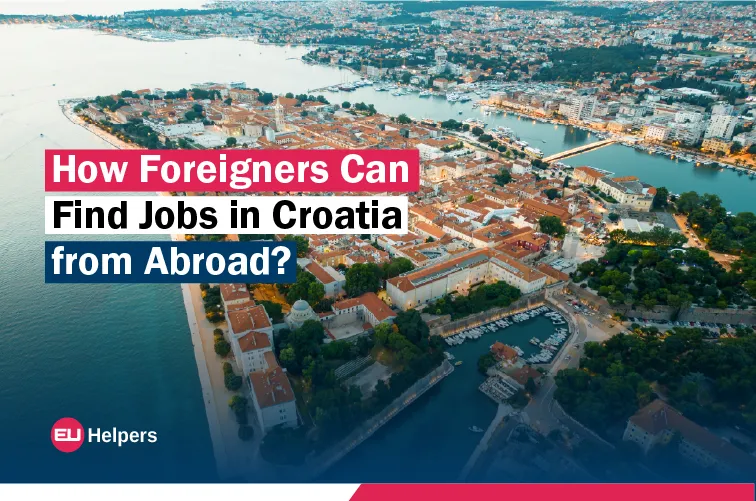

How Foreigners Can Find Jobs in Croatia from Abroad — EU Helpers Guide
Croatia has established itself as an increasingly attractive destination for foreign workers, combining its position as a full EU member since 2013 with Schengen membership since January 2023 and eurozone membership also since January 2023, exceptional natural beauty along the Adriatic coast and inland landscapes, growing tourism economy that has become one of Europe's most dynamic, developing modern economy, and immigration frameworks that have progressively welcomed foreign workers particularly to address labor shortages in tourism, construction, healthcare, and various other sectors. As a full EU member, Schengen Area participant, eurozone country, and home to approximately 3.9 million residents, Croatia occupies a strategic position on the Adriatic bordering Slovenia, Hungary, Serbia, Bosnia and Herzegovina, and Montenegro, with major Adriatic port access and one of the longest coastlines in Europe with over a thousand islands. The Croatian economy is built on substantial tourism (Croatia has become one of Europe's most important tourist destinations with over 20 million visitors annually attracted by the Dalmatian and Istrian coasts, Dubrovnik as one of the world's most-visited cities, various Adriatic islands, and historical destinations); shipbuilding centered on facilities including Uljanik, 3. Maj, and Brodosplit; growing technology and IT sector centered in Zagreb (with substantial international outsourcing operations and Croatian tech companies); agricultural production including wine (Croatia has substantial and internationally recognized wine industry), olive oil, and various crops; substantial food processing; energy sector including hydroelectric power; construction across major cities and coastal areas driven by tourism development; and various manufacturing and service sectors.
Beyond economic opportunities, Croatia attracts foreign workers and increasingly digital nomads for distinctive reasons. The country offers substantially lower cost of living than Western European destinations combined with full EU membership benefits, exceptional Adriatic coastline and Mediterranean climate, growing digital nomad culture (Croatia introduced a digital nomad visa in 2021 becoming one of the first EU countries with formal digital nomad framework), rich cultural heritage across the country, and welcoming Croatian society. Zagreb (the capital), Split, Rijeka, and various coastal cities offer distinctive urban experiences.
The Croatian immigration framework operates within EU standards with single permit (combined work and residence permit) for non-EU workers, EU Blue Card for highly qualified workers, and various other pathways.
For foreign workers from countries like Bosnia and Herzegovina (with substantial community given historical ties and linguistic similarities), Serbia, North Macedonia, Ukraine (with growing community), Turkey, India, Nepal, the Philippines, and many others, Croatia offers genuinely accessible pathways particularly for tourism, construction, healthcare, and other sectors experiencing labor shortages.
This EU Helpers guide provides comprehensive practical guidance for foreign workers considering Croatian employment.
EU Helpers has supported international applicants in navigating European immigration and employment systems. Always verify current rules through official Croatian sources.
Why Croatia Is an Attractive Destination for Foreign Workers
Croatia offers a distinctive combination of full EU membership benefits, exceptional Mediterranean lifestyle, growing economy, and accessible immigration pathways.
Full EU, Schengen, and eurozone membership
Croatia has been a full EU member since 2013, Schengen member since January 2023, and eurozone member since January 2023. This provides comprehensive EU integration benefits including free movement, common currency, and standard EU worker protections.
Substantial and growing tourism industry
Croatian tourism is one of Europe's most dynamic with over 20 million visitors annually. Coastal destinations along Dalmatia and Istria, Dubrovnik as one of the world's most-visited cities, various Adriatic islands (Hvar, Korčula, Brač, and many others), and inland destinations create substantial tourism employment. Croatia's coastline is among the world's most beautiful.
Growing technology sector
Zagreb has developed technology and IT sector with international outsourcing operations and Croatian tech companies. Various international companies operate Croatian technology operations.
Substantial shipbuilding industry
Croatian shipbuilding at facilities including Uljanik, 3. Maj, Brodosplit, and various others creates industrial employment.
Rich cultural heritage
Croatia has exceptional cultural heritage including UNESCO World Heritage sites (Dubrovnik Old Town, Diocletian's Palace in Split, Plitvice Lakes National Park, and various others), Roman ruins, medieval towns, and diverse cultural traditions.
Accessible cost of living
Croatian cost of living is substantially lower than Western European destinations while providing full EU membership benefits and eurozone convenience.
Digital nomad visa
Croatia introduced digital nomad visa in 2021 becoming one of the first EU countries with formal digital nomad framework. This supports remote workers seeking Croatian residence.
Single permit for non-EU workers
Croatian single permit provides pathway for non-EU skilled workers.
EU Blue Card
Available for highly qualified workers.
Adriatic climate and lifestyle
Mediterranean climate along the coast, beautiful natural environment, and Adriatic lifestyle appeal to workers seeking quality of life.
Established Bosnian and regional communities
Substantial Bosnian community in Croatia given linguistic similarities (Croatian and Bosnian are essentially the same language), historical ties, and geographic proximity. Growing Serbian, North Macedonian, and other regional communities.
Growing pharmaceutical and healthcare sectors
Various Croatian and international operations in pharmaceuticals and healthcare.
Path to Croatian citizenship
After typically 8 years of legal residence, Croatian citizenship becomes possible with various conditions.
Who Can Apply for Jobs in Croatia from Abroad
Croatian accessibility varies by nationality and sector.
EU/EEA citizens with free movement
Full free movement creating substantial existing communities from Germany, Italy, Austria, Slovenia, and other EU countries.
Bosnian and regional workers
Substantial Bosnian community given linguistic similarities and historical ties. Serbs, North Macedonians, and others find natural connections.
Non-EU skilled workers using single permit
Non-EU workers pursue Croatian single permit through employer sponsorship.
Highly qualified workers using EU Blue Card
For workers meeting Blue Card requirements.
Tourism and hospitality professionals
Given Croatia's substantial tourism sector.
Technology professionals
Software developers, IT specialists for Zagreb technology sector.
Construction workers
Given growing Croatian construction driven by tourism development.
Healthcare professionals
Doctors, nurses with Croatian language proficiency and qualification recognition.
Digital nomads
Various Croatian residence arrangements including specific digital nomad visa.
Various other categories
Depending on specific circumstances.
Understanding the Croatian Work and Residence Permit System
EU/EEA free movement
EU/EEA citizens have full free movement.
Single permit for non-EU workers
Non-EU skilled workers pursue Croatian single permit through employer sponsorship.
EU Blue Card
For highly qualified workers.
Digital Nomad visa
Croatia introduced digital nomad visa in 2021 for remote workers working for foreign employers.
Long-term residence
After 5 years of legal residence, permanent residence becomes possible.
Croatian citizenship
Typically 8 years of legal residence with various conditions.
Schengen access
Full Schengen membership.
Step-by-Step Process: Finding a Job in Croatia from Abroad
Step 1: Honest self-assessment
Evaluate qualifications and target sectors.
Step 2: Choose pathway
EU/EEA citizens proceed with registration. Non-EU workers evaluate single permit or EU Blue Card. Remote workers consider digital nomad visa.
Step 3: Language preparation
Croatian for many positions. English sufficient for many technology and international operations.
Step 4: Identify suitable employers
Croatian tourism operators, technology companies, healthcare providers, and various sector employers.
Step 5: Apply through legitimate channels
Croatian job portals, employer career pages, LinkedIn, and recruitment agencies.
Step 6: Interview and offer
Step 7: Permit application
Through employer for non-EU workers.
Step 8: Arrival and Croatian registration
Where to Find Real Job Opportunities in Croatia
Croatian job portals (MojPosao, Posao.hr), employer career pages, LinkedIn, and recruitment agencies. You can also explore job seeker support from EU Helpers for guidance.
Documents You Need to Prepare in Advance
Valid passport, educational certificates with translations, professional certifications, language certificates, employment history documentation, criminal background certificates, medical certificate.
Salary Expectations and Cost Breakdown
Croatian salaries are lower than Western European averages but combined with lower cost of living provide reasonable purchasing power. Tourism, technology, and specialized positions typically pay more. Cost of living is substantially lower than Western European destinations.
Rights and Benefits of Working in Croatia
Comprehensive Croatian and EU employment rights. Healthcare access. Education access. Path to Croatian citizenship after 8 years.
Sector-by-Sector Opportunities
Tourism and hospitality (major sector). Technology in Zagreb. Shipbuilding. Healthcare. Manufacturing. Construction. Agricultural and wine sectors.
Common Mistakes and Refusal Reasons
Underestimating language importance, choosing wrong sector fit, and various procedural issues.
How EU Helpers Supports Croatian Job Seekers
EU Helpers provides guidance about Croatian opportunities, helps evaluate fit, supports document preparation, and helps identify legitimate Croatian employers.
Legal Notes and Important Disclaimers
Croatian immigration rules continue evolving. This article is informational and educational, not legal advice.
Final Guidance
Finding a job in Croatia from abroad is genuinely accessible across diverse sectors including tourism (Croatia is one of Europe's major tourist destinations), technology (Zagreb tech sector), shipbuilding, healthcare, and various others. Croatia offers full EU, Schengen, and eurozone membership combined with Mediterranean lifestyle, exceptional Adriatic coast, digital nomad-friendly framework, and cost of living substantially lower than Western European destinations.
If you are ready to explore Croatia as a long-term destination, you can begin with structured job seeker support from EU Helpers and move forward with a clearer roadmap toward legal employment in Croatia.
FAQs
Yes, Croatia offers accessible pathways. EU/EEA citizens have full free movement. Non-EU workers pursue single permit or EU Blue Card. Croatia has substantial tourism sector, growing technology, shipbuilding, and various other sectors with foreign worker demand.
Yes, Croatia has been a full EU member since 2013, Schengen member since January 2023, and eurozone member since January 2023. This provides comprehensive EU integration benefits.
Croatian language is important for many positions particularly in tourism, healthcare, and general Croatian employment. For technology and international operations, English is often sufficient. Bosnian and Serbian speakers find Croatian accessible given linguistic similarities.
Tourism and hospitality (major growing sector), technology in Zagreb, shipbuilding, healthcare, construction, and various other sectors.
Croatia introduced digital nomad visa in 2021 allowing remote workers working for foreign employers to reside in Croatia. This makes Croatia one of the first EU countries with formal digital nomad framework, supporting Croatia's emerging position as remote work destination.
The Croatian single permit is a combined work and residence permit for non-EU skilled workers. Employer typically initiates the application.
Croatian salaries are lower than Western European averages but combined with lower cost of living provide reasonable purchasing power. Technology and tourism management positions typically pay competitively by regional standards.
Yes. EU/EEA workers have family free movement. Single permit and EU Blue Card holders can bring family through reunification.
Croatian tourism is one of Europe's most dynamic with over 20 million annual visitors. Coastal destinations, Dubrovnik, various islands, and inland attractions create substantial employment.
Zagreb is Croatia's capital with growing technology sector, various international operations, cultural life, and accessible cost of living. Growing digital nomad community.
Yes. After 5 years of legal residence, permanent residence becomes possible. Croatian citizenship is possible after typically 8 years with various conditions. Croatian citizenship provides full EU rights.
Substantial Bosnian community given linguistic similarities (Croatian and Bosnian are essentially the same language) and historical ties. Croatian pathway is particularly accessible for Bosnian speakers.
Croatia is generally safe as EU member with welcoming attitude toward foreigners.
Croatia's Adriatic coastline is among the world's most beautiful with over a thousand islands, historic coastal cities, and pristine natural environment. Coastal life is central to Croatian appeal.
EU Helpers provides guidance about Croatian opportunities including realistic assessment of sectors and accessibility, helps evaluate fit, supports document preparation, helps identify legitimate Croatian employers, and provides realistic information about Croatian employment market.