
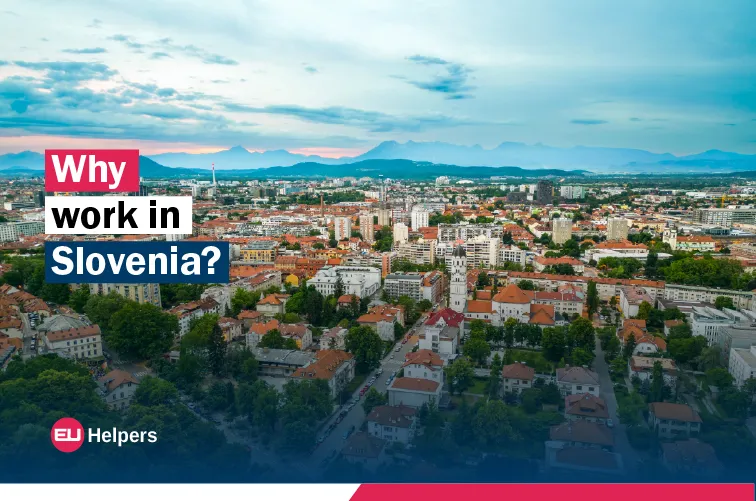
Why Work in Slovenia? A Complete EU Helpers Guide for International Professionals
Slovenia, the dynamic Central European nation bordering Italy to the west, Austria to the north, Hungary to the northeast, and Croatia to the south and southeast, and facing the Adriatic Sea (with a small but beautiful coastline of about 47 kilometers), occupies an exceptionally attractive position in Central Europe for those seeking the rare combination of being one of the most prosperous smaller EU member states (Slovenia has the highest GDP per capita among the post-Yugoslav successor states and is one of the most prosperous of the EU's smaller members), full EU and Schengen and eurozone integration (Slovenia joined the EU in 2004 in the largest EU enlargement to date, Schengen in 2007, the eurozone in 2007 — making Slovenia the first of the 2004 EU enlargement countries to join the eurozone, NATO in 2004, and the Council of Europe in 1993), exceptional natural beauty (Slovenia is often called "the Green Heart of Europe" with about 60% forest coverage making it one of the most forested countries in Europe, the spectacular Julian Alps including Mount Triglav — Slovenia's highest peak at 2,864 meters and the country's national symbol that appears on the national coat of arms and flag, with Triglav National Park being Slovenia's only national park covering the heart of the Julian Alps, the famous Lake Bled with its iconic Bled Island and the picturesque Pilgrimage Church of the Assumption of Maria — one of Slovenia's most photographed locations and a globally recognized symbol of Slovenian natural beauty, Lake Bohinj — the largest natural lake in Slovenia and located deeper in the Julian Alps with more pristine character than Bled, the Postojna Cave — one of the world's most famous karst cave systems extending over 24 kilometers with the famous Postojna Cave Train, the spectacular Predjama Castle — built into a cliff face above the Postojna Cave system, the Škocjan Caves — UNESCO World Heritage Site featuring one of the world's largest known underground river canyons, the spectacular Soča River — famous for its emerald green color and rafting opportunities, the Slovenian Riviera with charming coastal towns including Piran with its Venetian heritage, the beautiful Vipava Valley with wine production, and the picturesque countryside throughout the country), distinctive Slovene language and culture (Slovene is a South Slavic language with notable distinctive features including the dual grammatical number — a feature rarely found in modern Indo-European languages with Slovene being one of the very few languages worldwide that preserves this ancient grammatical category that distinguishes between one, two, and three or more), rich cultural heritage including notable UNESCO World Heritage Sites (the Heritage of Mercury — Almadén and Idrija shared with Spain — recognizing the historic mercury mining at Idrija, the Škocjan Caves — recognized for the spectacular underground river canyon and karst landscape, the Ancient and Primeval Beech Forests of the Carpathians and Other Regions of Europe — recognizing some of Europe's most pristine beech forests including in Slovenia, the Prehistoric Pile Dwellings around the Alps shared with Switzerland, Austria, and other countries — recognizing prehistoric pile dwelling settlements around Alpine lakes, and the Works of Jože Plečnik in Ljubljana — Human-Centred Urban Design — recognizing the famous Slovenian architect Jože Plečnik's distinctive urban design work in Ljubljana which has shaped the city's distinctive character), notable wine tradition (Slovenia has rich wine heritage dating from Roman times with three main wine regions — Primorska in the west influenced by Mediterranean climate, Posavje in the southeast, and Podravje in the northeast, with the famous Old Vine — the world's oldest grapevine still producing fruit, approximately 400 years old, growing in Maribor and listed in the Guinness Book of World Records), distinctive Slovenian cuisine (with Slovenia being one of the few countries where you can have breakfast on the Adriatic coast and lunch in the Alps), exceptional quality of life (Slovenia consistently ranks well in global quality of life, happiness, and human development measures), the distinctive Slovenian heritage of independence (Slovenia declared independence from Yugoslavia on June 25, 1991, following the Ten-Day War — one of the shortest armed conflicts in modern European history — making Slovenia one of the first post-Yugoslav successor states to achieve independence), accessible cost of living relative to Western European EU averages, and significant Slovenian diaspora connections (with substantial Slovenian communities in Austria, Italy, the US, Canada, Australia, Argentina, and many other countries). With a population of approximately 2.1 million (making Slovenia one of the EU's smaller member states) and covering about 20,271 square kilometers, Slovenia has firmly established itself as one of the most attractive smaller Central European EU destinations. The capital Ljubljana (the vibrant historic capital and main business, IT, and cultural hub, with iconic landmarks including Ljubljana Castle perched on Castle Hill providing panoramic views of the city, the famous Triple Bridge — Tromostovje designed by Jože Plečnik in 1930-1932 connecting the historic medieval town with the modern city, the Ljubljanica River running through the city center with the various Plečnik-designed bridges including the Dragon Bridge — Zmajski most adorned with the famous dragon statues that are Ljubljana's symbol, the Cobbler's Bridge — Čevljarski most also designed by Plečnik, Prešeren Square — Prešernov trg named after Slovenia's national poet France Prešeren whose statue stands in the square, the historic Old Town — Stari grad with charming narrow streets, the Central Market — Ljubljana Central Market also designed by Plečnik with its distinctive colonnade along the Ljubljanica River, the National and University Library — NUK designed by Plečnik considered one of his masterpieces, Tivoli Park — the largest park in Ljubljana, and Ljubljana being one of Europe's greenest capitals — European Green Capital 2016 reflecting the city's commitment to sustainability and quality of life), along with Maribor (Slovenia's second-largest city with notable Habsburg-era heritage, the historic Old Town with the Lent district along the Drava River — where the famous Old Vine — Stara trta grows, approximately 400 years old and listed in the Guinness Book of World Records as the world's oldest grapevine still producing fruit, with the annual celebration of the grape harvest, the Maribor Cathedral, the Pohorje mountain range with skiing opportunities and the Maribor Pohorje Ski Resort, and the city being European Capital of Culture in 2012), Celje (in eastern Slovenia with notable castle heritage including the famous Celje Castle — one of Slovenia's largest medieval castles and the historic seat of the Counts of Celje, the powerful medieval Slovenian dynasty), Koper (Capodistria — the main Slovenian Adriatic coastal city with notable Venetian heritage given the historic Venetian rule of Istria, and the Port of Koper — Slovenia's only major commercial seaport), Kranj (gateway to the Julian Alps and the famous Krvavec ski resort), Velenje (with significant industrial heritage including the Gorenje home appliances company headquarters), Novo Mesto (in southeastern Slovenia, home to Krka pharmaceutical company headquarters — one of Central Europe's largest pharmaceutical companies), Ptuj (one of Slovenia's oldest cities with notable Roman heritage and the famous Ptuj Castle, the historic Old Town, and the famous Kurentovanje carnival in February featuring the distinctive Kurent traditional masks — recognized by UNESCO as Intangible Cultural Heritage), Murska Sobota (in the Prekmurje region with distinctive cultural heritage), and Piran (the picturesque Adriatic coastal town with distinctive Venetian architecture), host major Slovenian and multinational companies, technology hubs, financial institutions, and innovative start-ups. For applicants from anywhere considering Slovenia, the country offers structured immigration pathways including the single permit (enotno dovoljenje — combining work and residence authorization), the EU Blue Card, the ICT permit, the D visa, self-employment routes, the researcher route, family reunification provisions, and a clear long-term route toward Slovenian permanent residence and eventually Slovenian citizenship with full EU citizenship benefits. At EU Helpers, candidates regularly ask the fundamental question: why should I consider Slovenia specifically?
This complete EU Helpers guide answers that question in depth and walks you through the genuine, practical, and long-term reasons that make Slovenia one of Central Europe's most attractive destinations.
Why Slovenia Is Genuinely Distinctive Among European Destinations
Slovenia occupies a distinctive position in Central Europe — full EU and eurozone integrated (first of the 2004 EU enlargement to join eurozone), with exceptional natural beauty ("the Green Heart of Europe"), distinctive Slovene culture (with the rare dual grammatical number), exceptional quality of life, and accessible cost of living.
Full EU, Schengen, and Eurozone Integration
Slovenia is an EU member (since 2004), Schengen member (since 2007), eurozone member (adopted euro in 2007 — making Slovenia the first of the 2004 EU enlargement countries to join the eurozone), NATO member (since 2004), and Council of Europe member (since 1993). This provides comprehensive European integration benefits.
One of the Most Prosperous Smaller EU Member States
Slovenia has the highest GDP per capita among the post-Yugoslav successor states and is one of the most prosperous of the EU's smaller members.
Exceptional Natural Beauty — "the Green Heart of Europe"
Slovenia is often called "the Green Heart of Europe" with about 60% forest coverage making it one of the most forested countries in Europe. The country features the spectacular Julian Alps with Mount Triglav (Slovenia's highest peak at 2,864 meters and the country's national symbol), Triglav National Park, the famous Lake Bled with its iconic island church, Lake Bohinj, Postojna Cave, the Škocjan Caves (UNESCO listed), the spectacular Soča River, the Slovenian Riviera with Piran, and beautiful countryside throughout.
Distinctive Slovene Language
Slovene is a South Slavic language with notable distinctive features including the dual grammatical number — a feature rarely found in modern Indo-European languages. Slovene is one of the very few languages worldwide that preserves this ancient grammatical category distinguishing between one, two, and three or more.
Rich Cultural Heritage with UNESCO Sites
Slovenia has multiple UNESCO World Heritage Sites including the Heritage of Mercury at Idrija, the Škocjan Caves, the Ancient and Primeval Beech Forests, the Prehistoric Pile Dwellings, and the Works of Jože Plečnik in Ljubljana.
Distinctive Plečnik Architectural Heritage
Slovenian architect Jože Plečnik's distinctive urban design work in Ljubljana has shaped the city's distinctive character with iconic landmarks including the Triple Bridge, the Dragon Bridge, the Cobbler's Bridge, the National and University Library, and the Central Market. The Works of Jože Plečnik are UNESCO World Heritage Site recognizing human-centred urban design.
Growing IT Sector Anchored by Outfit7
Slovenia has a growing IT sector anchored by Outfit7 — one of the world's most successful mobile gaming companies and creator of the Talking Tom and Friends franchise — and broader Ljubljana tech ecosystem.
Pharmaceutical Industry Significance
Slovenia has notable pharmaceutical sector with Krka (one of Central Europe's largest pharmaceutical companies headquartered in Novo Mesto) and Lek (subsidiary of Sandoz/Novartis).
Famous Lake Bled and Iconic Imagery
Lake Bled with its iconic Bled Island and the picturesque Pilgrimage Church of the Assumption of Maria is one of Slovenia's most photographed locations and a globally recognized symbol of Slovenian natural beauty.
Exceptional Quality of Life Rankings
Slovenia consistently ranks well in global quality of life, happiness, and human development measures, supporting attractive long-term residence prospects.
Independence Heritage
Slovenia declared independence from Yugoslavia on June 25, 1991, following the Ten-Day War — one of the shortest armed conflicts in modern European history. This makes Slovenia one of the first post-Yugoslav successor states to achieve independence.
Top Financial Reasons to Consider Slovenia
The financial rationale for working in Slovenia centers around accessible cost of living combined with full EU/eurozone benefits and rising salary levels.
Accessible Cost of Living
Slovenia has accessible cost of living compared to Western European EU averages, particularly outside central Ljubljana. Combined with full EU/eurozone benefits, this provides attractive purchasing power.
Rising Salary Levels
Slovenian salaries have been rising notably in IT, pharmaceutical, senior management, and specialized professional roles.
Eurozone Currency Convenience
Slovenia uses the euro (adopted in 2007 — making Slovenia the first of the 2004 EU enlargement countries to join the eurozone), providing currency stability and convenience for European business and personal matters.
Strong Worker Protections
Slovenia has labor laws providing paid vacation, public holidays, parental leave, and other worker protections within EU frameworks.
Comprehensive Healthcare
Slovenia has a healthcare system providing coverage for residents.
Quality Educational System Including Free Higher Education for EU Students
Slovenia offers a quality public education system, with free higher education for EU students and modest fees for other students.
Lifestyle and Quality-of-Life Benefits
Beyond money, Slovenia offers a distinctive lifestyle combining Central European character, exceptional natural beauty, Mediterranean coast access, and high quality of life.
Vibrant Capital Ljubljana
Ljubljana combines historical heritage (Ljubljana Castle, the historic Old Town with charming narrow streets), the distinctive Plečnik architectural heritage (the famous Triple Bridge — Tromostovje, the Dragon Bridge with its iconic dragon statues, the Cobbler's Bridge, the National and University Library — considered Plečnik's masterpiece, the Central Market with its distinctive colonnade), modern character (the growing tech ecosystem anchored by Outfit7, exceptional café culture, vibrant cultural scene), and exceptional green character (European Green Capital 2016 reflecting the city's commitment to sustainability). Ljubljana is one of Europe's greenest capitals.
Charming Maribor
Maribor, Slovenia's second-largest city, offers notable Habsburg-era heritage, the historic Old Town with the Lent district along the Drava River, the famous Old Vine (Stara trta — approximately 400 years old and the world's oldest grapevine still producing fruit), the Maribor Cathedral, the Pohorje mountain range with skiing opportunities, and was European Capital of Culture in 2012.
Other Distinctive Slovenian Cities
Celje (with the famous Celje Castle — one of Slovenia's largest medieval castles and the historic seat of the Counts of Celje). Koper (Capodistria — the main Slovenian Adriatic coastal city with notable Venetian heritage). Kranj (gateway to the Julian Alps). Velenje (with Gorenje home appliances headquarters). Novo Mesto (with Krka pharmaceutical headquarters). Ptuj (one of Slovenia's oldest cities with notable Roman heritage, the famous Ptuj Castle, and the famous Kurentovanje carnival featuring the distinctive Kurent traditional masks — recognized by UNESCO). Piran (the picturesque Adriatic coastal town with distinctive Venetian architecture). Each city offers distinctive character.
Spectacular Julian Alps and Triglav
The Julian Alps with Mount Triglav (Slovenia's highest peak at 2,864 meters and the country's national symbol that appears on the national coat of arms and flag) offer world-class hiking, climbing, skiing at resorts like Kranjska Gora, beautiful alpine lakes, and dramatic alpine scenery. Triglav National Park covers the heart of the Julian Alps.
Famous Lake Bled
Lake Bled with its iconic Bled Island and the picturesque Pilgrimage Church of the Assumption of Maria, plus Bled Castle perched on a cliff above the lake, is one of Slovenia's most beloved destinations and a globally recognized symbol of Slovenian natural beauty.
Spectacular Caves
Slovenia's spectacular cave systems include the famous Postojna Cave (one of the world's most famous karst cave systems extending over 24 kilometers with the famous Postojna Cave Train and home to the rare olm — the famous "human fish"), the spectacular Predjama Castle (built into a cliff face above the Postojna Cave system), and the Škocjan Caves (UNESCO listed featuring one of the world's largest known underground river canyons).
Distinctive Slovenian Coastline
Slovenia has a small but beautiful Adriatic coastline (about 47 kilometers) with charming coastal towns including Piran (with distinctive Venetian architecture), Portorož (the main Slovenian seaside resort), and Koper (the main commercial port).
Distinctive Slovenian Cuisine
Slovenian cuisine combines Central European, Mediterranean, and Balkan influences with distinctive specialties including potica (traditional rolled pastry with various fillings — recognized as a national dish), štruklji (rolled dumplings with various fillings), kranjska klobasa (Carniolan sausage — protected EU geographical indication), prekmurska gibanica (Prekmurje layered cake — protected EU geographical indication), idrijski žlikrofi (Idrija dumplings — protected EU geographical indication), Bled cream cake (kremšnita), Slovenian wines from the three main wine regions, and exceptional pastry tradition. Slovenia is one of the few countries where you can have breakfast on the Adriatic coast and lunch in the Alps.
Famous Slovenian Wine Tradition
Slovenia has rich wine heritage dating from Roman times with three main wine regions — Primorska (coastal — Mediterranean influence with wines like Refosco, Malvazija, and the distinctive orange wines), Posavje (in the southeast), and Podravje (in the northeast — known for the famous Cviček and dessert wines). The famous Old Vine in Maribor is the world's oldest grapevine still producing fruit (approximately 400 years old).
Distinctive Cultural Heritage
Slovenia has distinctive cultural heritage including the famous Kurentovanje carnival in Ptuj (featuring the distinctive Kurent traditional masks recognized by UNESCO as Intangible Cultural Heritage), exceptional folk culture, and distinctive Slovenian Christmas traditions.
Generally Safe
Slovenia has overall reasonable safety levels, with the country generally considered very safe for foreign residents.
Distinctive Slovenian Character
Slovenes are known for hospitality, hard work, environmental consciousness, love of nature, and quality-of-life orientation.
Continental and Sub-Mediterranean Climate
Slovenia has both continental and sub-Mediterranean climates depending on the region — continental in most of the country and sub-Mediterranean along the small Adriatic coast.
Strong Environmental Consciousness
Slovenes have strong environmental consciousness, supporting Slovenia's reputation as one of Europe's most environmentally conscious nations.
Growing International Community
Slovenia's growing IT sector, EU integration, and accessible cost of living have created international communities, particularly in Ljubljana.
Family-Friendly Society
Slovenia has family-oriented culture with public education, family allowances, parental leave, and family-friendly workplace policies.
Strategic Travel Position
Slovenia's strategic position at the intersection of Central Europe, the Mediterranean, and the Balkans provides excellent travel access to neighboring countries — Italy (with Venice just over 2 hours from Ljubljana), Austria (with Vienna and Graz easily accessible), Hungary, and Croatia.
Career Growth and Professional Opportunities
Slovenia's career environment is improving, with particularly strong opportunities in growing sectors.
Strong Career Pathways in Technology
For IT and tech professionals, Slovenia offers opportunities through Ljubljana's growing tech ecosystem anchored by Outfit7 (creator of Talking Tom and Friends) and broader tech activity.
Strong Career Pathways in Pharmaceutical
For pharmaceutical professionals, Slovenia's notable pharmaceutical sector (anchored by Krka — one of Central Europe's largest pharmaceutical companies in Novo Mesto, and Lek — Sandoz/Novartis subsidiary) creates substantial opportunities.
Manufacturing Opportunities
For manufacturing professionals, Slovenia's manufacturing tradition (with Gorenje, Krka, and broader industrial activity) creates opportunities.
Tourism and Hospitality Opportunities
For tourism and hospitality professionals, Slovenia's growing tourism industry creates opportunities.
Strong Foundation for European Careers
As an EU/Schengen/eurozone member, Slovenia provides a strong foundation for European careers.
Residency, Work Permit, and Legal Benefits
Working legally in Slovenia comes with structured immigration pathways and strong legal protections within the EU framework.
Structured Permit System
Foreign workers obtain residence through dedicated schemes including the single permit (enotno dovoljenje), EU Blue Card, ICT permit, self-employment routes, researcher route, family reunification provisions, and other pathways.
Family Reunification
Slovenia allows qualifying workers and residents to bring close family members.
Pathway to Slovenian Citizenship and EU Benefits
After qualifying continuous residence in Slovenia (typically 10 years and meeting other requirements including Slovenian language and integration), foreign nationals may become eligible for Slovenian citizenship by naturalization. Slovenian citizenship grants full EU citizenship benefits.
Healthcare, Education, and Social Benefits
Slovenian public services provide coverage for residents.
Healthcare System
Slovenia has a healthcare system providing coverage for residents.
Educational System Including Free Higher Education for EU Students
Slovenia offers a public education system with quality universities including the University of Ljubljana (founded in 1919 — Slovenia's largest), the University of Maribor, and others. Higher education is free for EU students.
Social Protections
Registered workers benefit from contributions toward pensions, healthcare, and other social protections.
Practical Considerations for Working in Slovenia
While Slovenia offers compelling benefits, applicants should also understand some practical considerations.
Slovenian Language Importance
Slovene is essential for most professional and daily life contexts, though English use is widespread in IT and international business contexts in Slovenia.
Smaller Market Size
Slovenia is a smaller EU country with a population of approximately 2.1 million, meaning the domestic market is smaller than larger EU countries.
Cultural Adjustments
Slovenian culture has distinctive features including environmental consciousness, love of nature and outdoor activities, hospitality, and quality-of-life orientation.
Required Documents and Step-by-Step Overview
While exact requirements depend on the specific permit and applicant profile, the general route involves coordination with the Slovenian Ministry of the Interior, Slovenian embassies and consulates abroad, the Upravna enota (Administrative Unit), and other authorities depending on the specific route.
Practical Tips for International Applicants Considering Slovenia
Tips From EU Helpers for Considering Slovenia
Carefully evaluate which permit category fits your profile — single permit (enotno dovoljenje), EU Blue Card, ICT permit, self-employment route, or others. Target Slovenian employers in growing sectors — IT (Outfit7 and broader tech ecosystem), pharmaceutical (Krka, Lek), manufacturing (Gorenje), and tourism. Take advantage of Slovenia's exceptional natural beauty and quality of life. Plan housing carefully — Slovenia offers different lifestyle options at accessible prices. Develop basic Slovenian language skills for daily life and integration, while leveraging English (widely used in IT contexts). Embrace Slovenia's environmental consciousness and outdoor culture. Always rely on the latest official guidance.
Final Guidance
Why work in Slovenia? Because few countries in Central Europe combine such a unique mix of full EU, Schengen, and eurozone integration (Slovenia was the first of the 2004 EU enlargement countries to join the eurozone in 2007), being one of the most prosperous smaller EU member states (with the highest GDP per capita among post-Yugoslav successor states), exceptional natural beauty (often called "the Green Heart of Europe" with about 60% forest coverage and featuring the spectacular Julian Alps with Mount Triglav — Slovenia's highest peak and national symbol, the famous Lake Bled with its iconic island church — one of the most photographed locations globally, Lake Bohinj, Postojna Cave — one of the world's most famous karst cave systems, the Škocjan Caves UNESCO World Heritage Site, the spectacular Soča River, and the small but beautiful Adriatic coast), distinctive Slovene language (one of the very few languages worldwide that preserves the rare dual grammatical number — distinguishing between one, two, and three or more), rich cultural heritage with multiple UNESCO sites (Heritage of Mercury at Idrija, Škocjan Caves, Ancient and Primeval Beech Forests, Prehistoric Pile Dwellings, and the Works of Jože Plečnik in Ljubljana — recognizing the distinctive Plečnik architectural heritage that has shaped Ljubljana's character), growing IT sector (anchored by Outfit7 — creator of the globally successful Talking Tom and Friends mobile gaming franchise), pharmaceutical industry significance (Krka — one of Central Europe's largest pharmaceutical companies, Lek), exceptional quality of life rankings (Slovenia consistently ranks well in global quality of life and happiness measures), distinctive wine tradition (with three wine regions and the world's oldest grapevine still producing fruit — the Old Vine in Maribor approximately 400 years old), distinctive Slovenian cuisine (with potica, štruklji, kranjska klobasa, prekmurska gibanica, and Bled cream cake), exceptional environmental consciousness (Ljubljana being European Green Capital 2016), accessible cost of living relative to Western European EU averages, strategic position at the intersection of Central Europe, the Mediterranean, and the Balkans (allowing breakfast on the Adriatic and lunch in the Alps), and a clear pathway to Slovenian citizenship with full EU benefits. For international IT and tech professionals drawn to Ljubljana's growing tech ecosystem anchored by Outfit7, pharmaceutical professionals attracted to Krka and broader pharmaceutical activity, manufacturing professionals attracted to Slovenia's manufacturing tradition, tourism and hospitality professionals attracted to Slovenia's growing tourism, lifestyle migrants attracted to Slovenia's exceptional natural beauty (particularly the Julian Alps, Lake Bled, and the small but beautiful coast), or those interested in smaller EU country character with exceptional quality of life, Slovenia stands out as one of Central Europe's most uniquely attractive destinations. EU Helpers supports international applicants at every stage — from evaluating eligibility and selecting the right permit route (single permit, EU Blue Card, ICT permit, self-employment route, researcher route, family-based residence, or others) to preparing documents, employer coordination, embassy navigation, Upravna enota timeline planning, and planning a smooth transition. If Slovenia is on your radar as a future work destination, EU Helpers can help you move forward with clarity, confidence, and the latest accurate information.
FAQs
Slovenia offers a unique combination of full EU/Schengen/eurozone integration (first of the 2004 EU enlargement to join eurozone), being one of the most prosperous smaller EU member states, exceptional natural beauty ("the Green Heart of Europe" with Julian Alps and Lake Bled), distinctive Slovene language and culture, exceptional quality of life rankings, growing IT sector (Outfit7), pharmaceutical industry significance (Krka), accessible cost of living, and a clear pathway to Slovenian citizenship with full EU benefits.
Yes. Slovenia is an EU member (since 2004), Schengen member (since 2007), eurozone member (adopted euro in 2007 — making Slovenia the first of the 2004 EU enlargement countries to join the eurozone), NATO member (since 2004), and Council of Europe member.
Slovenia uses the euro as its currency, having adopted it in 2007. Slovenia was the first of the 2004 EU enlargement countries to join the eurozone.
Slovenia is often called "the Green Heart of Europe" due to about 60% forest coverage making it one of the most forested countries in Europe, combined with exceptional natural beauty including the Julian Alps, Lake Bled, the spectacular Soča River, beautiful countryside, and strong environmental consciousness.
Outfit7 is one of Slovenia's most successful tech companies, the creator of the globally famous Talking Tom and Friends mobile game franchise. Outfit7 anchors Slovenia's growing tech ecosystem.
Krka is one of Central Europe's largest pharmaceutical companies, headquartered in Novo Mesto, Slovenia. Krka is one of Slovenia's most significant industrial successes and a major Slovenian employer with global operations.
Lake Bled with its iconic Bled Island and the picturesque Pilgrimage Church of the Assumption of Maria, plus Bled Castle perched on a cliff above the lake, is one of Slovenia's most beloved destinations and one of the most photographed locations globally. It is a recognized symbol of Slovenian natural beauty.
The Julian Alps are the spectacular Alpine mountain range in northwest Slovenia featuring Mount Triglav (Slovenia's highest peak at 2,864 meters and the country's national symbol that appears on the national coat of arms and flag). Triglav National Park covers the heart of the Julian Alps.
Mount Triglav (2,864 meters) is Slovenia's highest peak and the country's national symbol. The three-headed mountain appears on the Slovenian national coat of arms and flag, making Triglav one of Slovenia's most important national symbols.
Postojna Cave is one of the world's most famous karst cave systems, extending over 24 kilometers. The cave features the famous Postojna Cave Train and is home to the rare olm (the famous "human fish") — a distinctive cave-dwelling amphibian.
Jože Plečnik was the famous Slovenian architect (1872-1957) whose distinctive urban design work in Ljubljana has shaped the city's distinctive character. His works include the famous Triple Bridge, the Dragon Bridge, the Cobbler's Bridge, the National and University Library, and the Central Market. The Works of Jože Plečnik in Ljubljana are UNESCO World Heritage Site.
Slovene is one of the very few languages worldwide that preserves the dual grammatical number — distinguishing between one (singular), two (dual), and three or more (plural). This is a rare feature in modern Indo-European languages, making Slovene linguistically distinctive.
The Old Vine (Stara trta) in Maribor is the world's oldest grapevine still producing fruit. Approximately 400 years old, it is listed in the Guinness Book of World Records and is celebrated annually during the grape harvest. The Old Vine represents Slovenia's rich wine heritage.
Ljubljana is Slovenia's vibrant historic capital with iconic landmarks including Ljubljana Castle, the famous Triple Bridge designed by Plečnik, the Ljubljanica River with various Plečnik-designed bridges including the Dragon Bridge, Prešeren Square, the historic Old Town, the National and University Library (Plečnik's masterpiece), and is one of Europe's greenest capitals (European Green Capital 2016).
Slovene (Slovenian) is the official language. English use is widespread in IT and international business contexts. Italian and Hungarian are also officially recognized minority languages in specific border regions.
Yes. Slovenia has overall reasonable safety levels and is considered very safe for foreign residents. Stable political conditions and strong institutional frameworks support reasonable safety.
Slovenia has both continental and sub-Mediterranean climates depending on the region — continental in most of the country (with warm summers and cold snowy winters), sub-Mediterranean along the small Adriatic coast (with warm summers and mild winters), and Alpine in the mountain regions.
Slovenian cuisine combines Central European, Mediterranean, and Balkan influences with distinctive specialties including potica (traditional rolled pastry), štruklji (rolled dumplings), kranjska klobasa (Carniolan sausage — EU protected), prekmurska gibanica (Prekmurje layered cake — EU protected), Bled cream cake (kremšnita), and Slovenian wines.
Slovenia was the northernmost republic of Yugoslavia. Slovenia declared independence on June 25, 1991, following the brief Ten-Day War — one of the shortest armed conflicts in modern European history. This made Slovenia one of the first post-Yugoslav successor states to achieve independence.
Slovenia's cost of living is accessible compared to Western European EU averages, particularly outside central Ljubljana. This provides attractive purchasing power with full EU/eurozone benefits.
Yes. Slovenia's combination of full EU and eurozone integration, growing IT sector (anchored by Outfit7), accessible cost of living, exceptional quality of life, exceptional natural beauty, and stable institutional framework makes Slovenia attractive for foreign IT professionals.
Yes. Qualifying workers and residents can usually apply for family reunification for spouses, registered partners, and dependent children. EU Blue Card holders benefit from particularly favorable family reunification provisions.
After qualifying continuous residence in Slovenia (typically 10 years and meeting other requirements including Slovenian language and integration), foreign nationals may become eligible for Slovenian citizenship by naturalization. Slovenian citizenship grants full EU citizenship benefits.
EU Helpers supports international applicants with eligibility assessment, permit category selection, document preparation, employer or sponsor coordination, embassy navigation, Upravna enota timeline planning, and clarity on the latest official requirements tailored to your career goals.