
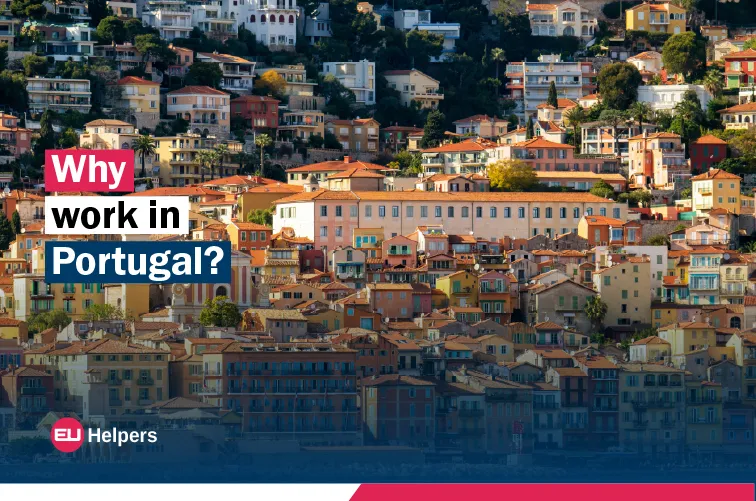

Why Work in Portugal? A Complete EU Helpers Guide for International Professionals
Portugal, the dynamic Southwestern European nation on the Iberian Peninsula bordering only Spain and facing the Atlantic Ocean, occupies an exceptionally attractive position in Europe for those seeking the rare combination of full EU, Schengen, and eurozone integration (Portugal joined the European Economic Community in 1986, the Schengen Area in 1995, and was a founding eurozone member adopting the euro in 1999/2002), stunning Atlantic coastline (one of Europe's most beautiful, with the Algarve, Costa Vicentina, the Lisbon coast, the Estoril coast, and the magnificent coastlines of Madeira and the Azores), exceptional climate (with over 300 sunny days per year in many areas, particularly the Algarve which is consistently among Europe's sunniest regions), rich cultural heritage spanning Lusitanian, Roman, Moorish, medieval Portuguese, Age of Discoveries (Portugal was one of history's most significant maritime powers, with explorers like Vasco da Gama, Ferdinand Magellan, and many others), and modern Portuguese influences, exceptional UNESCO World Heritage Sites (including the historic centers of Évora, Porto, Sintra, Angra do Heroísmo in the Azores, Funchal's Laurissilva forest in Madeira, the Convent of Christ in Tomar, the Monastery of Batalha, the Monastery of Alcobaça, the Belém Tower and Jerónimos Monastery in Lisbon, the Cultural Landscape of Sintra, the Alto Douro Wine Region, the Pico Island Vineyard Culture in the Azores, the prehistoric rock art of the Côa Valley, the University of Coimbra, the Royal Building of Mafra, the Garrison Border Town of Elvas, the Sanctuary of Bom Jesus do Monte in Braga, and others), Portuguese language as a global language (spoken by over 250 million people worldwide across Portugal, Brazil, Angola, Mozambique, Cape Verde, Guinea-Bissau, São Tomé and Príncipe, East Timor, and Equatorial Guinea), distinctive visa frameworks particularly attractive for foreign nationals (the D7 passive income visa, the D8 digital nomad visa introduced in October 2022, the Tech Visa for highly qualified tech workers, the Golden Visa, the D2 entrepreneur visa, and others), accessible cost of living relative to Western European EU countries (though Lisbon and Porto have become more expensive), and Atlantic lifestyle combining European modernity with relaxed coastal character. With a population of approximately 10.3 million and covering about 92,212 square kilometers (including the autonomous regions of Madeira — an Atlantic archipelago famous for the Laurissilva forest and Madeira wine — and the Azores — a stunning Atlantic archipelago of nine volcanic islands), Portugal has firmly established itself as one of the most attractive Atlantic EU destinations. The capital Lisbon (Lisboa — the vibrant historic capital and main business, IT, and cultural hub, one of Europe's oldest cities — older than Rome — and a major Atlantic capital with stunning Tagus River setting, the famous Belém district with the Jerónimos Monastery and Belém Tower, the historic Alfama neighborhood, and exceptional culinary and cultural scene), along with Porto (the second-largest city, famous for port wine — produced in the Douro Valley and aged in Porto's Vila Nova de Gaia — and the UNESCO-listed historic center with the magnificent Ribeira district along the Douro River), Braga (a historic university city in the north, one of Portugal's oldest cities with significant religious heritage), Coimbra (home of the University of Coimbra — one of Europe's oldest universities, founded in 1290, UNESCO listed), Aveiro (sometimes called "the Portuguese Venice" for its canals and moliceiros boats), Faro (the Algarve capital), Funchal (the capital of Madeira, famous for the Laurissilva forest and Madeira wine), Ponta Delgada (the capital of the Azores), and Évora (the UNESCO-listed Alentejo city with the famous Roman temple and Capela dos Ossos), host major Portuguese and multinational companies, technology hubs, financial institutions, and innovative start-ups. For applicants from anywhere considering Portugal, the country offers structured immigration pathways including the D1 work visa, the distinctive D2 entrepreneur visa, the distinctive D7 passive income visa (particularly popular among retirees), the distinctive D8 digital nomad visa, the Tech Visa for highly qualified tech workers, the Golden Visa (restructured since 2023), the EU Blue Card, family reunification provisions, and a clear long-term route toward Portuguese permanent residence and eventually Portuguese citizenship. At EU Helpers, candidates regularly ask the fundamental question: why should I consider Portugal specifically?
This complete EU Helpers guide answers that question in depth and walks you through the genuine, practical, and long-term reasons that make Portugal one of Europe's most uniquely attractive destinations. Whether you are considering a role under the D1 work visa, the distinctive Tech Visa for qualifying tech employment, the D2 entrepreneur visa, the popular D7 passive income visa (particularly attractive for retirees), the D8 digital nomad visa, the EU Blue Card, the Golden Visa, or family-based residence, this article walks you through everything you need to know — from full EU/Schengen/eurozone integration to stunning Atlantic coastline, distinctive visa frameworks, exceptional climate, rich cultural heritage, and Atlantic lifestyle.
Why Portugal Is Genuinely Unique Among European Destinations
Portugal occupies an exceptionally attractive position in Europe — fully EU, Schengen, and eurozone integrated, blessed with one of Europe's most beautiful Atlantic coastlines and exceptional climate, rich with cultural heritage from the Age of Discoveries, and pioneering in distinctive visa frameworks (particularly the D7, D8, and Tech Visa) that make it one of Europe's most welcoming destinations for diverse foreign residents.
Full EU, Schengen, and Eurozone Integration
Portugal is a full EU member (since 1986), Schengen Area member (since 1995), and founding eurozone member (adopting the euro in 1999/2002), providing comprehensive European integration benefits.
Stunning Atlantic Coastline
Portugal has one of Europe's most beautiful Atlantic coastlines, with stunning destinations including the Algarve (famous for golden beaches, dramatic cliffs, and over 300 sunny days per year), the Costa Vicentina (the wild southwestern coast), the Lisbon coast (with beaches like Cascais and Estoril), the Silver Coast (Costa de Prata), and the magnificent coastlines of Madeira and the Azores.
Exceptional Climate
Portugal has exceptional climate with mild winters (particularly along the coast and in the south) and warm sunny summers. The Algarve consistently ranks among Europe's sunniest regions with over 300 sunny days per year, while Madeira has remarkably stable temperate climate year-round.
Distinctive Visa Frameworks
Portugal has positioned itself as one of Europe's most welcoming destinations for diverse foreign residents through distinctive visa frameworks including the popular D7 passive income visa (particularly attractive for retirees), the D8 digital nomad visa (one of Europe's most prominent digital nomad frameworks, introduced in October 2022), the Tech Visa (fast-track route for highly qualified tech workers), the D2 entrepreneur visa, and the Golden Visa (residence by investment, restructured since 2023). This portfolio creates one of Europe's most diverse and accessible visa frameworks.
Multiple UNESCO World Heritage Sites
Portugal has extraordinary cultural heritage with multiple UNESCO World Heritage Sites including the historic centers of Évora, Porto, Sintra, Angra do Heroísmo, the Belém Tower and Jerónimos Monastery in Lisbon, the Cultural Landscape of Sintra, the Alto Douro Wine Region, the University of Coimbra, the Convent of Christ in Tomar, the Monasteries of Batalha and Alcobaça, the prehistoric rock art of the Côa Valley, the Royal Building of Mafra, and others.
Portuguese Language as a Global Language
Portuguese is one of the world's most widely spoken languages, with over 250 million speakers across Portugal, Brazil, Angola, Mozambique, Cape Verde, Guinea-Bissau, São Tomé and Príncipe, East Timor, and Equatorial Guinea. This creates natural business and cultural connections to Lusophone economies worldwide.
Renewable Energy Leadership
Portugal is one of Europe's leaders in renewable energy, with one of the highest shares of renewable electricity in the EU. Portugal targets 80% renewable electricity by 2030 and aims for carbon neutrality by 2050.
Atlantic Lifestyle Combining European Modernity with Coastal Relaxation
Portugal's lifestyle combines European modernity with relaxed Atlantic coastal character, creating a distinctive quality of life appreciated by foreign residents.
Top Financial Reasons to Consider Portugal
The financial rationale for working in Portugal centers around accessible cost of living combined with full EU benefits and rising IT sector salaries.
Accessible Cost of Living
Portugal has a lower cost of living than Western European EU averages, though Lisbon, Porto, and prime Algarve areas have become more expensive in recent years. Smaller cities and inland areas remain particularly affordable.
Rising IT and Senior Professional Salaries
IT salaries in Portugal, particularly in Lisbon and Porto with international tech companies, have been rising notably, supported by the Tech Visa and Web Summit-driven international attention. Senior professional roles are similarly competitive.
Eurozone Currency Convenience
Portugal uses the euro, providing currency stability and convenience for European business and personal matters.
Tax Frameworks for Foreign Residents
Portugal previously offered the Non-Habitual Resident (NHR) tax regime, which provided favorable tax treatment for qualifying foreign residents. The NHR was significantly restricted from 2024 for new applicants, with new replacement frameworks being developed. Current tax planning requires verification of current Portuguese regulations.
Strong Worker Protections
Portugal has strong labor laws, paid vacation, public holidays, parental leave, and other comprehensive worker protections.
Social Welfare System
Portugal has a comprehensive social welfare system including healthcare coverage, family allowances, pension contributions, and other benefits.
Lifestyle and Quality-of-Life Benefits
Beyond money, Portugal offers an exceptional lifestyle combining Atlantic coastal character, rich cultural heritage, exceptional climate, and Portuguese hospitality.
Vibrant Capital Lisbon
Lisbon, Portugal's capital, is one of Europe's most beautiful and atmospheric capitals, with the stunning Tagus River setting, the historic Alfama neighborhood (with traditional Fado music), the famous Belém district with the Jerónimos Monastery and Belém Tower (both UNESCO listed), the colorful tile-decorated buildings (azulejos), the historic trams (including the famous Tram 28), exceptional culinary scene (with bacalhau, sardines, pastéis de Belém, and Lisbon-specific specialties), vibrant nightlife, exceptional museums (including the Calouste Gulbenkian Museum, the National Tile Museum, MAAT, and many others), and the unique character that has attracted foreign residents from around the world.
Atmospheric Porto
Porto, Portugal's second-largest city, is widely considered one of Europe's most beautiful cities, with the UNESCO-listed historic center, the magnificent Ribeira district along the Douro River, the famous port wine lodges in Vila Nova de Gaia (the source of port wine maturation), the iconic Dom Luís I Bridge designed by a student of Gustave Eiffel, the Livraria Lello (one of the world's most beautiful bookstores), exceptional cuisine (with Porto specialties like francesinha), and a relaxed character with growing international community.
Exceptional Algarve
The Algarve is one of Europe's most famous coastal regions, with stunning beaches, dramatic cliffs (particularly at Lagos and Ponta da Piedade), over 300 sunny days per year, charming towns (Tavira, Albufeira, Lagos, Faro, Olhão), exceptional seafood, world-class golf courses, and a Mediterranean-Atlantic character that has attracted retirees and lifestyle migrants from around the world.
Magical Sintra
Sintra, the UNESCO-listed cultural landscape just outside Lisbon, features stunning palaces (the colorful Pena Palace, the National Palace, the Quinta da Regaleira with its mysterious initiation well), lush forests, and a unique microclimate creating exceptional natural beauty.
Madeira and the Azores
The autonomous regions of Madeira (the Atlantic archipelago famous for the UNESCO-listed Laurissilva forest, Madeira wine, year-round spring climate, and Funchal as a stunning capital) and the Azores (nine volcanic Atlantic islands with stunning landscapes, hot springs, whale watching, and a unique Atlantic mid-ocean character) offer extraordinary natural beauty and distinctive lifestyles.
Rich Cultural Heritage
Portugal has extraordinary cultural heritage including multiple UNESCO World Heritage Sites, the Age of Discoveries legacy (Portugal was one of history's most significant maritime powers), Fado music tradition (UNESCO Intangible Cultural Heritage), exceptional architectural heritage spanning Romanesque, Manueline (a distinctive Portuguese style incorporating maritime motifs), Baroque, and modern styles, literary tradition (Luís de Camões, Fernando Pessoa, José Saramago — Portuguese Nobel laureate for Literature 1998, António Lobo Antunes), and rich folk and religious traditions.
Distinctive Portuguese Cuisine
Portuguese cuisine has distinctive Atlantic and Mediterranean character with specialties including bacalhau (salt cod, with reportedly 365 different ways to prepare it — one for each day of the year), sardines (especially during the summer Santos Populares festivals), pastéis de nata (the famous custard tarts), francesinha (Porto's iconic sandwich), polvo à lagareiro (octopus), cataplana (Algarve seafood stew), exceptional cheeses (Serra da Estrela, São Jorge from the Azores, and others), and exceptional seafood throughout the country.
World-Famous Wine Tradition
Portugal has world-famous wine tradition including Port wine (the fortified wine from the UNESCO-listed Alto Douro Valley), Madeira wine (the famous fortified wine from Madeira), Vinho Verde (the distinctive "green wine" from the Minho region), Douro wines, Alentejo wines (with rising international recognition), Dão wines, and many other distinctive Portuguese wines. The Alto Douro Wine Region is one of the world's oldest demarcated wine regions (established 1756).
Fado Music Tradition
Fado is Portugal's distinctive musical tradition, UNESCO listed as Intangible Cultural Heritage. Often described as expressing "saudade" (a uniquely Portuguese concept of longing), Fado is particularly associated with Lisbon and Coimbra.
Atlantic Mediterranean Climate
Portugal has exceptional climate with mild winters (particularly along the coast and in the south) and warm sunny summers. The Algarve consistently ranks among Europe's sunniest regions.
Generally Safe
Portugal has overall low crime rates and is generally considered very safe, with stable political and security conditions supported by NATO founding membership.
Exceptional Quality of Life
Portugal consistently ranks among Europe's countries with the best quality of life when considering climate, lifestyle, culture, safety, accessibility, and overall character.
Growing International Community
Portugal's distinctive visa frameworks have attracted significant international communities, particularly in Lisbon, Porto, the Algarve, and various other locations. This creates welcoming environments for international professionals.
Excellent Healthcare and Public Services
Portugal has well-regarded healthcare and other public services.
Beautiful Countryside
Beyond cities, Portugal offers beautiful countryside including the Alentejo (rolling cork oak landscapes with charming traditional villages), the Douro Valley (UNESCO-listed wine region with terraced vineyards), the Serra da Estrela (the country's highest mountain range), the Peneda-Gerês National Park (Portugal's only national park), and many other natural areas.
Affordable Lifestyle Possibilities
Portugal makes lifestyle options accessible — apartments in many cities (more accessible than Western European capitals), dining at quality restaurants, cultural activities, and a generally comfortable lifestyle are all genuinely affordable, particularly outside Lisbon and Porto.
Career Growth and Professional Opportunities
Portugal's career environment is improving, with particularly strong opportunities in growing sectors.
Growing IT and Tech Opportunities
For IT and tech professionals, Portugal offers expanding opportunities through international tech companies establishing significant European hubs in Lisbon and Porto, supported by the Tech Visa pathway and Web Summit positioning.
Opportunities in Tourism and Hospitality
For tourism and hospitality professionals, Portugal as one of Europe's leading tourism destinations creates substantial opportunities.
Opportunities in Renewable Energy
For renewable energy professionals, Portugal's leadership in renewable energy creates substantial opportunities.
Opportunities in Shared Services
For multilingual professionals, Lisbon and Porto's role as major European shared services centers creates substantial opportunities.
Opportunities for Entrepreneurs
Portugal offers multiple distinctive routes for entrepreneurs through the D2 visa and the growing tech ecosystem.
Opportunities for Remote Workers and Digital Nomads
Portugal is particularly attractive for remote workers and digital nomads through the distinctive D8 visa and broader digital nomad-friendly environment.
Strong Foundation for International Careers
As an EU, Schengen, and eurozone member with Portuguese language connections to global Lusophone economies, Portugal provides a strong foundation for international careers.
Residency, Work Permit, and Legal Benefits
Working legally in Portugal comes with structured immigration pathways and strong legal protections within the EU framework.
Structured Permit System
Foreign workers obtain residence through dedicated schemes including the D1 work visa, D2 entrepreneur visa, D3 highly qualified activity visa, Tech Visa, D7 passive income visa, D8 digital nomad visa, EU Blue Card, Golden Visa, researcher route, family reunification provisions, and others.
Distinctive Tech Visa for Tech Professionals
The Tech Visa offers expedited processing for qualifying highly qualified workers at certified Portuguese tech companies.
Distinctive D7 for Retirees and Passive Income
The D7 visa is one of Europe's most accessible retirement residence pathways for those with stable passive income.
Distinctive D8 for Digital Nomads
The D8 visa is one of Europe's most prominent digital nomad frameworks.
Distinctive D2 for Entrepreneurs
The D2 visa supports foreign entrepreneurs establishing businesses in Portugal.
Family Reunification
Portugal allows qualifying workers and residents to bring close family members.
Pathway to Portuguese Citizenship and EU Benefits
After 5 years of legal residence in Portugal (and meeting other requirements including basic Portuguese language), foreign nationals may become eligible for Portuguese citizenship by naturalization. Portuguese citizenship grants full EU citizenship benefits.
Healthcare, Education, and Social Benefits
Portugal's public services are well-regarded.
Strong Healthcare System
Portugal has a well-regarded healthcare system providing coverage for residents through the National Health Service (SNS).
Excellent Educational System
Portugal offers a well-developed public education system, alongside excellent private and international schools (particularly serving the substantial expat community in Lisbon, Porto, the Algarve, and elsewhere).
Strong Social Protections
Registered workers benefit from contributions toward pensions, healthcare, and other social protections.
Practical Considerations for Working in Portugal
While Portugal offers compelling benefits, applicants should also understand some practical considerations.
AIMA Backlogs
Portugal's transition from SEF to AIMA in late 2023 has caused significant backlogs in residence permit processing, requiring patience and significant buffer time.
Rising Costs in Major Cities
Lisbon, Porto, and prime Algarve areas have become more expensive in recent years, partly due to significant foreign resident inflows and tourism growth.
Portuguese Language Considerations
Portuguese is the official language, and Portuguese language skills enhance integration and daily life. While English use is growing rapidly (particularly in IT, tourism, and international business contexts), Portuguese skills are increasingly important for full integration.
Tax Considerations
The Non-Habitual Resident (NHR) tax regime was significantly restricted from 2024 for new applicants, with new replacement frameworks being developed. Current tax planning requires verification of current Portuguese regulations.
Demographic Considerations
Portugal has one of Europe's oldest populations, with implications for various sectors and social dynamics.
Required Documents and Step-by-Step Overview
While exact requirements depend on the specific permit, the general route involves coordination with AIMA and Portuguese embassies and consulates abroad.
Practical Tips for International Applicants Considering Portugal
Tips From EU Helpers for Considering Portugal
Carefully evaluate which Portuguese route best matches your profile — Portugal offers exceptional choice with the D1, D2, D7, D8, Tech Visa, Golden Visa, and EU Blue Card serving very different applicant profiles. For tech professionals, evaluate the Tech Visa carefully as it offers expedited processing. For self-employed professionals and entrepreneurs, evaluate the D2 visa. For those with stable passive income (particularly retirees), evaluate the D7 visa. For remote workers, evaluate the D8 digital nomad visa. For significant investors, evaluate the Golden Visa. Obtain a Portuguese NIF (tax identification number) when feasible. Plan around current AIMA backlogs by allowing significant buffer time. Plan housing carefully — Lisbon, Porto, and prime Algarve markets have become competitive. Strengthen your Portuguese language skills for daily life and integration, while leveraging English. Always rely on the latest official guidance from AIMA and the Portuguese embassy or consulate handling your case.
Final Guidance
Why work in Portugal? Because few countries in Europe combine such a unique mix of full EU, Schengen, and eurozone membership (EU member since 1986, Schengen member since 1995, founding eurozone member), stunning Atlantic coastline (with the Algarve, Costa Vicentina, the Lisbon coast, and the magnificent coastlines of Madeira and the Azores), exceptional climate (with over 300 sunny days per year in many areas, particularly the Algarve), rich cultural heritage (with multiple UNESCO World Heritage Sites including Lisbon's Belém district, Porto's historic center, Sintra, Évora, the Alto Douro Wine Region, the University of Coimbra, and many others), Age of Discoveries legacy (Portugal was one of history's most significant maritime powers with explorers like Vasco da Gama and Ferdinand Magellan), Portuguese language as a global language (spoken by over 250 million people worldwide creating connections to Brazil, Angola, Mozambique, and other Lusophone economies), distinctive visa frameworks particularly attractive for diverse foreign residents (the Tech Visa for tech professionals, the D7 for retirees and passive income, the D8 for digital nomads, the D2 for entrepreneurs, the Golden Visa for investors), accessible cost of living relative to Western European EU countries (particularly outside Lisbon and Porto), world-famous wine tradition (Port wine, Madeira wine, Vinho Verde, Douro wines, and many others), distinctive Fado music tradition (UNESCO Intangible Cultural Heritage), exceptional Portuguese cuisine (bacalhau, sardines, pastéis de nata, francesinha, and many others), renewable energy leadership, growing tech sector (particularly in Lisbon and Porto with Web Summit positioning and international tech company hubs), exceptional quality of life, strong social welfare, well-regarded healthcare and education, and a clear pathway to Portuguese citizenship with full EU benefits after 5 years. For international IT professionals drawn to Lisbon and Porto's growing tech ecosystems and the Tech Visa, retirees and those with passive income seeking the D7 visa, digital nomads using the D8, entrepreneurs using the D2, significant investors using the restructured Golden Visa, or lifestyle migrants drawn to Portugal's exceptional Atlantic coastline, climate, cultural heritage, and Atlantic lifestyle, Portugal stands out as one of Europe's most uniquely attractive destinations. EU Helpers supports international applicants at every stage — from evaluating eligibility and selecting the right permit route (Tech Visa, D7, D8, D2, Golden Visa, EU Blue Card, or others) to preparing documents, NIF acquisition guidance, AIMA application support, and planning a smooth transition. If Portugal is on your radar as a future work destination, EU Helpers can help you move forward with clarity, confidence, and the latest accurate information.
FAQs
Portugal offers a unique combination of full EU/Schengen/eurozone integration, stunning Atlantic coastline, exceptional climate (with over 300 sunny days per year in many areas), rich cultural heritage with multiple UNESCO sites, Portuguese language as a global language, distinctive visa frameworks (Tech Visa, D7, D8, D2, Golden Visa), accessible cost of living, world-famous wine and cuisine, and a clear pathway to Portuguese citizenship after 5 years with full EU benefits.
Yes. Portugal is an EU member (since 1986), Schengen member (since 1995), eurozone member (founding member, adopting the euro in 1999/2002), NATO founding member (since 1949), and Council of Europe member, providing comprehensive European integration benefits.
Portugal uses the euro as its currency, having been a founding eurozone member that adopted the euro in 1999 for accounting purposes and in 2002 in physical form.
The Tech Visa is Portugal's fast-track route for highly qualified workers at certified Portuguese tech companies. It is designed to attract international tech talent and offers expedited processing typically around 30 days, supporting Portugal's growing tech ecosystem particularly in Lisbon and Porto.
The D7 visa supports foreign nationals with stable passive income (pensions, rental income, dividends, royalties, or other passive sources) seeking residence in Portugal. It has been particularly popular among retirees and those with international passive income, requiring demonstration of sufficient and stable income.
The D8 visa, introduced in October 2022, allows foreign nationals working remotely for non-Portuguese employers or freelancing for non-Portuguese clients to reside in Portugal. It is one of Europe's most prominent digital nomad frameworks and has attracted significant inflows of remote workers.
Lisbon is one of Europe's most beautiful and atmospheric capitals, with stunning Tagus River setting, historic Alfama neighborhood (Fado music heritage), famous Belém district with UNESCO-listed Jerónimos Monastery and Belém Tower, colorful azulejo-decorated buildings, historic trams, exceptional cuisine, vibrant nightlife, and unique character that has attracted foreign residents from around the world.
Porto is widely considered one of Europe's most beautiful cities, with the UNESCO-listed historic center, magnificent Ribeira district along the Douro River, famous port wine lodges in Vila Nova de Gaia, iconic Dom Luís I Bridge, Livraria Lello bookstore, exceptional cuisine including francesinha, and a relaxed character with growing international community.
The Algarve is one of Europe's most famous coastal regions, with stunning beaches, dramatic cliffs (particularly at Lagos and Ponta da Piedade), over 300 sunny days per year, charming towns (Tavira, Albufeira, Lagos, Faro, Olhão), exceptional seafood, world-class golf courses, and a Mediterranean-Atlantic character.
Portugal generally has a lower cost of living than Western European EU averages, though Lisbon, Porto, and prime Algarve areas have become more expensive in recent years. Smaller cities and inland areas remain particularly affordable, with full EU/Schengen/eurozone benefits.
Portugal has exceptional climate with mild winters (particularly along the coast and in the south) and warm sunny summers. The Algarve consistently ranks among Europe's sunniest regions with over 300 sunny days per year, while Madeira has remarkably stable temperate climate year-round.
Portuguese is the official language, spoken by over 250 million people worldwide across Portugal, Brazil, Angola, Mozambique, Cape Verde, Guinea-Bissau, São Tomé and Príncipe, East Timor, and Equatorial Guinea. English is widely used in tourism, IT, and international business contexts.
Yes. Portugal has overall low crime rates and is generally considered very safe, with stable political and security conditions supported by NATO founding membership. The country consistently ranks among Europe's safest destinations.
Portugal has multiple UNESCO World Heritage Sites including the historic centers of Évora, Porto, Sintra, Angra do Heroísmo, the Belém Tower and Jerónimos Monastery in Lisbon, the Cultural Landscape of Sintra, the Alto Douro Wine Region, the University of Coimbra, the Convent of Christ in Tomar, the Monasteries of Batalha and Alcobaça, and others.
Portugal's Golden Visa is one of Europe's most well-known residence-by-investment programs. The real estate route was significantly restricted in 2023, with the program now focusing on investment fund commitments, business creation with employment, donations to scientific research or arts heritage, and other qualifying investments.
AIMA (Agência para a Integração, Migrações e Asilo) is the Portuguese Agency for Integration, Migration and Asylum, which replaced SEF in late 2023 as Portugal's main immigration authority. The transition has caused significant backlogs in residence permit processing.
Yes, very. Portugal's growing tech sector (particularly in Lisbon and Porto), international tech company presence, Tech Visa expedited pathway, Web Summit positioning, exceptional Atlantic lifestyle, and accessible cost of living make the country particularly attractive for international IT professionals.
Yes, exceptionally. Portugal is one of Europe's most attractive retirement destinations, supported by the popular D7 passive income visa, exceptional climate, beautiful Atlantic coastline (particularly the Algarve), accessible cost of living, well-regarded healthcare, full EU/Schengen/eurozone benefits, and welcoming international community.
Yes. Qualifying workers and residents can usually apply for family reunification for spouses, registered partners, and dependent children. EU Blue Card holders benefit from particularly favorable family reunification provisions.
Yes. After 5 years of legal residence in Portugal (and meeting other requirements including basic Portuguese language and integration criteria), foreign nationals may become eligible for Portuguese citizenship by naturalization. Portuguese citizenship grants full EU citizenship benefits.
EU Helpers supports international applicants with eligibility assessment, permit category selection (including Tech Visa, D7, D8, D2, Golden Visa, EU Blue Card, and other distinctive Portuguese options), document preparation, NIF acquisition guidance, employer or sponsor coordination, AIMA application support, and clarity on the latest official requirements tailored to your career goals.