
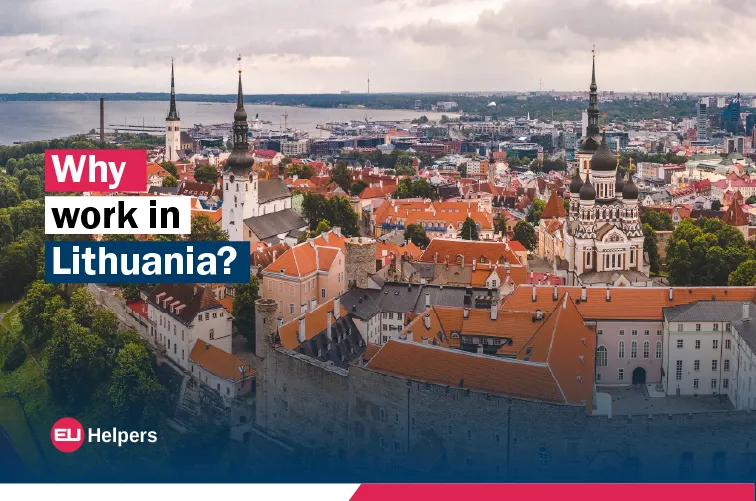

Why Work in Lithuania? A Complete EU Helpers Guide for International Professionals
Lithuania, the dynamic Baltic nation on the eastern shore of the Baltic Sea, has steadily emerged as one of the European Union's most innovative, accessible, and increasingly attractive work destinations for international professionals, IT and tech specialists, fintech experts, engineering professionals, finance and shared services specialists, healthcare workers, business consultants, founders, and entrepreneurs. As an EU member state, a Schengen Area member, a eurozone member, and a NATO member, with a strategic Baltic location bridging Northern Europe and the broader European market, exceptional digital infrastructure, rapidly growing technology and fintech ecosystem, vibrant historic capital, exceptionally accessible cost of living compared to Western European countries, and one of Europe's most English-friendly business environments, Lithuania consistently ranks among the most interesting emerging destinations in the EU for foreign professionals. Cities like Vilnius (the vibrant historic capital and main tech hub), Kaunas (Lithuania's second-largest city with growing IT and business sectors), Klaipėda (the only Lithuanian seaport), Šiauliai, and Panevėžys host multinational companies, technology hubs, fintech operations, shared services centers, manufacturing leaders, and innovative start-ups that consistently recruit foreign talent. For applicants from Asia, Africa, Latin America, the Americas, and Europe, Lithuania offers structured immigration pathways, EU-aligned legal protections, an entrepreneur-friendly approach (with the distinctive Lithuanian Startup Visa and accessible individuali veikla self-employment framework), and a clear long-term route toward EU long-term residence and eventually Lithuanian citizenship. At EU Helpers, candidates regularly ask the fundamental question: why should I consider Lithuania specifically, compared to larger European destinations?
This complete EU Helpers guide answers that question in depth and walks you through the genuine, practical, and long-term reasons that make Lithuania one of Europe's most compelling emerging work destinations. Whether you are considering a salaried role under the standard work permit and temporary residence permit, the EU Blue Card, the ICT permit, the distinctive Lithuanian Startup Visa for innovative founders, self-employment through the individuali veikla framework, the investor route, the researcher route, family-based residence, or other pathways, this article walks you through everything you need to know — from competitive salaries by Baltic standards and exceptional cost of living to growing tech ecosystem, exceptional digital infrastructure, English-friendly workplaces, and the warm Baltic lifestyle. Keep in mind that immigration rules, salaries, and market conditions may vary by nationality, employer, permit category, sector, and the latest official requirements, so EU Helpers always recommends confirming your eligibility and offer based on your personal profile before making any move.
Why Lithuania Is Genuinely Worth Considering
Lithuania occupies an unusual position in Europe — small enough to feel accessible and intimate, yet dynamic enough to host one of Europe's most notable fintech hubs (Vilnius), exceptional digital infrastructure, growing tech ecosystem, and full EU integration. Few EU countries offer such a distinctive combination of advantages for those seeking accessible European opportunities.
One of Europe's Most Digitally Advanced Countries
Lithuania has positioned itself as one of the EU's most digitally advanced economies, with exceptional digital infrastructure, widespread digital government services (Lithuania consistently ranks among the EU's leaders in digital public services), and a growing technology ecosystem. This creates a uniquely modern professional environment.
Vilnius as One of Europe's Leading Fintech Hubs
Vilnius has emerged as one of Europe's leading fintech hubs. The Bank of Lithuania has established a notably welcoming regulatory environment for fintech firms, and hundreds of fintech companies are licensed in Lithuania, including major international fintech operations. This creates significant opportunities for fintech professionals.
Strategic Baltic Location
Lithuania's location on the Baltic Sea with strong connections to the other Baltic states (Estonia and Latvia), the Nordic countries (particularly through close ties with Sweden and Finland), Poland, Germany, and the broader European market makes it a strategic base for international business.
Distinctive Entrepreneur-Friendly Pathways
Lithuania has developed distinctive entrepreneur-friendly immigration pathways including the Lithuanian Startup Visa (one of Europe's well-established programs for foreign innovative founders) and the individuali veikla self-employment framework that has become particularly popular with IT freelancers and consultants seeking accessible EU residency.
EU and Eurozone Membership
Lithuania is a full EU member, Schengen Area member, eurozone member (joined in 2015), and NATO member, providing full EU citizenship benefits eventually for those who naturalize.
Accessible Cost of Living
Lithuania has a significantly lower cost of living than Western EU countries, providing strong purchasing power for skilled professionals while offering full EU integration benefits.
English-Friendly Business Environment
Lithuania has high English proficiency, particularly among younger professionals, and English is widely used in IT, fintech, multinational companies, BPO and shared services, and international business contexts. This makes Lithuania exceptionally accessible for English-speaking foreign professionals.
Top Financial Reasons to Consider Lithuania
The financial rationale for working in Lithuania centers around competitive salaries by Baltic standards, exceptional cost of living advantages, and continued economic growth.
Competitive Salaries by Baltic Standards
In top-paying sectors such as senior IT, fintech, finance, shared services leadership, and senior management at multinational companies, salaries in Lithuania are competitive by Baltic and Eastern European standards. Salaries have been rising significantly in recent years, particularly in tech and fintech sectors.
Significantly Lower Cost of Living
Lithuania has a significantly lower cost of living than Western EU countries, with affordable housing (particularly outside central Vilnius), food, dining, services, and transportation. This provides strong purchasing power for skilled professionals.
Strong Wages in Multinational Companies
Multinational companies operating in Lithuania, particularly in IT, fintech, BPO and shared services, and other internationally-oriented sectors, typically offer competitive compensation packages.
Comprehensive Social Welfare
Lithuania's social welfare system provides solid value, including public healthcare, parental leave, unemployment insurance, pension contributions, and education access for residents.
Eurozone Currency Convenience
Lithuania uses the euro (joined the eurozone in 2015), providing currency stability and convenience for European business and personal matters.
Favorable Conditions for Self-Employment
Lithuania's individuali veikla self-employment framework provides relatively accessible setup and operation for self-employed professionals, particularly attractive for IT freelancers and consultants.
Lifestyle and Quality-of-Life Benefits
Beyond money, Lithuania offers a lifestyle that combines vibrant Baltic culture, exceptional digital convenience, beautiful nature, and rich cultural heritage at very accessible costs.
Vibrant Capital Vilnius
Vilnius, Lithuania's vibrant capital, features a stunning UNESCO World Heritage-listed Old Town (one of the largest and best-preserved medieval old towns in Eastern Europe), Gediminas Tower, the Cathedral and Palace of the Grand Dukes, vibrant Užupis bohemian quarter (with its quirky "constitution" declaring itself a republic), beautiful Vilnia and Neris rivers, growing tech scene, exceptional cafe culture, and remarkably affordable lifestyle. Vilnius has become increasingly popular as a destination for foreign professionals and digital nomads.
Other Distinctive Cities
Kaunas, Lithuania's second-largest city with a growing tech and business scene and remarkable interwar architecture (a UNESCO World Heritage candidate). Klaipėda, Lithuania's main port city on the Baltic coast with a charming Old Town reflecting its Prussian heritage. The seaside resort of Palanga and the unique Curonian Spit (UNESCO World Heritage Site with dramatic sand dunes). Trakai, with the iconic Trakai Castle on a lake. Each Lithuanian city offers distinctive experiences.
Exceptional Natural Beauty
Lithuania offers beautiful natural landscapes including extensive forests (Lithuania is one of Europe's more forested countries), beautiful Baltic Sea coastline, the dramatic Curonian Spit (a UNESCO site with sand dunes), beautiful lakes (Lithuania has about 6,000 lakes), Aukštaitija and Dzūkija National Parks, and many other natural treasures.
Rich Cultural and Historical Heritage
Lithuania has a remarkable cultural and historical heritage spanning the medieval Grand Duchy of Lithuania (once one of Europe's largest states), Polish-Lithuanian Commonwealth, modern independence movements, and contemporary developments. UNESCO sites include the historic centers of Vilnius and Kernavė, and the Curonian Spit shared with Russia.
Distinctive Lithuanian Cuisine
Lithuanian cuisine offers distinctive specialties including cepelinai (potato dumplings), kibinai (savory pastries), beetroot soup (šaltibarščiai, served cold in summer), excellent dark rye bread, smoked fish from the Baltic, and various beer traditions. The food is hearty, distinctive, and remarkably affordable.
Continental Climate With Four Seasons
Lithuania has a continental climate with four distinct seasons, with warm summers (long daylight hours given the northern latitude), beautiful spring and autumn, and snowy winters. The country's natural rhythms support distinctive seasonal experiences.
Safety and Political Stability
Lithuania is consistently ranked among the safer countries in Europe, with relatively low crime rates and strong political stability as an EU and NATO member.
Strong Work-Life Balance
Lithuania values work-life balance, with reasonable working hours, generous vacation entitlements, and a culture that values family time and outdoor activities.
Family-Friendly Society
Lithuania has a family-oriented culture with high-quality childcare, public education, and family-friendly workplace policies.
Growing Multicultural Community
Vilnius and Kaunas host growing international communities, particularly in IT, fintech, BPO, and education sectors, making integration easier for foreign professionals.
Excellent Digital Infrastructure
Lithuania has one of Europe's most advanced digital infrastructures, with widespread high-speed internet, excellent mobile coverage, and a culture of digital innovation that supports both work and daily life.
Excellent Transport Connections
Lithuania has excellent transport connections within Europe through Vilnius International Airport, Kaunas Airport, the Port of Klaipėda, and rail and road networks. Major European cities are easily accessible.
Career Growth and Professional Opportunities
Lithuania's career environment is dynamic and growing, particularly in technology, fintech, and emerging sectors.
Strong Career Pathways in Growing Sectors
IT and software development, fintech (Vilnius is one of Europe's leading fintech hubs), shared services and BPO (significant cluster in Vilnius and Kaunas), engineering, life sciences, manufacturing, healthcare, financial services, defense and security (driven by NATO commitments), construction, marketing, and education all offer career pathways for foreign professionals.
Opportunities in Growing Tech and Fintech
For IT and fintech professionals, Vilnius offers exceptional opportunities given the city's emergence as one of Europe's leading fintech hubs and growing tech ecosystem. Major multinational tech operations, growing Lithuanian tech companies, and innovative start-ups create substantial opportunities.
Opportunities for Entrepreneurs Through Startup Visa
The Lithuanian Startup Visa supports foreign founders establishing innovative start-ups in Lithuania. Combined with Lithuania's EU access, growing tech ecosystem, and supportive regulatory environment, this offers opportunities for serious founders with innovative propositions.
Opportunities for IT Freelancers Through Individuali Veikla
Lithuania's accessible individuali veikla self-employment framework provides particularly attractive opportunities for IT freelancers, consultants, designers, and other self-employed professionals seeking accessible EU residency through legitimate self-employment.
Strong Foundation for Regional and EU Mobility
As an EU, eurozone, Schengen, and NATO member with strategic Baltic location and excellent transport links, Lithuania is an excellent base for regional and broader EU careers.
Residency, Work Permit, and Legal Benefits
Working legally in Lithuania comes with structured immigration pathways and strong legal protections within the EU framework.
Structured Permit System
Most foreign workers obtain a residence permit through dedicated schemes such as the standard work permit and temporary residence permit, EU Blue Card, ICT permit, Lithuanian Startup Visa, residence permit for self-employment via individuali veikla, residence permit for investors, residence permit for researchers, or family-based residence.
Lithuanian Startup Visa
The Lithuanian Startup Visa is one of Europe's notable programs for foreign founders of innovative start-ups, providing a distinctive pathway for entrepreneurs.
Individuali Veikla Self-Employment
The individuali veikla framework provides accessible self-employment for foreign nationals operating as freelancers, consultants, or independent professionals.
EU Blue Card
Lithuania issues the EU Blue Card for highly qualified third-country professionals.
Family Reunification With Strong Provisions
Lithuania allows qualifying workers and residents to bring close family members, including spouses and dependent children, under family reunification rules. EU Blue Card holders typically benefit from particularly favorable family reunification provisions.
Pathway to Long-Term Residency and Lithuanian Citizenship
After several continuous years of legal residence and work in Lithuania, foreign nationals may become eligible for permanent residence (EU long-term resident status) and eventually Lithuanian citizenship by naturalization, provided they meet integration, language, and legal requirements. Lithuanian citizenship is valuable as it grants full EU citizenship benefits.
Healthcare, Education, and Social Benefits
Lithuania's public services provide solid support for workers and their families.
Healthcare System
Lithuania has a public healthcare system. Once registered and employed in Lithuania, residents have access to healthcare services. Many international professionals also use private health insurance to supplement public coverage.
Educational System for Families
Lithuania offers a public educational system, alongside growing international schools, particularly in Vilnius, with English-language and bilingual programs. Lithuanian universities, including Vilnius University (one of the oldest universities in Eastern Europe, founded in 1579) and Kaunas University of Technology, have respected traditions.
Strong Social Protections for Workers
Registered workers benefit from contributions toward pensions, healthcare, unemployment insurance, parental leave, and other social protections through the Lithuanian social security system.
Practical Considerations for Working in Lithuania
While Lithuania offers compelling benefits, applicants should also understand some practical considerations.
Lithuanian Language for Integration
While English is widely used in IT, fintech, and international business, the Lithuanian language is important for daily life, integration, and broader career opportunities, particularly for the long-term path to permanent residence and citizenship.
Climate Considerations
Lithuania's continental climate with cold winters (often with snow) may require adjustment for those from warmer climates, though the country's distinct seasons are appreciated by many.
Northern European Location
Lithuania's northern location means significant variation in daylight between summer (very long days) and winter (short days), which is a notable lifestyle consideration.
Emerging But Smaller Job Market
While growing rapidly, Lithuania's job market remains smaller than larger Western European countries, with most opportunities concentrated in specific sectors like IT, fintech, shared services, and engineering.
Required Documents and Step-by-Step Overview of Working in Lithuania
While exact requirements depend on the specific permit and applicant profile, the general route to legally working in Lithuania follows a predictable structure.
Typical Documents Needed
Applicants usually need a valid passport, police clearance certificates, medical certificates where required, proof of qualifications and experience, a formal job offer or qualifying ground, employer or sponsor documentation, accommodation evidence, valid health insurance, and proof of financial means. Translations into Lithuanian and apostille or legalization of foreign public documents are commonly required.
General Step-by-Step Process
The process typically starts with securing a job offer, startup project for the Startup Visa, individuali veikla self-employment setup, qualifying investment, or another qualifying ground. The employer or applicant prepares the relevant application, applies for the D visa at the Lithuanian embassy or consulate where required, travels to Lithuania, and obtains the temporary residence permit through the Migration Department.
Common Mistakes and Reasons for Delays or Refusals
Incomplete documents, missing translations or legalizations, unverified employer sponsorship, salary below thresholds, mismatched qualifications, weak business plans for Startup Visa applications, and the wrong permit category being selected are common reasons for delays or refusals.
Practical Tips for International Applicants Considering Lithuania
Moving to Lithuania is rewarding, but preparation makes the difference between a smooth transition and a stressful one.
Tips From EU Helpers for Considering Lithuania
Carefully evaluate which permit category fits your profile, whether through standard employment, EU Blue Card, ICT, Startup Visa, individuali veikla self-employment, investor route, family-based pathways, or others. Identify Lithuanian employers experienced with hiring foreign workers, particularly in IT, fintech, BPO, and shared services in Vilnius and Kaunas. For Startup Visa applicants, prepare a thoroughly innovative and credible startup proposal. For self-employment via individuali veikla, prepare clear documentation of intended activities. Strengthen your English fluency, which is widely used in Lithuanian IT and international business, and consider learning Lithuanian for daily life, integration, and broader career opportunities. Plan housing carefully — Vilnius has affordable housing options compared to Western European capitals. Understand how your nationality, sponsor, and permit category may influence your timeline and documentation. Keep originals and certified copies of all key documents, and always rely on the latest official guidance.
Final Guidance
Why work in Lithuania? Because few EU countries combine such a unique mix of full EU and eurozone access (with NATO security), one of Europe's most digitally advanced infrastructures, Vilnius as one of Europe's leading fintech hubs, growing tech and IT ecosystem, distinctive entrepreneur-friendly pathways (Lithuanian Startup Visa for innovative founders and individuali veikla for accessible self-employment), exceptional English proficiency, significantly lower cost of living than Western Europe (combined with rising salaries in growth sectors), beautiful Baltic capital Vilnius with its UNESCO-listed Old Town, rich cultural heritage, distinctive Baltic lifestyle, strong family-friendly benefits, excellent quality of life, and a clear pathway to Lithuanian citizenship with full EU benefits. For international professionals seeking accessible European opportunities combined with growing tech and fintech sectors, Lithuania stands out as one of Europe's most interesting emerging destinations. However, the process is structured, and outcomes depend heavily on personal circumstances, employer sponsorship, nationality, sector, and the specific permit category chosen. That is exactly where expert guidance matters. EU Helpers supports international applicants at every stage — from evaluating eligibility and selecting the right permit route to preparing documents, comparing standard work permit and temporary residence permit, EU Blue Card, ICT, Lithuanian Startup Visa, individuali veikla self-employment, investor routes, and other pathways, and planning a smooth relocation. If Lithuania is on your radar as a future work destination, EU Helpers can help you move forward with clarity, confidence, and the latest accurate information.
FAQs
Lithuania offers a unique combination of EU and eurozone access, NATO security, exceptional digital infrastructure, Vilnius as one of Europe's leading fintech hubs, growing tech and IT ecosystem, distinctive entrepreneur-friendly pathways (Startup Visa and individuali veikla), exceptional English proficiency, significantly lower cost of living than Western Europe, beautiful Baltic capital, rich cultural heritage, and a clear pathway to Lithuanian citizenship.
Lithuanian salaries are generally lower than Western European averages, but have been rising significantly in recent years, particularly in tech and fintech sectors. Combined with significantly lower cost of living, salaries provide attractive purchasing power for skilled professionals.
Lithuania has a significantly lower cost of living than Western EU countries, with affordable housing (particularly outside central Vilnius), food, dining, services, and transportation. This provides strong purchasing power.
Yes. Vilnius has emerged as one of Europe's leading fintech hubs, with the Bank of Lithuania establishing a notably welcoming regulatory environment for fintech firms. Hundreds of fintech companies are licensed in Lithuania, including major international fintech operations.
Yes. Lithuania has emerged as a notable tech hub in the Baltic region, supported by strong technical education, exceptional digital infrastructure, and a growing ecosystem of Lithuanian tech companies and international subsidiaries.
Yes. Lithuania is an EU member state, a Schengen Area member, a eurozone member (since 2015), and a NATO member.
Lithuania uses the euro as its currency (joined the eurozone in 2015).
The Lithuanian Startup Visa is Lithuania's dedicated route for foreign entrepreneurs establishing innovative start-ups in Lithuania, with evaluation considering the project's innovation, viability, and economic impact.
The individuali veikla framework is Lithuania's accessible self-employment structure, particularly popular with IT freelancers, consultants, designers, and other self-employed individuals seeking accessible EU residency through legitimate self-employment.
Lithuania issues the EU Blue Card for highly qualified third-country professionals with recognized higher education or equivalent qualifications and a qualifying job offer that meets the salary threshold.
Yes. English-speaking foreigners are in demand in IT, fintech, BPO and shared services, multinational companies, international consulting, education, and senior management, particularly in Vilnius and Kaunas. Lithuania has high English proficiency.
Lithuanian is the official language and is essential for daily life and many roles. However, English is widely used in IT, fintech, multinational companies, BPO and shared services, international business, and tourism, particularly in Vilnius and Kaunas. Russian is also widely understood among older generations.
Yes. Vilnius is Lithuania's vibrant capital with a UNESCO-listed Old Town, growing tech and fintech scene, exceptional cafe culture, multicultural environment, and remarkably affordable lifestyle. It is Lithuania's main destination for foreign professionals.
Yes. Lithuania is consistently ranked among the safer countries in Europe, with relatively low crime rates and strong political stability as an EU and NATO member.
Qualifying workers can usually apply for family reunification for spouses and dependent children. EU Blue Card holders typically benefit from particularly favorable family reunification provisions.
After several continuous years of legal residence and work in Lithuania, foreign nationals may become eligible for permanent residence (EU long-term resident status) and eventually Lithuanian citizenship by naturalization, granting full EU citizenship benefits.
Yes. Lithuania's individuali veikla self-employment framework is particularly attractive for IT freelancers, supported by exceptional digital infrastructure, growing tech ecosystem, English-friendly business environment, and accessible cost of living.
Yes. Vilnius and Kaunas have emerged as major destinations for shared services centers, BPO operations, and customer support for European and global clients.
Lithuania has one of Europe's most advanced digital infrastructures, with widespread high-speed internet, excellent mobile coverage, and a culture of digital innovation. Lithuania consistently ranks among EU leaders in digital public services.
EU Helpers supports international applicants with eligibility assessment, permit category selection, document preparation, employer coordination, and clarity on the latest official requirements, including Lithuania's distinctive Startup Visa and individuali veikla self-employment options. The goal is to help you approach the Lithuanian work and residency process with accurate, up-to-date, and practical information tailored to your career goals.