
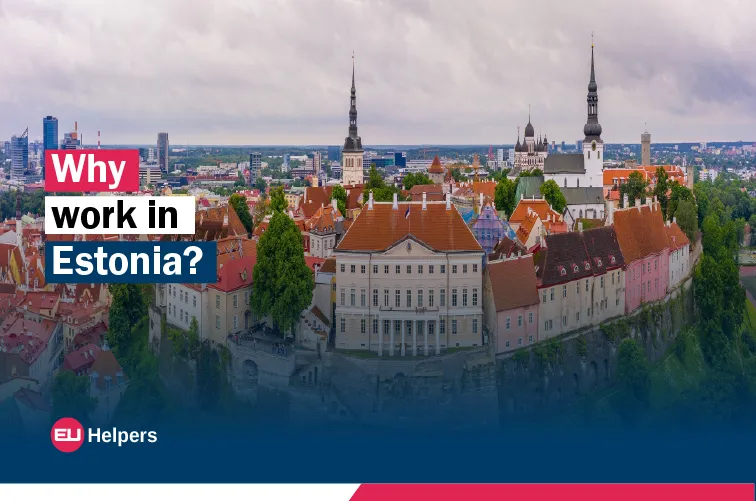

Why Work in Estonia? A Complete EU Helpers Guide for International Professionals
Estonia, the dynamic Northeastern European nation on the eastern coast of the Baltic Sea bordering Latvia to the south, Russia to the east, and Finland across the Gulf of Finland to the north, occupies an exceptionally attractive position in Europe for those seeking the rare combination of full EU, Schengen, and eurozone integration (Estonia joined the EU and NATO in 2004, Schengen in 2007, and adopted the euro in 2011), world-leading digital society and e-government services (Estonia is widely considered one of the world's most digitally advanced countries with 99% of public services available online, the famous e-Residency program — the world's first transnational digital identity for non-residents launched in 2014, X-Road digital infrastructure, e-tax — Estonians complete tax returns in around 3 minutes online, e-Cabinet — Estonia's paperless government meetings, i-Voting — Estonia was the first country in the world to enable internet voting in national elections in 2005, digital signatures, digital ID cards used for almost everything, and many other digital innovations that have made Estonia a global digital society reference), exceptional startup ecosystem (Tallinn has produced more unicorns per capita than any other European city, anchored by Skype — which originated in Estonia and was acquired by Microsoft for $8.5 billion in 2011 — plus Wise — the global money transfer company founded by Estonians — Bolt — the European mobility super-app, Pipedrive — the CRM software company, Veriff — the identity verification company, Playtech — the gaming technology company, and many other Estonian startup successes), pioneering immigration frameworks (Estonia introduced one of the world's first Digital Nomad Visas in 2020 and offers a distinctive Startup Visa for foreign founders), strong IT sector, exceptional English proficiency (consistently ranking among the world's top countries for English proficiency among non-native speakers, particularly among younger generations), distinctive Estonian language (a Finno-Ugric language closely related to Finnish, making it linguistically distinctive from Indo-European languages — Estonian is one of Europe's most unique languages along with Hungarian and Finnish), beautiful Baltic natural beauty (with extensive forests covering over 50% of the country, more than 2,000 islands including the largest Saaremaa and Hiiumaa, lakes including the famous Lake Peipus shared with Russia, and the Baltic Sea coastline), rich cultural heritage spanning ancient Estonian, medieval Hanseatic (Tallinn was a major Hanseatic League city), Swedish, Russian, and Soviet influences plus the distinctive post-1991 independence Estonian developments, and the famous Singing Revolution (Estonia regained independence through peaceful song-based protests against Soviet rule between 1987-1991 — one of history's most remarkable peaceful revolutions). With a population of approximately 1.3 million and covering about 45,335 square kilometers, Estonia has firmly established itself as one of the most innovative and digitally advanced EU destinations in the world, particularly for international IT and tech specialists, founders, entrepreneurs, digital nomads, remote workers, freelancers, cybersecurity experts, fintech professionals, and recent graduates. As an EU, Schengen, eurozone, and NATO member, with rich cultural heritage, exceptional universities (including the University of Tartu — Estonia's oldest and most prestigious university, founded in 1632 by Sweden's King Gustav II Adolf, making it one of Northern Europe's oldest universities and a leading Baltic research institution), strong digital and tech infrastructure, vibrant historic cities (with Tallinn's medieval Old Town being a UNESCO World Heritage Site and one of Europe's best-preserved medieval Hanseatic League cities), and central Baltic positioning, Estonia consistently ranks among the most innovative and forward-looking countries in the world. The capital Tallinn (the vibrant historic capital and main business, IT, and startup hub, with the famous UNESCO-listed medieval Old Town — one of Europe's best-preserved Hanseatic League cities featuring the Tallinn Town Hall Square, Toompea Hill with Toompea Castle, the Alexander Nevsky Cathedral, St. Olaf's Church which was reportedly the world's tallest building for some 350 years, and other medieval landmarks — and a globally renowned startup ecosystem that has produced more unicorns per capita than any other European city), along with Tartu (the second-largest city, home to the University of Tartu — founded in 1632 — and a major academic and research hub, European Capital of Culture 2024 with growing tech presence), Narva (the third-largest city in eastern Estonia with significant Russian-speaking population and the famous Narva Castle facing the Russian Ivangorod Fortress across the Narva River), Pärnu (Estonia's "summer capital" with Baltic beach resorts), Kohtla-Järve (an industrial city), Viljandi (a charming historic city famous for folk music festivals), Haapsalu (a historic resort town), and Kuressaare (the main town on Saaremaa island with the well-preserved medieval Episcopal Castle), host major Estonian and international companies, technology hubs, financial institutions, and innovative startups. For applicants from anywhere considering Estonia, the country offers structured immigration pathways including the residence permit for employment, the EU Blue Card, the distinctive Startup Visa, the pioneering Digital Nomad Visa (one of the world's first, launched in 2020), the e-Residency program (a digital identity for non-residents enabling business operations — not a residence permit), and a clear long-term route toward Estonian permanent residence and eventually Estonian citizenship (with full EU citizenship benefits). At EU Helpers, candidates regularly ask the fundamental question: why should I consider Estonia specifically?
This complete EU Helpers guide answers that question in depth and walks you through the genuine, practical, and long-term reasons that make Estonia one of Europe's most uniquely innovative destinations. Whether you are considering a role under the residence permit for employment, the EU Blue Card, the distinctive Startup Visa for innovative founders, the pioneering Digital Nomad Visa for remote workers, or family-based residence (or whether you are exploring the e-Residency program for digital business operations), this article walks you through everything you need to know — from world-leading digital society and exceptional startup ecosystem to pioneering immigration frameworks, exceptional English proficiency, and distinctive Baltic character.
Why Estonia Is Genuinely Unique Among European Destinations
Estonia occupies an exceptionally distinctive position in Europe — fully EU, Schengen, and eurozone integrated, blessed with world-leading digital society and exceptional startup ecosystem, and pioneering in innovative immigration frameworks (Startup Visa, Digital Nomad Visa, e-Residency).
World-Leading Digital Society
Estonia is widely considered one of the world's most digitally advanced countries with 99% of public services available online. Innovations include the X-Road digital infrastructure (the backbone of Estonia's e-government), e-tax (Estonians complete tax returns in around 3 minutes online), e-Cabinet (paperless government meetings), i-Voting (Estonia was the first country to enable internet voting in 2005), digital signatures, digital ID cards used for almost everything, e-prescription, e-school, e-health records, and the famous e-Residency program. This digital society fundamentally shapes daily life and business operations in ways that are unique globally.
Exceptional Startup Ecosystem
Estonia has one of Europe's most successful startup ecosystems, with Tallinn producing more unicorns per capita than any other European city. Estonian heritage includes Skype (which originated in Estonia and was acquired by Microsoft for $8.5 billion), Wise (the global money transfer company), Bolt (the European mobility super-app), Pipedrive (the CRM software company), Veriff (the identity verification company), Playtech (the gaming technology company), and many other Estonian startup successes.
Pioneering Immigration Frameworks
Estonia has been a pioneer in innovative immigration frameworks. Estonia launched one of the world's first Digital Nomad Visas in 2020, the distinctive Startup Visa for innovative founders, and the famous e-Residency program (the world's first transnational digital identity for non-residents launched in 2014, though importantly e-Residency is NOT a residence permit).
Exceptional English Proficiency
Estonia consistently ranks among the world's top countries for English proficiency among non-native speakers, particularly among younger generations. Many companies operate entirely in English, daily life functions well in English, and integration is exceptionally accessible.
Global Cybersecurity Leadership
Estonia is a global leader in cybersecurity, hosting the NATO Cooperative Cyber Defence Centre of Excellence in Tallinn (established after the 2007 cyberattacks against Estonia). Estonian cybersecurity expertise is globally recognized.
Full EU, Schengen, and Eurozone Integration
Estonia is a full EU, Schengen, eurozone, and NATO member, providing comprehensive European integration benefits.
Distinctive Estonian Language and Finno-Ugric Heritage
Estonian is a Finno-Ugric language closely related to Finnish, making it linguistically distinctive from Indo-European languages. Estonia shares distinctive Finno-Ugric heritage with Finland (across the Gulf of Finland), creating a unique cultural identity in Europe.
Singing Revolution Heritage
Estonia regained independence through the peaceful Singing Revolution between 1987-1991, one of history's most remarkable peaceful revolutions. This distinctive heritage shapes contemporary Estonian identity.
Top Financial Reasons to Consider Estonia
The financial rationale for working in Estonia centers around competitive salaries in tech sectors combined with accessible cost of living and full EU/eurozone benefits.
Competitive Salaries in Tech Sectors
Estonian salaries in IT, cybersecurity, fintech, and senior professional roles have been rising rapidly and are competitive within the Baltic region and increasingly competitive across Europe.
Accessible Cost of Living
Estonia's cost of living, particularly outside central Tallinn, is more accessible than Western European EU averages. Housing, food, dining, services, and transportation are all more accessible than in Western European capitals.
Eurozone Currency Convenience
Estonia uses the euro (adopted in 2011), providing currency stability and convenience for European business and personal matters.
Strong Worker Protections
Estonia has labor laws providing paid vacation, public holidays, parental leave, and other worker protections within EU frameworks.
Social Welfare System
Estonia has a comprehensive welfare system providing healthcare coverage, family allowances, pension contributions, and other benefits.
Digital Efficiency Reduces Friction
Estonia's world-leading digital infrastructure dramatically reduces administrative friction in daily life and business operations, providing exceptional efficiency that translates to time savings and quality of life improvements.
Lifestyle and Quality-of-Life Benefits
Beyond money, Estonia offers a distinctive lifestyle combining digital society convenience, Baltic natural beauty, rich cultural heritage, and the Estonian appreciation for nature, sauna culture, and quiet contemplation.
Vibrant Capital Tallinn
Tallinn, Estonia's capital, combines extraordinary historical heritage (the famous UNESCO-listed medieval Old Town with the Tallinn Town Hall Square — one of the best-preserved medieval squares in Northern Europe, Toompea Hill with Toompea Castle, the Alexander Nevsky Cathedral, St. Olaf's Church, Kiek in de Kök, the medieval city walls with their famous towers, and the Pikk Hermann tower flying the Estonian flag), modern character (the glass towers of the modern business district, the Telliskivi Creative City district, exceptional digital infrastructure), exceptional café and dining culture, growing international atmosphere (especially in startup circles), and a unique character that has attracted foreign residents from around the world.
Charming Tartu
Tartu, Estonia's second-largest city and European Capital of Culture 2024, offers exceptional university environment anchored by the University of Tartu (founded in 1632), beautiful historic center, the Estonian National Museum (one of Europe's most striking modern museum buildings), vibrant student life, growing tech ecosystem, and a relaxed cultural character.
Other Distinctive Estonian Cities
Narva (the third-largest city in eastern Estonia, with the famous Narva Castle facing the Russian Ivangorod Fortress across the Narva River — a stunning historical setting), Pärnu (Estonia's "summer capital" with Baltic beach resorts and the famous Pärnu Beach), Viljandi (famous for the annual Viljandi Folk Music Festival — one of the largest folk music festivals in Northern Europe), Haapsalu (a historic resort town with notable architecture), Kuressaare (the main town on Saaremaa island with the well-preserved medieval Episcopal Castle), and many others.
Beautiful Baltic Nature
Estonia offers exceptional natural beauty including extensive forests covering over 50% of the country (Estonia is one of Europe's most forested countries), more than 2,000 islands (with the largest being Saaremaa, Hiiumaa, Muhu, and Vormsi — each with distinctive character), beautiful lakes (including Lake Peipus shared with Russia — Europe's fifth-largest lake), bogs and wetlands (Estonia has exceptional bog and wetland landscapes, with many protected areas), and the Baltic Sea coastline. Estonia has 5 national parks including Lahemaa National Park (Estonia's first and largest), Soomaa National Park (famous for its bogs and floods), Vilsandi National Park, Karula National Park, and Matsalu National Park.
Distinctive Estonian Sauna Culture
Estonia has a distinctive sauna culture, with Estonian smoke sauna tradition (suitsusaun) recognized by UNESCO as Intangible Cultural Heritage. Saunas are central to Estonian culture and social life.
Rich Cultural Heritage
Estonia has rich cultural heritage spanning ancient Estonian pagan traditions, medieval Hanseatic League heritage (Tallinn was a major Hanseatic city), Swedish era (Estonia was part of the Swedish Empire from the 16th to 18th centuries), Russian/Tsarist era, Soviet era, and the distinctive post-1991 independence Estonian developments. The famous Singing Revolution (1987-1991) is a particularly distinctive heritage.
Estonian Music Tradition
Estonia has exceptional choral and music tradition, with the Estonian Song Festival (Laulupidu) being a massive cultural event held every five years. The Estonian Song Festival tradition has UNESCO recognition and was a central part of the Singing Revolution leading to independence.
Distinctive Estonian Cuisine
Estonian cuisine has distinctive Baltic and Nordic character with specialties including kama (a flour mix of roasted grains traditionally eaten with kefir), mulgipuder (potato and barley dish), verivorst (blood sausages — traditional Christmas dish), kiluvõileib (sprat sandwich), Estonian black bread (rukkileib), Estonian dark rye bread, smoked fish from the Baltic Sea, marinated mushrooms (foraging is popular), Estonian dairy products, and emerging modern Estonian cuisine drawing on Nordic influences.
Continental and Maritime Climate
Estonia has a humid continental climate moderated by the Baltic Sea. Summers are mild with long daylight hours (very long days in June with white nights — limited darkness), while winters are cold with snow.
Generally Safe
Estonia has overall low crime rates and is generally considered very safe, with stable political and security conditions supported by NATO membership and strong governance.
Exceptional Quality of Life
Estonia consistently ranks well in quality of life measures when considering digital efficiency, safety, education, natural beauty, and overall lifestyle.
Growing International Community
Estonia's startup ecosystem, distinctive immigration frameworks (Startup Visa, Digital Nomad Visa, e-Residency), and growing international visibility have created substantial international communities, particularly in Tallinn.
Excellent Healthcare and Education
Estonia has well-regarded healthcare and educational systems, with strong universities including the University of Tartu.
Family-Friendly Society
Estonia has family-oriented culture with public childcare, family allowances, parental leave, and family-friendly workplace policies.
Affordable Lifestyle Possibilities
Estonia makes lifestyle options accessible — apartments in Tallinn (more accessible than Western European capitals), dining at quality restaurants, cultural activities, and a generally comfortable lifestyle are accessible.
Career Growth and Professional Opportunities
Estonia's career environment is exceptional in tech sectors, with particularly strong opportunities in IT, startup ecosystem, cybersecurity, and fintech.
Exceptional Career Pathways in Technology and Startups
For IT and tech professionals, Estonia offers exceptional opportunities through Tallinn's leading startup ecosystem (with Wise, Bolt, Pipedrive, Veriff, Playtech, and many other Estonian startups, plus international tech companies with Estonian operations).
Strong Cybersecurity Opportunities
For cybersecurity professionals, Estonia's global cybersecurity leadership (supported by the NATO Cyber Defence Centre of Excellence) creates substantial opportunities.
Strong Fintech Opportunities
For fintech professionals, Estonia's strong fintech ecosystem (anchored by Wise's significance) creates substantial opportunities.
Opportunities for Entrepreneurs Through Startup Visa
For innovative entrepreneurs, the distinctive Startup Visa supports establishment in Estonia's exceptional startup ecosystem.
Opportunities for Remote Workers Through Digital Nomad Visa
For remote workers and digital nomads, Estonia's pioneering Digital Nomad Visa (one of the world's first) supports residence while working remotely.
Strong Foundation for International Careers
As an EU, Schengen, and eurozone member with exceptional digital infrastructure and English proficiency, Estonia is a strong base for international careers.
Residency, Work Permit, and Legal Benefits
Working legally in Estonia comes with structured immigration pathways and strong legal protections within the EU framework.
Structured Permit System
Foreign workers obtain residence through dedicated schemes including the residence permit for employment, EU Blue Card, distinctive Startup Visa, pioneering Digital Nomad Visa, researcher route, family reunification provisions, and other pathways.
e-Residency Program (Complementary, Not Residence)
The famous e-Residency program enables digital business operations but is NOT a residence permit. It can complement actual residence routes for those engaging with Estonia from abroad.
Family Reunification
Estonia allows qualifying workers and residents to bring close family members.
Pathway to Estonian Citizenship and EU Benefits
After qualifying continuous residence in Estonia (typically 8 years and meeting other requirements including Estonian language), foreign nationals may become eligible for Estonian citizenship by naturalization. Estonian citizenship grants full EU citizenship benefits.
Healthcare, Education, and Social Benefits
Estonia's public services benefit from world-leading digital infrastructure.
Well-Regarded Healthcare System
Estonia has a well-regarded healthcare system providing coverage for residents.
Excellent Educational System
Estonia offers high-quality public education and well-regarded universities (particularly the University of Tartu — Estonia's oldest, founded in 1632).
Strong Social Protections
Registered workers benefit from contributions toward pensions, healthcare, and other social protections.
Practical Considerations for Working in Estonia
While Estonia offers compelling benefits, applicants should also understand some practical considerations.
Distinctive Estonian Language
Estonian is a Finno-Ugric language closely related to Finnish, distinguishing it from Indo-European languages. Estonian is one of the more challenging European languages for non-native speakers. However, Estonia's exceptional English proficiency means many functions of daily life and most professional contexts work well in English.
Small Country Considerations
Estonia has a small population (around 1.3 million) and relatively small job market in some sectors outside tech. This concentrates opportunities particularly in IT, startups, fintech, and cybersecurity.
Climate Considerations
Estonia has cold dark winters with limited daylight (particularly in December), though summers offer beautiful long days with white nights.
Cultural Adjustments
Estonian culture has distinctive features including more reserved interpersonal style than some other European cultures, appreciation for personal space and quiet contemplation, and strong individualist tendencies.
Required Documents and Step-by-Step Overview
While exact requirements depend on the specific permit, the general route involves coordination with the Police and Border Guard Board (PPA), Estonian embassies and consulates abroad, and other authorities depending on the specific route.
Practical Tips for International Applicants Considering Estonia
Tips From EU Helpers for Considering Estonia
Carefully evaluate which permit category fits your profile — residence permit for employment, EU Blue Card, Startup Visa, Digital Nomad Visa, or others — understanding clearly that e-Residency is a digital identity NOT a residence permit. For innovative startup founders, evaluate the distinctive Startup Visa. For remote workers, evaluate the pioneering Digital Nomad Visa. Target Estonian employers in the strong tech and startup ecosystem. Develop English proficiency (essential given Estonia's exceptional English use). Take advantage of Estonia's world-leading digital infrastructure. Embrace the Estonian culture of nature appreciation, sauna culture, and quiet contemplation. Always rely on the latest official guidance.
Final Guidance
Why work in Estonia? Because few countries in Europe combine such a unique mix of full EU, Schengen, and eurozone membership (EU and NATO member since 2004, Schengen since 2007, euro since 2011), world-leading digital society (with 99% of public services online, the famous e-Residency program — the world's first transnational digital identity — X-Road, e-tax, i-Voting, and many other digital innovations), exceptional startup ecosystem (Tallinn produced more unicorns per capita than any other European city, with Estonian heritage including Skype — which originated in Estonia and was acquired by Microsoft for $8.5 billion — Wise, Bolt, Pipedrive, Veriff, Playtech, and many other Estonian startup successes), pioneering immigration frameworks (Estonia introduced one of the world's first Digital Nomad Visas in 2020 and offers a distinctive Startup Visa), global cybersecurity leadership (hosting the NATO Cooperative Cyber Defence Centre of Excellence in Tallinn), exceptional English proficiency, distinctive Estonian language and Finno-Ugric cultural heritage, the famous Singing Revolution heritage, UNESCO-listed medieval Tallinn Old Town (one of Europe's best-preserved Hanseatic League cities), beautiful Baltic natural beauty (with extensive forests covering over 50% of the country, more than 2,000 islands, beautiful lakes, bogs, and Baltic coastline), distinctive Estonian sauna culture (UNESCO Intangible Cultural Heritage), exceptional choral and music tradition (including the Estonian Song Festival), accessible cost of living relative to Western European EU averages, growing salary levels particularly in tech sectors, full eurozone integration, and a clear pathway to Estonian citizenship with full EU benefits. For international IT and tech professionals drawn to Tallinn's exceptional startup ecosystem and digital society, cybersecurity professionals attracted to Estonia's global cybersecurity leadership, fintech professionals attracted to Wise and the broader Estonian fintech ecosystem, innovative entrepreneurs using the distinctive Startup Visa, remote workers using the pioneering Digital Nomad Visa, or lifestyle migrants drawn to Estonia's distinctive Baltic character and natural beauty, Estonia stands out as one of Europe's most uniquely innovative destinations. EU Helpers supports international applicants at every stage — from evaluating eligibility and selecting the right permit route (Startup Visa, Digital Nomad Visa, residence permit for employment, EU Blue Card, or others) to preparing documents, employer or sponsor coordination, embassy navigation, and planning a smooth transition. If Estonia is on your radar as a future work destination, EU Helpers can help you move forward with clarity, confidence, and the latest accurate information.
FAQs
Estonia offers a unique combination of full EU/Schengen/eurozone integration, world-leading digital society (with 99% of public services online), exceptional startup ecosystem (most unicorns per capita in Europe), pioneering immigration frameworks (Digital Nomad Visa, Startup Visa, e-Residency), global cybersecurity leadership, exceptional English proficiency, beautiful Baltic nature, and a clear pathway to Estonian citizenship with full EU benefits.
Yes. Estonia is an EU member (since 2004), Schengen member (since 2007), eurozone member (adopted the euro in 2011), NATO member (since 2004), and Council of Europe member, providing comprehensive European integration benefits.
Estonia uses the euro as its currency, having adopted it in 2011. This provides currency stability and convenience for European business and personal matters.
Estonia is widely considered one of the world's most digitally advanced countries with 99% of public services available online. Innovations include the X-Road digital infrastructure, e-tax (Estonians complete tax returns in around 3 minutes), e-Cabinet, i-Voting (first country to enable internet voting in 2005), digital ID cards, digital signatures, and the famous e-Residency program.
Estonia's e-Residency program, launched in 2014, is the world's first transnational digital identity for non-residents. It provides a digital identity enabling business operations in Estonia, including company registration. Importantly, e-Residency is NOT a residence permit and does NOT provide rights to physically reside in Estonia.
Tallinn has produced more unicorns per capita than any other European city. Estonian heritage includes Skype (which originated in Estonia and was acquired by Microsoft for $8.5 billion), Wise (global money transfer), Bolt (mobility super-app), Pipedrive (CRM software), Veriff (identity verification), Playtech, and many other Estonian startup successes.
Estonia's Startup Visa is a distinctive framework for foreign startup founders with innovative business ideas. Applications are evaluated by a Startup Committee of experts who assess innovation, viability, and scalability. Successful applicants receive residence permits to develop their startups in Estonia.
Estonia's Digital Nomad Visa, launched in 2020 as one of the world's first digital nomad visas, supports foreign nationals working remotely for non-Estonian employers or freelancing for non-Estonian clients while residing in Estonia for up to one year, with structured income requirements.
Skype, the famous internet communications platform, originated in Estonia in 2003 — developed primarily by Estonian engineers. Skype was acquired by Microsoft for $8.5 billion in 2011, becoming one of the most significant Estonian startup successes and a foundational story of Estonia's tech ecosystem.
Wise (formerly TransferWise) is the global money transfer company founded by Estonians (Taavet Hinrikus and Kristo Käärmann). Wise is one of Estonia's most successful startup exports, demonstrating the strength of Estonia's tech ecosystem and Estonian entrepreneurial heritage.
The NATO Cooperative Cyber Defence Centre of Excellence in Tallinn was established after the 2007 cyberattacks against Estonia (some of the first significant cyberattacks against a nation). The centre is one of NATO's most important cyber defence facilities, making Estonia a global cybersecurity leader.
Estonia consistently ranks among the world's top countries for English proficiency among non-native speakers, particularly among younger generations. Many companies operate entirely in English, daily life functions well in English, and integration is exceptionally accessible.
Tallinn is Estonia's vibrant capital with the famous UNESCO-listed medieval Old Town (one of Europe's best-preserved Hanseatic League cities with the Town Hall Square, Toompea Hill, Alexander Nevsky Cathedral, St. Olaf's Church, and medieval city walls), modern character with growing startup ecosystem, exceptional digital infrastructure, and unique blend of medieval heritage and digital innovation.
Tartu is Estonia's second-largest city and home to the University of Tartu (Estonia's oldest, founded in 1632). It is a major academic and research hub, European Capital of Culture 2024, with beautiful historic center, the Estonian National Museum, vibrant student life, and growing tech ecosystem.
Estonia has distinctive sauna culture, with Estonian smoke sauna tradition (suitsusaun) recognized by UNESCO as Intangible Cultural Heritage. Saunas are central to Estonian social life and cultural identity.
The Singing Revolution refers to Estonia's peaceful path to independence from Soviet rule between 1987-1991, characterized by mass singing events and the Estonian Song Festival tradition. It is one of history's most remarkable peaceful revolutions and a distinctive part of Estonian identity.
Estonian (a Finno-Ugric language closely related to Finnish) is the official language. English is widely used in business and daily life, particularly among younger generations and in Tallinn. Russian is also spoken, particularly in eastern Estonia and among older generations.
Yes. Estonia has overall low crime rates and is generally considered very safe, with stable political and security conditions supported by NATO membership and strong governance.
Estonia has a humid continental climate moderated by the Baltic Sea. Summers are mild with long daylight hours (very long days in June with "white nights"), while winters are cold with snow and limited daylight.
Estonia's cost of living, particularly outside central Tallinn, is more accessible than Western European EU averages, providing attractive purchasing power. Estonia offers full EU and eurozone benefits with relatively accessible costs by Western European standards.
Yes, exceptionally. Estonia's combination of exceptional digital infrastructure, leading startup ecosystem (Wise, Bolt, Pipedrive, Veriff, and many others), global cybersecurity expertise, distinctive immigration frameworks (Startup Visa, Digital Nomad Visa), exceptional English proficiency, and accessible cost of living makes the country particularly attractive for foreign IT professionals.
Yes. Qualifying workers and residents can usually apply for family reunification for spouses, registered partners, and dependent children. EU Blue Card holders benefit from particularly favorable family reunification provisions.
EU Helpers supports international applicants with eligibility assessment, permit category selection (including Startup Visa for innovative founders, Digital Nomad Visa for remote workers, and other Estonian options), document preparation, employer or sponsor coordination, embassy navigation, and clarity on the latest official requirements tailored to your career goals.