
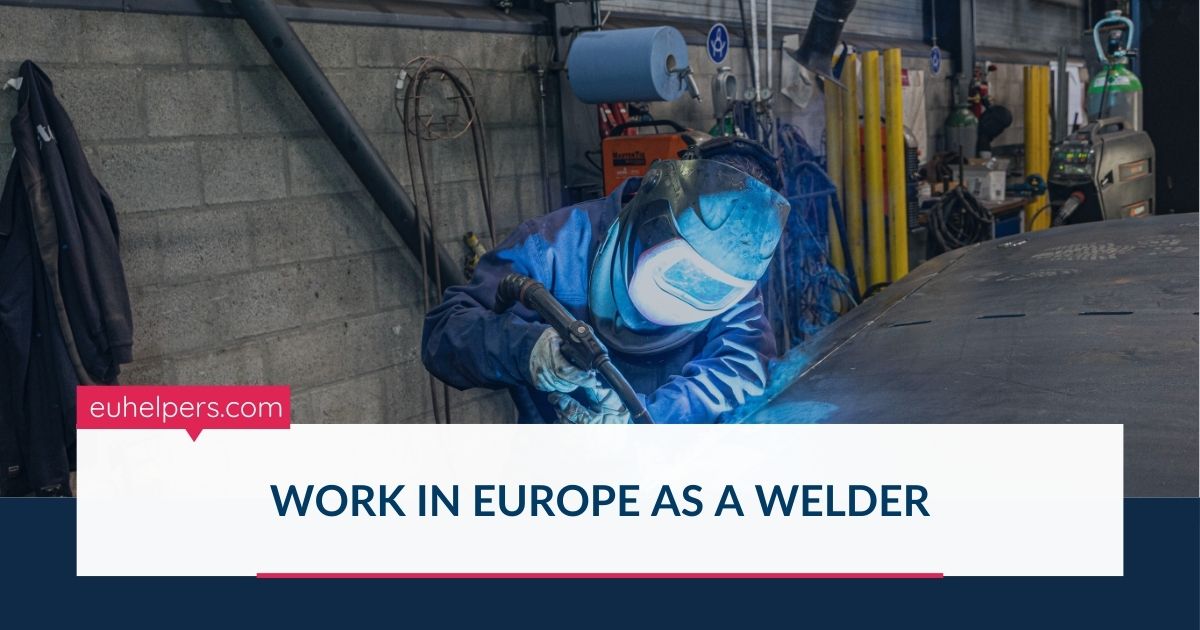
Welding plays a crucial role in Europe's manufacturing and construction industries. With increasing demand for infrastructure, vehicles, and metal products, skilled welders are in high demand, offering stable careers with competitive salaries.
What Does a Welder Do?
Welders join metal components using various techniques across industries like automotive, construction, shipbuilding, and aerospace. This profession requires technical expertise, precision, and knowledge of safety procedures.
Main Welding Techniques:
- MIG/MAG Welding – Common in automotive and fabrication.
- TIG Welding – Ideal for high-precision work on stainless steel and aluminum.
- Arc Welding – Frequently used in construction and heavy machinery repair.
- Electrode Welding – Popular in maintenance and repair jobs.
How to Become a Welder in Europe
- Training & Education – Vocational courses, apprenticeships, and specialized schools provide essential skills.
- Certifications – Required qualifications include EN ISO 9606-1 (widely recognized in Europe) and ASME (for pipeline and boiler welding).
- Experience – Beginners often start as apprentices before moving into specialized roles.
Salaries for Welders in Europe
Wages vary by country, experience, and industry:
- Germany: €2,000–€4,500/month
- France: €1,800–€4,000/month
- Spain: €1,500–€3,000/month
- Netherlands: €2,200–€4,500/month
- UK: £2,000–£4,500/month
Job Demand & Opportunities
Europe faces a shortage of skilled welders, with growing demand in:
- Infrastructure (roads, bridges, railways)
- Automotive manufacturing
- Energy (renewable and nuclear projects)
- Shipbuilding and maintenance
- Petrochemical industry
Welding is a rewarding career with strong job prospects and attractive salaries across Europe. With proper training and certification, welders can secure well-paid jobs in booming industries. Now is an excellent time to enter this profession.