

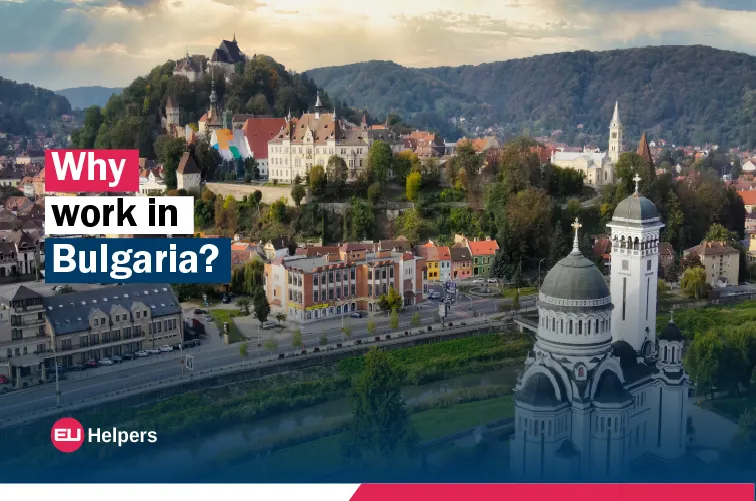
Why Work in Bulgaria? A Complete EU Helpers Guide for International Professionals
Bulgaria, the dynamic Southeast European nation in the Balkans bordering Romania, Serbia, North Macedonia, Greece, and Turkey (with a beautiful coastline on the Black Sea), occupies an increasingly attractive position in the European Union for those seeking full EU integration, accessible cost of living significantly lower than Western European averages, growing career opportunities (particularly in IT, BPO, pharmaceutical, and manufacturing), beautiful natural and cultural heritage, and Black Sea lifestyle. As an EU member state (joined in 2007), a NATO member, a Council of Europe member, and a country that joined the Schengen Area for air and sea borders in March 2024 (with full land border Schengen integration expected), Bulgaria has firmly established itself as one of the most accessible EU member states for international professionals, IT and tech specialists, BPO and shared services professionals, pharmaceutical experts, manufacturing professionals, engineering specialists, business consultants, founders, entrepreneurs, retirees, and lifestyle migrants. With a population of approximately 6.8 million and covering about 110,994 square kilometers, Bulgaria offers a uniquely interesting combination of full EU benefits combined with accessible cost of living and Mediterranean-Balkan character. The capital Sofia (the dynamic capital and Bulgaria's major business, IT, and BPO hub, with the imposing Vitosha Mountain providing a beautiful backdrop), along with Plovdiv (Bulgaria's second-largest city and one of Europe's oldest continuously inhabited cities, with a beautiful UNESCO-recognized old town), Varna (the beautiful Black Sea port and tourism hub), Burgas (another important Black Sea coastal city), Ruse (on the Danube River with Austro-Hungarian-era architecture), Veliko Tarnovo (the spectacular medieval capital), and Nessebar (UNESCO-listed ancient Black Sea town), hosts businesses across various sectors. For applicants from anywhere considering Bulgaria, the country offers structured immigration pathways and a clear long-term route toward Bulgarian permanent residence and eventually Bulgarian citizenship (with full EU citizenship benefits). At EU Helpers, candidates regularly ask the fundamental question: why should I consider Bulgaria specifically?
This complete EU Helpers guide answers that question in depth and walks you through the genuine, practical, and long-term reasons that make Bulgaria one of Europe's most accessible and attractive EU destinations. Whether you are considering a salaried role under the single permit, the EU Blue Card, the ICT permit, self-employment routes, investor routes, family-based residence, or other pathways, this article walks you through everything you need to know — from EU membership benefits and accessible cost of living to growing IT and BPO opportunities, beautiful Black Sea coastline, rich cultural heritage, exceptional natural beauty, Mediterranean-Balkan cuisine, and Schengen integration.
Why Bulgaria Is Genuinely Worth Considering
Bulgaria occupies an unusually attractive position in Europe — fully EU integrated but accessible, beautiful with both coast and mountains, increasingly modernized but with rich historical heritage, and one of the EU's most affordable countries.
Full EU Member State
Bulgaria has been a full EU member since 2007, providing complete EU benefits including freedom of movement, EU labor market access for Bulgarian citizens, EU funds, and broader integration. Bulgarian citizenship (achievable through naturalization after qualifying residence) grants full EU citizenship benefits.
Schengen Integration
Bulgaria joined the Schengen Area for air and sea borders in March 2024, with full land border integration expected, supporting freedom of movement within the Schengen Area.
NATO Member
Bulgaria is a NATO member, providing security alignment with Western institutions.
Genuinely Accessible Cost of Living
Bulgaria has one of the lowest costs of living in the EU, with affordable housing, food, services, and transportation. This makes salaries provide remarkable purchasing power and supports comfortable lifestyles.
Growing IT and BPO Hub
Bulgaria has emerged as one of Eastern Europe's most important IT and BPO destinations, with Sofia particularly significant as a major hub.
Beautiful Black Sea Coastline
Bulgaria's Black Sea coastline (approximately 354 kilometers) features beautiful destinations including Sunny Beach, Golden Sands, Nessebar (UNESCO listed), Sozopol, Pomorie, and others.
Stunning Mountain Landscapes
Bulgaria offers exceptional mountain landscapes including the Rila Mountains (with Bulgaria's highest peak Musala at 2,925 meters and the famous Rila Monastery, a UNESCO site), the Pirin Mountains (UNESCO listed), the Rhodope Mountains, and the Balkan Mountains crossing the country.
Rich Historical Heritage
Bulgaria has an extraordinarily rich history spanning Thracian, Roman, Byzantine, First and Second Bulgarian Empires, Ottoman, and modern periods, with UNESCO World Heritage Sites including the Rila Monastery, the Madara Rider, the Boyana Church, the Thracian Tomb of Kazanlak, the Thracian Tomb of Sveshtari, ancient Nessebar, the Pirin National Park, Srebarna Nature Reserve, and the rock-hewn churches of Ivanovo.
Top Financial Reasons to Consider Bulgaria
The financial rationale for working in Bulgaria centers around accessible cost of living combined with EU benefits and growing salaries.
One of the EU's Lowest Costs of Living
Bulgaria has one of the lowest costs of living in the EU, with housing, food, dining, services, transportation, and entertainment all significantly less expensive than in Western European EU countries. This provides remarkable purchasing power.
Growing Salary Levels in Key Sectors
Bulgarian salaries are rising significantly, particularly in IT, BPO, pharmaceutical, and senior professional roles. Bulgaria has been one of the EU's faster-growing economies in terms of wage growth.
Favorable Tax Environment
Bulgaria has a relatively favorable tax environment with a flat 10% personal income tax rate, one of the EU's lowest. This significantly enhances net compensation.
Currency
Bulgaria uses the Bulgarian lev (BGN), pegged to the euro. Bulgaria is preparing for euro adoption.
EU Membership Benefits
EU membership provides labor mobility for Bulgarian citizens (achievable through naturalization), EU funds for development, and other integration benefits.
Lifestyle and Quality-of-Life Benefits
Beyond financial considerations, Bulgaria offers a lifestyle that appeals to those who value Balkan-Mediterranean character, natural beauty, rich heritage, and accessible quality of life.
Vibrant Capital Sofia
Sofia, Bulgaria's dynamic capital, combines historical heritage (the Alexander Nevsky Cathedral, one of the world's largest Orthodox cathedrals; the Boyana Church, a UNESCO site; the Roman St. George Rotunda; the National Palace of Culture), growing modern character, vibrant café culture, growing dining scene, and the imposing Vitosha Mountain providing a beautiful backdrop for hiking, skiing, and outdoor activities just minutes from the city center.
UNESCO-Listed Plovdiv
Plovdiv is one of Europe's oldest continuously inhabited cities (over 8,000 years), with a beautiful old town featuring National Revival period architecture, a Roman amphitheater, ancient ruins, and a vibrant arts scene. Plovdiv was European Capital of Culture in 2019.
Beautiful Black Sea Coastline
Bulgaria's Black Sea coastline features beautiful destinations including Sunny Beach (one of Bulgaria's major resort destinations), Golden Sands, ancient Nessebar (UNESCO listed with stunning medieval churches), Sozopol (charming old town), Pomorie, Burgas, and Varna with their distinctive Bulgarian coastal character.
Spectacular Mountain Destinations
Bulgaria offers exceptional mountain destinations including Bansko (a major ski resort), Borovets (one of Europe's oldest ski resorts), Pamporovo, the Rila Monastery (Bulgaria's most important monastery and UNESCO site), the Seven Rila Lakes, Musala peak, and the breathtaking Pirin Mountains.
Mediterranean and Continental Climate
Bulgaria has varied climate — Mediterranean influences along the Black Sea coast and in southern Bulgaria, continental in the interior, and alpine in mountain areas. Coastal areas have warm sunny summers and mild winters.
Distinctive Bulgarian Cuisine
Bulgarian cuisine combines Mediterranean, Balkan, Turkish, and broader influences with distinctive specialties including shopska salad (the national salad with tomatoes, cucumbers, onions, peppers, and white cheese), banitsa (savory pastry), kebapche (grilled minced meat), tarator (cold yogurt soup), and excellent Bulgarian dairy products (Bulgarian yogurt is internationally famous). Bulgaria also has a notable wine tradition.
Bulgarian Wine Tradition
Bulgaria has one of Europe's oldest wine traditions (over 4,000 years), with distinctive grape varieties including Mavrud, Melnik, and Rubin, alongside international varieties. Bulgarian wines are gaining international recognition.
Generally Safe
Bulgaria is generally safe with relatively low crime rates compared to many European countries.
Growing International Community
Bulgaria's growing IT and BPO sector, foreign investment, and emerging international visibility have created growing international communities, particularly in Sofia.
Affordable Lifestyle Possibilities
Bulgaria makes lifestyle options accessible that would be expensive elsewhere — apartments in Sofia, properties along the Black Sea coast, dining at quality restaurants, and a generally relaxed quality of life are all genuinely affordable.
Career Growth and Professional Opportunities
Bulgaria's career environment is dynamic and growing in many sectors.
Strong Career Pathways in IT and BPO
For IT and BPO professionals, Bulgaria offers exceptional opportunities given its status as one of Eastern Europe's major IT and BPO hubs.
Opportunities in Pharmaceutical and Manufacturing
For pharmaceutical and manufacturing professionals, Bulgaria's growing sectors offer opportunities.
Opportunities in Healthcare
For healthcare professionals, demographic aging and emigration of medical professionals create growing demand.
Strong Foundation for International Careers
As an EU and Schengen member with growing IT and BPO ecosystem and accessible business environment, Bulgaria provides a strong foundation for international careers.
Residency, Work Permit, and Legal Benefits
Working legally in Bulgaria comes with structured immigration pathways and strong legal protections within the EU framework.
Structured Permit System
Most foreign workers obtain residence through dedicated schemes including the single permit, EU Blue Card, ICT permit, self-employment routes, investor routes, researcher permit, family reunification provisions, and other pathways.
Single Permit Combining Work and Residence
The single permit conveniently combines work authorization and residence permit.
EU Blue Card
Bulgaria issues the EU Blue Card for highly qualified third-country professionals.
Family Reunification
Bulgaria allows qualifying workers and residents to bring close family members.
Pathway to Bulgarian Citizenship and EU Benefits
After several continuous years of legal residence and work in Bulgaria, foreign nationals may become eligible for Bulgarian citizenship by naturalization, granting full EU citizenship benefits.
Healthcare, Education, and Social Benefits
Bulgaria's public services provide coverage for residents.
Healthcare System
Bulgaria has a healthcare system providing coverage for residents, with both public and private healthcare options.
Educational System
Bulgaria offers high-quality public and private education, with international schools available in Sofia and other major cities.
Social Protections
Registered workers benefit from contributions toward pensions, healthcare, and other social protections through the Bulgarian social security system.
Practical Considerations for Working in Bulgaria
While Bulgaria offers compelling benefits, applicants should also understand some practical considerations.
Demographic Challenges
Bulgaria faces demographic challenges with an aging population and emigration of skilled workers to other EU member states.
Language Considerations
Bulgarian (Cyrillic script) is the official language. English is increasingly used in IT, BPO, and international business contexts.
Cyrillic Script
Bulgaria uses Cyrillic script. While many Bulgarians can read Latin script, official documents and many practical aspects of daily life use Cyrillic.
Emerging EU Member Character
Bulgaria, as an EU member since 2007, is still developing in some respects compared to longer-standing EU members.
Required Documents and Step-by-Step Overview
While exact requirements depend on the specific permit and applicant profile, the general route involves coordination with the Migration Directorate of the Ministry of Interior, the Employment Agency, the Bulgarian embassy or consulate for D visas where required, and local authorities for registration after arrival.
Practical Tips for International Applicants Considering Bulgaria
Moving to Bulgaria is rewarding, but preparation makes the difference.
Tips From EU Helpers for Considering Bulgaria
Carefully evaluate which permit category fits your profile. Identify Bulgarian employers experienced with hiring foreign workers, particularly in IT, BPO, pharmaceutical, and growing sectors in Sofia, Plovdiv, and Varna. For self-employment, prepare credible business plans. Take advantage of Bulgaria's exceptional cost of living and EU benefits. Plan housing in Sofia, Plovdiv, Varna, or other relevant cities. Strengthen your Bulgarian language skills for daily life and integration. Always rely on the latest official guidance.
Final Guidance
Why work in Bulgaria? Because few EU member states offer such a unique mix of full EU membership (since 2007), Schengen integration (joined for air and sea borders in March 2024), NATO membership, one of the EU's lowest costs of living, growing IT and BPO sector (Sofia is one of Eastern Europe's major hubs), beautiful Black Sea coastline (with destinations like Sunny Beach, Nessebar UNESCO site, Sozopol, and Varna), stunning mountain landscapes (Rila Mountains with the famous Rila Monastery, Pirin Mountains, Rhodopes, Balkan Mountains), rich historical heritage spanning Thracian, Roman, Byzantine, Bulgarian Empire, and Ottoman periods (with multiple UNESCO World Heritage Sites), distinctive Bulgarian cuisine and notable wine tradition (one of Europe's oldest), generally favorable 10% flat personal income tax rate, accessible immigration pathways, and a clear path to Bulgarian citizenship with full EU benefits. For international professionals seeking accessible EU residence with growing career opportunities, IT and BPO professionals drawn to Bulgaria's major Eastern European tech hub status, lifestyle migrants and retirees seeking accessible Mediterranean-Balkan lifestyle, or entrepreneurs establishing accessible EU operations, Bulgaria stands out as one of Europe's most attractive accessible destinations. EU Helpers supports international applicants at every stage — from evaluating eligibility and selecting the right permit route to preparing documents, comparing single permit, EU Blue Card, ICT, self-employment, investor routes, and family-based residence, and planning a smooth transition. If Bulgaria is on your radar as a future work or residence destination, EU Helpers can help you move forward with clarity, confidence, and the latest accurate information.
FAQs
Bulgaria offers a unique combination of full EU membership, Schengen integration, NATO membership, one of the EU's lowest costs of living, growing IT and BPO sector, beautiful Black Sea coastline, stunning mountain landscapes, rich historical heritage, distinctive cuisine and wine tradition, favorable 10% flat tax rate, accessible immigration pathways, and a clear path to Bulgarian citizenship with full EU benefits.
Yes. Bulgaria has been an EU member state since 2007, a NATO member, and a Council of Europe member.
Bulgaria joined the Schengen Area for air and sea borders in March 2024, with full land border Schengen integration expected.
Bulgaria uses the Bulgarian lev (BGN) as its currency, which is pegged to the euro. Bulgaria is preparing for euro adoption.
Bulgaria has a relatively favorable tax environment with a flat 10% personal income tax rate, one of the EU's lowest, which significantly enhances net compensation.
Bulgaria has one of the lowest costs of living in the EU, with housing, food, dining, services, transportation, and entertainment all significantly less expensive than in Western European EU countries. This provides remarkable purchasing power.
Sofia, Bulgaria's dynamic capital, combines historical heritage (the Alexander Nevsky Cathedral, the Boyana Church UNESCO site, the Roman St. George Rotunda), growing modern character, vibrant café culture, growing dining scene, and the imposing Vitosha Mountain providing a beautiful backdrop just minutes from the city center.
Plovdiv is one of Europe's oldest continuously inhabited cities (over 8,000 years), with a beautiful old town featuring National Revival period architecture, a Roman amphitheater, and ancient ruins. Plovdiv was European Capital of Culture in 2019.
Bulgaria has varied climate — Mediterranean influences along the Black Sea coast and in southern Bulgaria, continental in the interior, and alpine in mountain areas. Coastal areas have warm sunny summers and mild winters.
Yes. Bulgaria is generally safe with relatively low crime rates compared to many European countries.
Bulgarian (Cyrillic script) is the official language. English is increasingly used in business, IT, BPO, and international contexts.
Yes, very. Bulgaria has emerged as one of Eastern Europe's most important IT destinations, with Sofia particularly significant as a major IT hub. The combination of favorable tax rate, accessible cost of living, EU membership, growing ecosystem, and competitive salaries makes Bulgaria attractive for IT professionals.
Bulgaria has multiple UNESCO World Heritage Sites including the Rila Monastery, the Madara Rider, the Boyana Church, the Thracian Tomb of Kazanlak, the Thracian Tomb of Sveshtari, ancient Nessebar, the Pirin National Park, Srebarna Nature Reserve, and the rock-hewn churches of Ivanovo.
Bulgaria's Black Sea coastline (approximately 354 kilometers) features beautiful destinations including Sunny Beach, Golden Sands, ancient Nessebar (UNESCO listed), Sozopol (charming old town), Pomorie, Burgas, and Varna.
Yes. Bulgaria has notable ski resorts including Bansko (a major modern ski resort), Borovets (one of Europe's oldest ski resorts), and Pamporovo, with affordable prices compared to Western European ski destinations.
The single permit is Bulgaria's main framework combining work authorization and residence permit for third-country nationals in salaried employment with a Bulgarian employer.
Bulgaria issues the EU Blue Card for highly qualified third-country professionals with recognized higher education and a qualifying job offer meeting the salary threshold.
Yes. Qualifying workers can usually apply for family reunification for spouses and dependent children.
After several continuous years of legal residence and work in Bulgaria, foreign nationals may become eligible for Bulgarian citizenship by naturalization, provided they meet integration, language, and other requirements. Bulgarian citizenship grants full EU citizenship benefits.
Yes. Bulgaria is attractive for retirees seeking EU residence with accessible cost of living, beautiful natural settings (Black Sea coast, mountain regions), Mediterranean-influenced climate, and EU benefits.
EU Helpers supports international applicants with eligibility assessment, permit category selection (including single permit, EU Blue Card, ICT, self-employment, and others), document preparation, employer coordination, and clarity on the latest official requirements. The goal is to help you approach the Bulgarian work and residency process with accurate, up-to-date, and practical information tailored to your career goals.