
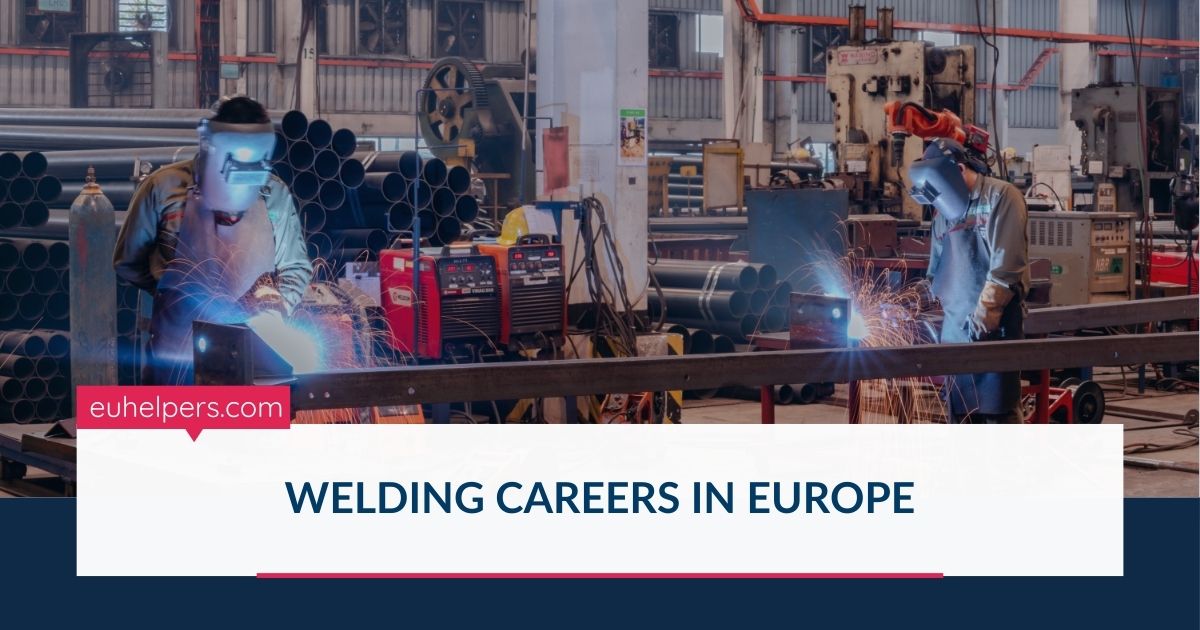
Welders play a crucial role in Europe’s industrial and construction sectors, contributing to the fabrication and maintenance of everything from buildings and bridges to pipelines and machinery. A typical welder’s job in Europe involves performing precise welding operations, ensuring high-quality results, adhering to strict safety standards, and collaborating with other professionals to meet project objectives.
With a strong demand across multiple industries, including manufacturing, shipbuilding, and automotive, welding is a versatile and in-demand trade across the continent.
Core Responsibilities of a Welder in Europe
1. Welding Operations
Welders carry out various welding tasks using methods such as MIG (Metal Inert Gas), TIG (Tungsten Inert Gas), and ARC (Electric Arc) welding. They interpret technical specifications and blueprints to ensure each weld is accurate and structurally sound.
2. Quality Assurance
Ensuring the quality of each weld is essential. Welders conduct visual inspections and may also perform non-destructive testing (NDT) to detect internal flaws or weaknesses, ensuring compliance with industry and safety standards.
3. Safety Compliance
A strong focus on workplace safety is vital. Welders must follow all safety protocols, wear appropriate protective gear, and maintain a safe working environment to prevent accidents and injuries.
4. Collaboration and Teamwork
Welders frequently work in teams alongside engineers, fabricators, and supervisors. Effective communication and coordination are essential to ensure smooth project execution.
5. Equipment Maintenance
Maintaining welding tools and machinery is part of the job. Welders are expected to perform regular checks, troubleshoot equipment issues, and ensure everything functions optimally.
6. Fabrication and Assembly
Many welding roles also involve fabricating and assembling steel structures. This includes cutting materials, fitting components, and using machinery such as guillotines, presses, and flame cutters.
7. Blueprint Reading and Interpretation
Understanding technical drawings is a core part of a welder's duties. These blueprints provide detailed guidance on dimensions, materials, and techniques required for the task at hand.
8. Operating Fabrication Machinery
Welders may operate heavy fabrication tools and machines that assist in cutting, shaping, and preparing metal parts for welding and assembly.
Common Welding Techniques in Europe
-
MIG Welding (Metal Inert Gas): Often used in automotive and construction applications for its speed and efficiency.
-
TIG Welding (Tungsten Inert Gas): Known for precision and clean welds, commonly used in aerospace and fine metalwork.
-
ARC Welding (Electric Arc): Suitable for heavy-duty work, including structural steel and industrial fabrication.
Skills and Qualifications for Welders
Technical Proficiency:
Mastery of multiple welding methods and familiarity with industry tools and machines.
Blueprint Literacy:
The ability to read and interpret complex engineering drawings and specifications.
Safety Awareness:
Understanding safety standards and protocols to ensure a secure working environment.
Quality Control:
Keen attention to detail and the ability to inspect welds for accuracy and compliance.
Communication Skills:
Clear communication and cooperation with team members and supervisors.
Physical Stamina:
Welding can be physically demanding, requiring strength, endurance, and the ability to work in various positions.
Problem-Solving Abilities:
Quick thinking and practical skills to troubleshoot issues with materials, equipment, or project requirements.
Common Job Titles for Welders in Europe
-
Welder
-
Fabricator Welder
-
MIG Welder
-
TIG Welder
Welding offers a hands-on and rewarding career path for those with technical skills and a strong work ethic. In Europe, welders are valued for their craftsmanship and contribute significantly to infrastructure and industrial development. With a variety of specializations and industries to choose from, welding provides both job security and the opportunity for continuous growth and learning.