
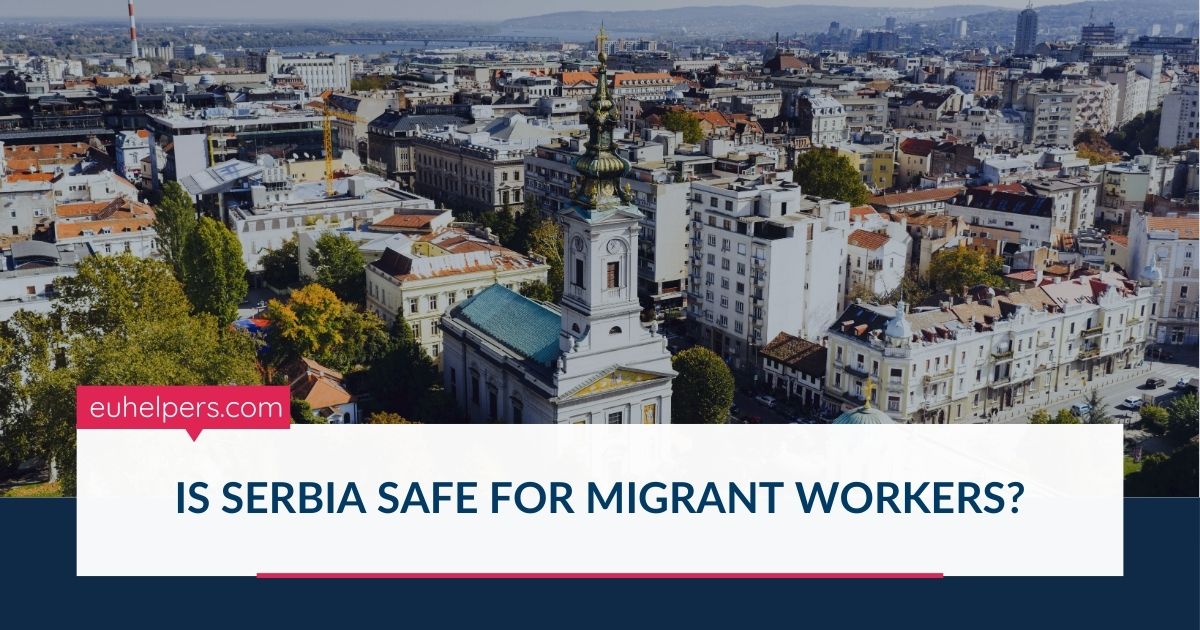

Serbia is generally considered a safe country for migrant workers. Thousands of foreign employees from Asia, the Middle East, and neighboring Balkan states live and work in Serbia without major security problems. The country has low violent crime rates, stable social conditions, and clear labor laws that protect legal workers.
General Safety Situation in Serbia
Serbia is one of the safer countries in Southeast Europe.
Key points:
-
Low street crime compared to many EU countries
-
Safe public transport and city centers
-
Police presence in major cities
-
Rare violent incidents against foreigners
Most migrants live peacefully in Belgrade, Novi Sad, Niš, and other industrial towns.
Workplace Safety for Migrant Employees
For legal workers, workplace safety is regulated.
Employers must provide:
-
Official employment contracts
-
Health insurance registration
-
Protective equipment in factories
-
Regulated working hours
-
Salary payment through banks
Problems usually appear only in informal or illegal jobs, which should be avoided.
Attitude Toward Foreign Workers
Serbian society is mostly friendly toward migrants.
Common experiences:
-
Respectful behavior in neighborhoods
-
Easy interaction in English in big cities
-
Acceptance in factories and construction sites
-
Growing multicultural communities
Discrimination is not common in everyday life, especially in urban areas.
Safe Cities for Migrant Workers
The most comfortable cities for foreigners:
-
Belgrade – largest job market and services
-
Novi Sad – calm and organized
-
Subotica – close to EU border
-
Niš – affordable and safe
-
Kragujevac – industrial job center
These cities have established migrant communities and better support.
Accommodation Safety
Housing in Serbia is generally safe.
-
Apartments have good security
-
Neighborhoods are family-oriented
-
Rent contracts are standard
-
Utilities are reliable
Many employers help new workers find safe accommodation.
Transport and Daily Life Safety
Migrant workers can move freely.
-
Buses and trains are safe
-
Taxis are regulated
-
Streets are safe at night in most areas
-
Hospitals and clinics accessible
Normal precautions like in any European country are enough.
Challenges Migrant Workers May Face
Some difficulties still exist:
-
Language barrier outside big cities
-
Unregistered employers
-
Long working hours in some sectors
-
Lack of information about rights
Choosing legal employment removes most risks.
How to Stay Safe as a Migrant Worker
Practical steps:
-
Work only with a legal contract
-
Keep residence documents valid
-
Avoid cash-only salary offers
-
Register address with authorities
-
Use licensed recruiters only
These actions ensure full legal protection.
Worker Rights and Protection
Serbian labor law gives migrants:
-
Right to minimum wage
-
Paid overtime
-
Medical insurance
-
Annual leave
-
Protection from abuse
Complaints can be filed with labor inspection.
Final Opinion
Serbia is a safe country for migrant workers when employment is legal and documented. Cities are secure, people are welcoming, and daily life is stable. Most negative stories come from informal jobs rather than the country itself. With proper contracts and verified employers, Serbia can be a reliable and safe destination for foreign workers.