
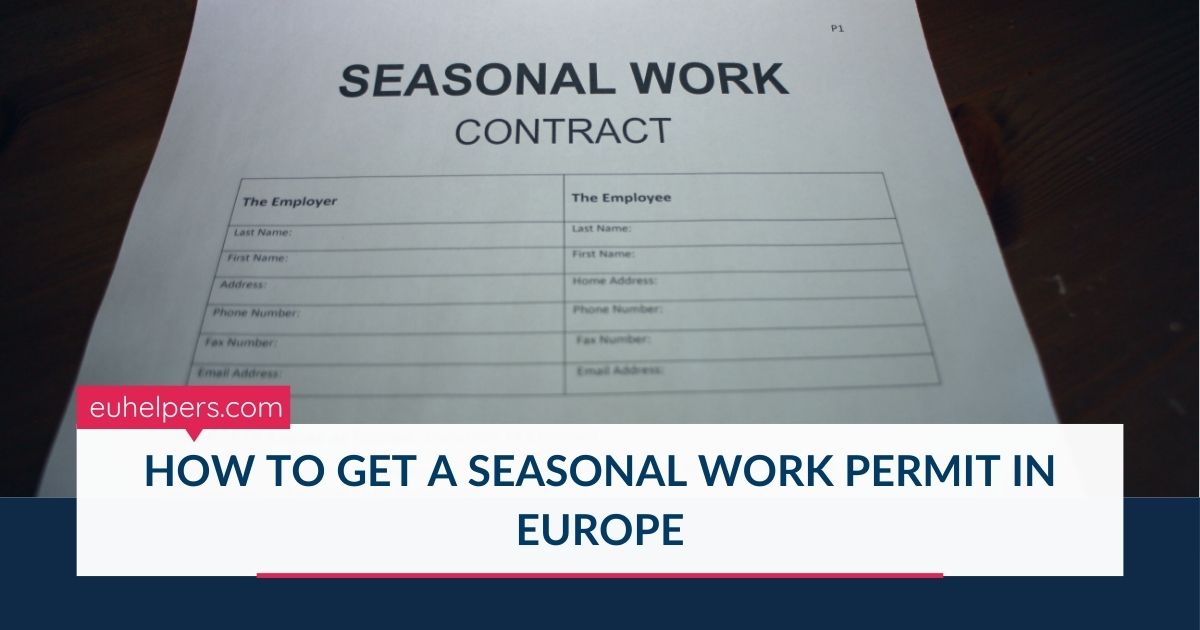
Seasonal work in Europe offers exciting opportunities for foreign nationals looking to gain international experience in sectors like agriculture, tourism, and hospitality. However, before you can start working, you typically need to secure a seasonal work permit or visa, depending on the country and your nationality.
Here’s a clear overview of the general process for obtaining a seasonal work permit in Europe, along with key considerations for specific countries.
Step-by-Step Process for Obtaining a Seasonal Work Permit
1. Find a Job Offer
Your first step is to secure a seasonal job offer from an employer based in the European country where you wish to work. Seasonal roles are most commonly available in:
-
Agriculture and farming
-
Tourism and hospitality
-
Construction and other labor-intensive industries
Job search platforms like EURES, LinkedIn, and local recruitment agencies can be helpful in finding seasonal positions.
2. Employer Applies for Work Authorization
Once you have a job offer, your potential employer often needs to apply for your work authorization with the local employment office or immigration authority. This ensures that the position complies with national labor regulations and is open to foreign workers.
3. Apply for a Visa or Residence Permit
After your employer’s application is approved, you may be required to apply for a visa or residence permit—this depends on your nationality and the host country’s policies. Non-EU citizens typically need to complete this step before entering the country.
4. Prepare the Required Documents
When applying for a visa or permit, you will usually need to provide:
-
A valid passport
-
Job offer or employment contract
-
Proof of accommodation during your stay
-
Health insurance coverage
-
Possibly evidence of sufficient financial means
Each country may request additional documents, so it's important to check the specific requirements of your destination.
5. Submit Your Application
Applications are generally submitted either in person at a consulate or embassy, or through an online portal, depending on the country. Some countries also allow your employer to submit the necessary paperwork on your behalf.
6. Wait for Processing and Approval
After submission, immigration authorities will review your application. If approved, you’ll receive your visa or permit, allowing you to legally enter and work in the country for the specified period.
Country-Specific Examples
Lithuania
-
Your employer must report the job opening to the Employment Service Office and apply for a seasonal work permit.
-
Once approved, you can apply for a national long-stay visa to work in Lithuania.
Luxembourg
-
Employers are required to submit a valid employment contract and proof of accommodation to the immigration authorities.
-
Once a temporary work authorization is granted, you may need to apply for a visa before entering Luxembourg.
Schengen Area and Visa Considerations
If you're from a non-EU country, you might need a Schengen visa for stays up to 90 days within a 180-day period, depending on your employment terms and the job's duration. For longer employment, a national visa or residence permit will likely be required.
Final Tips and Recommendations
-
Check each country’s official immigration website or consult their embassy to get the most accurate, up-to-date information.
-
Allow ample time for visa and permit processing, which can take several weeks or even months.
-
Consider programs like Nordjobb (for EU/Nordic citizens aged 18–30), which can help you secure seasonal jobs and navigate the paperwork.
A seasonal work permit in Europe can be your gateway to earning income, gaining valuable experience, and exploring new cultures. With proper planning and the right documentation, your seasonal job abroad can be both legally compliant and incredibly rewarding.