
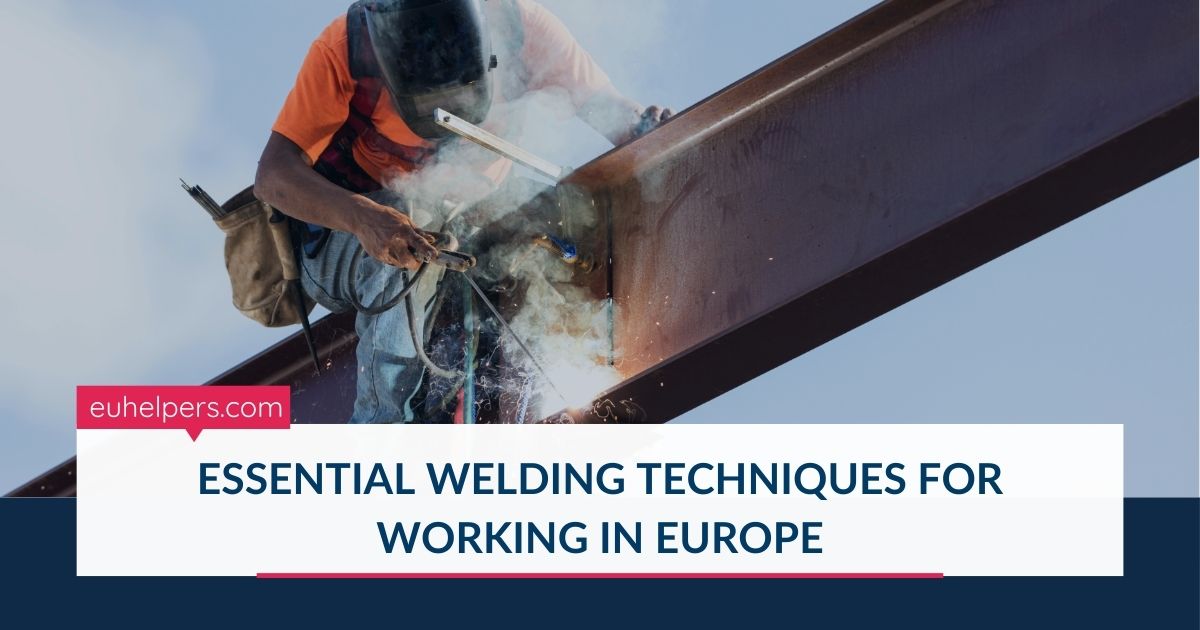
Welding is a vital skill across Europe’s manufacturing, construction, automotive, and heavy industry sectors. To succeed, welders must master a range of techniques, hold relevant certifications, and follow strict safety standards. The most commonly used methods include MIG/MAG, TIG, and Stick welding, with additional processes like FCAW and SAWplaying key roles in specialized applications.
1. Core Welding Techniques
MIG/MAG Welding (Metal Inert/Active Gas):
One of the most versatile and widely used welding processes, MIG/MAG is common in automotive, manufacturing, and construction industries. It works by feeding a continuous wire electrode through a welding gun, with shielding gas to protect the weld.
-
MIG uses inert gases such as argon or helium.
-
MAG uses active gases like carbon dioxide or a gas mixture.
This process offers speed, versatility, and high productivity.
TIG Welding (Tungsten Inert Gas):
Renowned for precision and control, TIG welding is ideal for applications where quality and accuracy are critical, such as aerospace, shipbuilding, and automotive work. It uses a non-consumable tungsten electrode, with a separate filler material if needed. TIG delivers clean, high-quality welds but requires greater skill and practice.
Stick Welding (Shielded Metal Arc Welding – SMAW):
A traditional, highly portable welding method using a consumable flux-coated electrode. It’s effective for working in tight spaces, on-site repairs, and outdoor projects. Stick welding does not require a gas tank, making it suitable for a variety of conditions and environments.
2. Additional Specialized Techniques
Flux-Cored Arc Welding (FCAW):
Similar to MIG welding but uses a tubular wire filled with flux. FCAW is well-suited for outdoor conditions and can be applied in multiple positions, making it efficient for construction and repair work.
Submerged Arc Welding (SAW):
Uses a continuous wire electrode and granular flux to create a weld beneath a layer of flux, preventing sparks and radiation. It is typically used in heavy industries and for welding thick materials.
3. The Importance of Welder Qualifications in Europe
Certification is essential for working on many projects across Europe, particularly in regulated industries like construction, shipbuilding, and energy.
-
EN ISO 9606-1 (Steel): Defines qualification testing for welders working with steel.
-
These standards ensure welders meet specific technical and quality requirements, enhancing both employability and credibility.
4. Other Key Factors for Success
Safety:
Welding involves heat, sparks, and hazardous fumes. Wearing proper personal protective equipment (PPE) and following established safety protocols is critical.
Technical Skills:
Accuracy, attention to detail, and problem-solving abilities are essential for producing strong, high-quality welds.
Continuous Learning:
The welding industry constantly evolves with new materials, techniques, and standards. Staying updated through training and certifications is vital for long-term career growth.
Bottom line:
To excel as a welder in Europe, mastering multiple welding techniques, obtaining recognized qualifications, and maintaining high safety and technical standards are essential. By continuously improving skills and staying informed on industry trends, welders can secure rewarding roles across a wide range of sectors.