
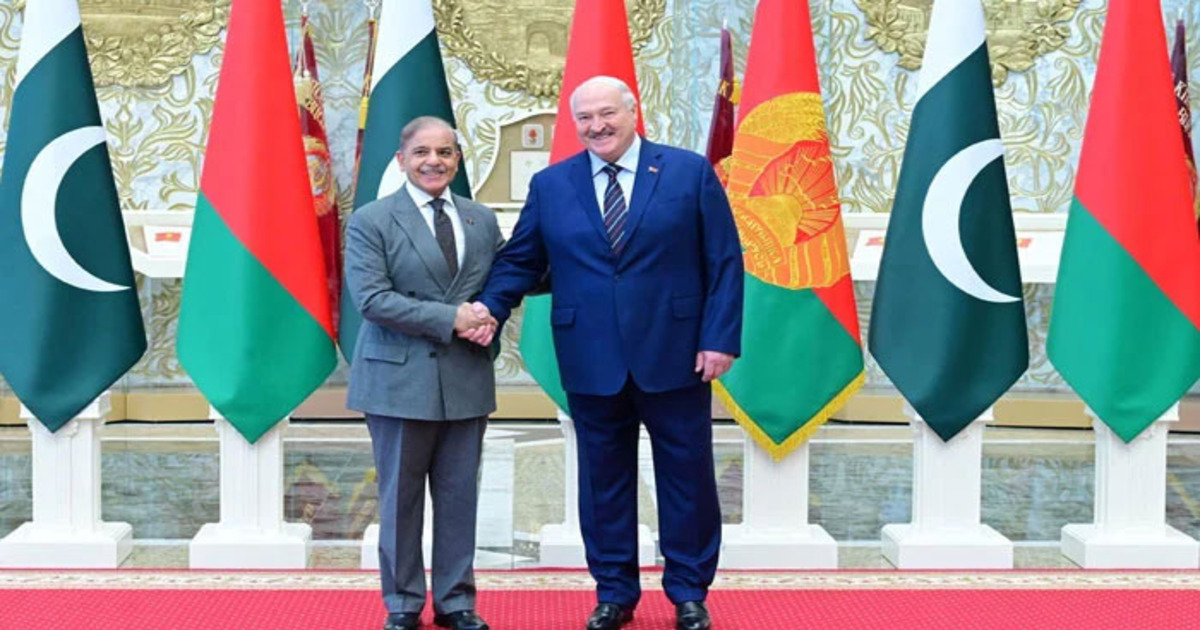
Pakistan and Belarus have taken a significant step forward in strengthening bilateral ties, as Prime Minister Shehbaz Sharif concluded an official visit to Belarus with a series of high-level meetings and the signing of wide-ranging cooperation agreements.
In a landmark announcement, Belarus has offered to host over 150,000 highly skilled Pakistani workers, a move Prime Minister Shehbaz hailed as a “gift” to the people of Pakistan. He emphasized that this initiative will support Belarus's nation-building efforts while providing valuable employment opportunities for Pakistani youth.
Speaking at a joint press briefing with Belarusian President Aleksandr Lukashenko, Prime Minister Shehbaz expressed gratitude for the offer and confidence in the Pakistani workforce, which he said is “duly certified both by international standards and through national accreditation.”
Expanding Bilateral Cooperation
Both leaders reiterated their commitment to deepening cooperation across multiple sectors, including agriculture, food security, defense, industry, and trade.
Prime Minister Shehbaz expressed Pakistan’s interest in leveraging Belarusian expertise in agriculture, particularly in improving per-acre yield through modern technology. Highlighting Pakistan’s agrarian base with 65% of its population in rural areas, he called for joint ventures between Pakistani and Belarusian companies for mutual benefit.
He also pointed to Belarus’s capabilities in manufacturing mining equipment, proposing partnerships to help explore and develop Pakistan’s vast mineral resources, estimated to be worth trillions of dollars.
Belarus Praises Ties with Pakistan
President Lukashenko reaffirmed Belarus’s commitment to fostering stronger ties with Pakistan, expressing optimism about the future of bilateral cooperation. He described the visit by Prime Minister Shehbaz as a catalyst for opening “new avenues of cooperation” in technology, trade, agriculture, and industrial development.
Joint Initiatives and Agreements
During their meeting, the two leaders agreed to formulate a comprehensive strategy to facilitate the recruitment and integration of the 150,000 Pakistani professionals into Belarus. Additionally, they reached consensus on several collaborative projects, including:
-
Joint manufacturing of agricultural machinery
-
Partnerships in the production of electric buses
-
Cooperation in food security and defense industries
-
Strengthening business-to-business relations
The leaders also discussed trade, investment, and regional issues, expressing satisfaction with the current trajectory of bilateral relations.
MoUs and Strategic Accords Signed
The visit culminated in the signing of several important agreements and Memorandums of Understanding (MoUs) across diverse sectors. Key documents included:
-
Readmission Agreement and a Cooperation Agreement between the interior ministries of both countries
-
Defense cooperation agreement between the ministries of commerce and defense
-
A Roadmap for Military-Technical Cooperation (2025–2027)
-
MoUs covering environmental protection, postal services, trade development, and business support
These agreements were exchanged in a formal ceremony witnessed by both leaders, following delegation-level talks that covered regional and international matters.
PM Shehbaz Highlights Strategic Vision
In a post on social media platform X, Prime Minister Shehbaz Sharif shared highlights from his visit, stating, “We reviewed the entire spectrum of our bilateral cooperation, including political, trade, investment, and people-to-people contacts.”
He noted the significance of the workforce agreement, enhanced collaboration in agriculture and technology, and potential industrial joint ventures. “President Lukashenko and I share a strong desire to continue elevating Pakistan-Belarus cooperation to new and greater heights,” he added.
The agreements signed and commitments made during this visit mark a new chapter in Pakistan-Belarus relations, signaling the beginning of a deeper, strategic partnership aimed at long-term growth and mutual benefit.