
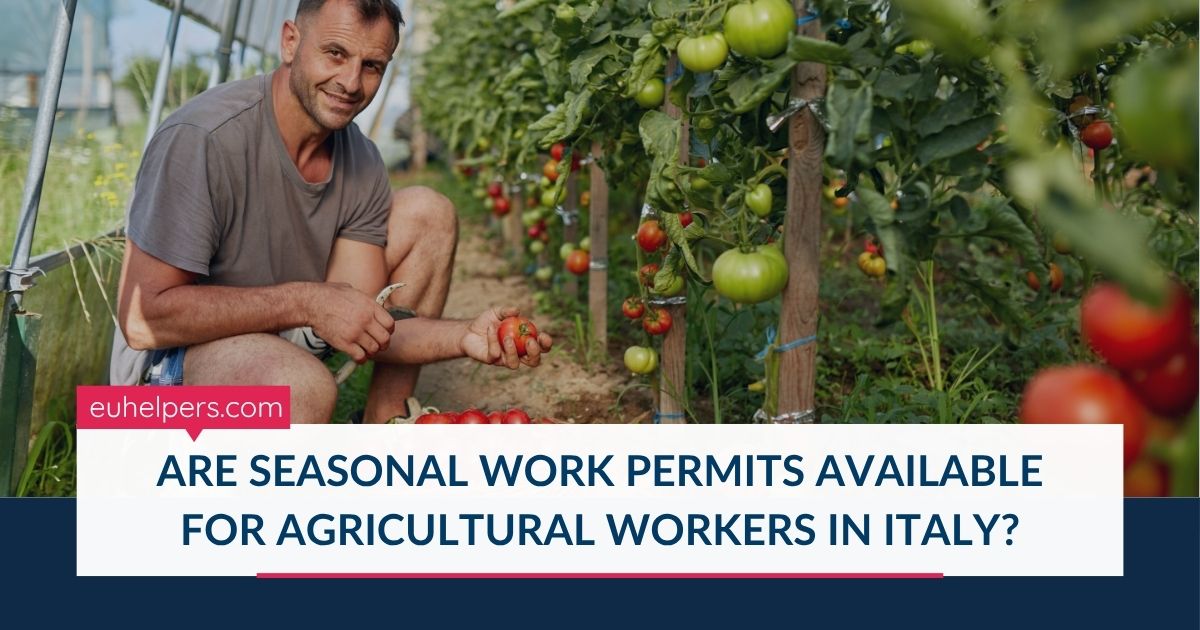

Italy’s agriculture sector depends heavily on seasonal labor — from fruit picking and vineyard work to greenhouse farming and packaging. Every year, thousands of foreign workers travel to Italy for short-term employment during harvest seasons.
If you’re planning to work in agriculture, you may ask: “Can foreign workers apply for seasonal work permits in Italy?”
Yes — Italy offers seasonal work permits that allow non-EU citizens to work legally in the agricultural sector for several months each year.
1. What Is a Seasonal Work Permit?
A seasonal work permit allows non-EU citizens to work legally in Italy’s agricultural sector for a limited period.
These permits are issued under Italy’s annual work quota program, which defines how many foreign workers can enter the country each year for seasonal employment.
Common sectors include:
-
Fruit and vegetable picking
-
Olive and grape harvesting
-
Greenhouse and flower production
-
Farm maintenance and food packaging
2. Duration of the Seasonal Work Permit
Seasonal permits are usually granted for a period of 20 days up to 9 months, depending on your job contract and the employer’s request.
Once you arrive in Italy, you must apply for a residence permit (Permesso di Soggiorno) within 8 days to start working legally.
In some cases, if you maintain good work history and employer support, your seasonal permit can later be converted into a long-term work permit.
3. Requirements to Apply
To qualify for an Italian seasonal work permit, you must:
-
Have a valid passport
-
Receive a job offer or employment contract from a registered Italian employer
-
Obtain a work authorization (Nulla Osta) through the employer
-
Apply for your seasonal visa at the nearest Italian embassy or consulate
-
Provide a medical and police clearance certificate
-
Show proof of accommodation and travel insurance
Employers usually handle the initial authorization process, while workers complete the visa application after approval.
4. Processing Time
The average processing time for seasonal work permits and visas is 4 to 8 weeks, depending on the embassy’s workload and documentation completeness.
To avoid delays, apply as soon as the quota opens and ensure that all documents are accurate and properly translated.
5. Benefits of Seasonal Work in Italy
Seasonal jobs in Italy come with several advantages for foreign workers:
-
Legal employment with signed contracts
-
Full health insurance and social security coverage
-
Paid accommodation and meals in many cases
-
Opportunity to gain European work experience
-
Possibility of contract renewal or long-term permit conversion
Working seasonally in Italy can be a stepping stone toward permanent European residence or future job opportunities.
6. How EU Helpers Can Help You
At euhelpers, we assist workers through every step of the process — from finding a verified employer to securing your visa.
Our services include:
-
Matching you with legal agricultural employers in Italy
-
Preparing and reviewing documentation
-
Coordinating the visa and relocation process
-
Providing ongoing support during your stay
Steps to Apply:
-
Submit your CV and passport copy
-
Get matched with an approved employer
-
Receive work permit guidance and visa support
-
Travel and begin your job in Italy
Conclusion
Yes, seasonal work permits are available for agricultural workers in Italy. These permits allow foreign workers to legally work in farming, harvesting, and related activities for several months each year.
With the right documentation and verified support from EU Helpers, you can begin your journey to a rewarding and legal job in Italy’s agricultural sector.
Apply now— our team will guide you from the job application to your arrival in Italy.
FAQs
1. Can non-EU citizens apply for agricultural jobs in Italy?
Yes. Non-EU workers can apply for seasonal agricultural permits if they have a valid job offer.
2. How long can I stay in Italy on a seasonal permit?
Usually between 3 and 9 months, depending on your employment contract.
3. Do I need experience for agricultural work?
Not always. Many farms accept first-time applicants and provide basic on-the-job training.
4. Are accommodation and meals provided?
Yes. Most employers offer free or low-cost accommodation and food.
5. Can my seasonal permit be extended or converted?
In some cases, yes — if you maintain a good work record and meet legal conditions.