
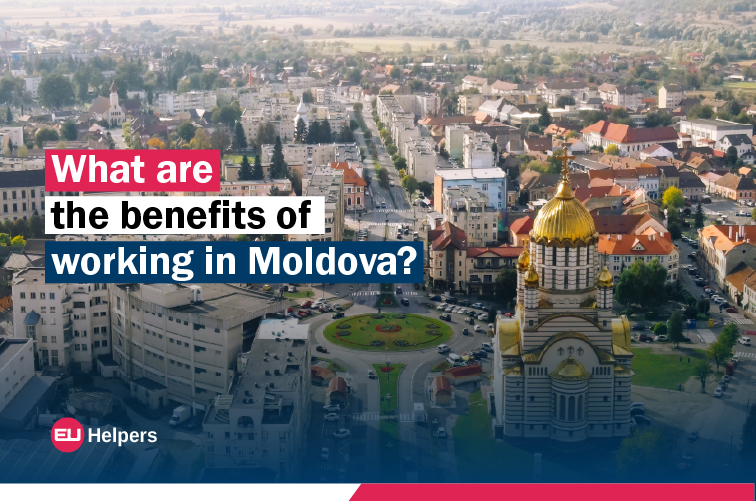

What Are the Benefits of Working in Moldova? A Complete EU Helpers Guide
Moldova, located in southeastern Europe between Romania and Ukraine, has steadily become an increasingly interesting and emerging work destination for international professionals, IT specialists, BPO and shared services experts, agricultural and food industry professionals, wine industry leaders, manufacturing workers, healthcare staff, finance and banking experts, hospitality leaders, business owners, and entrepreneurs. Although Moldova is not yet a member of the European Union, it holds official EU candidate status, has signed an Association Agreement with the EU including a Deep and Comprehensive Free Trade Area (DCFTA), and is actively aligning its legal and economic framework with European standards. The country offers a unique combination of strategic location between the EU and the Black Sea region, very low cost of living, multilingual environment where Romanian, Russian, English, and other regional languages are widely used in business, world-renowned wine industry, growing IT and BPO sectors, and an attractive base for those targeting Eastern European and EU-adjacent markets. For applicants from Asia, Africa, Latin America, the Americas, and Europe, Moldova can offer a realistic, affordable, and forward-looking base in Eastern Europe with serious long-term prospects as the country continues its EU integration path. At EU Helpers, candidates regularly ask which concrete benefits make Moldova worth choosing as a work destination.
This complete EU Helpers guide explains the real, practical, and long-term benefits of working in Moldova. Whether you are considering a salaried role, an international assignment, a position in the IT or BPO ecosystems, self-employment, a business venture, an investment-based residence, or a remote-working setup, this article walks you through everything you need to know — from salaries, costs, the Moldova IT Park, and taxation to lifestyle, healthcare, family options, and career growth. Keep in mind that immigration rules, salaries, and market conditions may vary by nationality, embassy, sponsor, employer, permit category, sector, region, and the latest official requirements, so EU Helpers always recommends confirming your eligibility and offer based on your personal profile before making any move.
Why Moldova Is Becoming a Strategic Career Destination
Moldova is steadily modernizing its economy, attracting foreign investment, and developing sectors that consistently rely on foreign talent. For ambitious professionals, this evolution creates real opportunities.
A Strategic Location Between the EU and Eastern Europe
Moldova's location between Romania (an EU member state) and Ukraine, with proximity to the Black Sea region and Central Europe, makes it a strategic base for international business. The country's EU candidate status, Association Agreement with the EU, and DCFTA framework support increasing integration with European markets.
A Modernizing, Diversified Economy
Moldova's economy has diversified beyond traditional sectors. IT and software development, BPO and shared services, wine industry, agriculture and food industry, manufacturing, energy, real estate, construction, healthcare, education, logistics, and creative industries all create consistent demand for foreign workers and specialists. EU Helpers frequently supports applicants moving into these growing sectors.
EU Candidate Status and Long-Term Outlook
Moldova's EU candidate status, ongoing alignment with EU standards, and clear European orientation provide a long-term horizon that is increasingly attractive for foreign professionals and investors. As the country continues its EU integration path, today's residents and businesses are well positioned for future opportunities.
Strong Demand for Foreign Talent in Key Sectors
Moldova actively recruits foreign talent through structured pathways such as the temporary residence and work permit, self-employment, investor pathways, and family-based residence. IT, BPO and shared services, wine industry, agriculture, manufacturing, healthcare, and certain skilled trades consistently feature in active recruitment.
Top Financial Benefits of Working in Moldova
One of the biggest reasons professionals consider Moldova is its highly favorable financial framework when measured against the local cost of living and the overall career opportunities on offer.
Competitive Salaries in Key Sectors
Salaries in Moldova are generally lower than in most EU countries in absolute terms, but in top-paying sectors such as IT, BPO and shared services leadership, banking and finance, energy, senior wine industry leadership, specialized healthcare, and senior management, compensation is significantly above the national average. International experience, technical specialization, language skills, and industry-specific certifications can push earnings considerably higher.
Strong Purchasing Power Thanks to Low Cost of Living
The cost of living in Moldova is generally significantly lower than in most Western and Central European countries, particularly for housing, food, transport, and services. This means that even moderate Moldovan salaries can offer a comfortable lifestyle, while higher-end sector salaries deliver strong purchasing power and savings potential.
Moldova IT Park: A Globally Distinctive Tax and Business Framework
Moldova IT Park is a virtual technology park that offers attractive tax conditions for qualifying IT companies and their employees, supporting strong financial outcomes for IT professionals working with resident companies. For digital nomads, founders, IT specialists, and remote workers, this can deliver significant net advantages and is one of the country's most distinctive economic features.
Favorable Conditions for Remote and Foreign-Earning Professionals
For remote workers, freelancers, and consultants serving foreign clients while based in Moldova, the combination of moderate operating costs, IT Park benefits where applicable, and a low cost of living can deliver significant net advantages, provided the legal and tax setup is properly structured.
Lifestyle and Quality-of-Life Benefits
Beyond money, Moldova offers a lifestyle that emphasizes affordability, culture, food and wine, nature, and quality of daily living, especially in Chișinău and the country's renowned wine regions.
Affordable and Welcoming Cities
Chișinău, Moldova's capital, offers a relatively affordable yet pleasant urban lifestyle, combining a historic center, vibrant cafés, cultural venues, and modern districts. Smaller cities like Bălți, Cahul, and Tiraspol provide additional regional opportunities, often at even lower costs.
Renowned Wine Regions and Gastronomy
Moldova is one of the world's most historic wine-producing countries, with renowned vineyards, wineries, and traditional gastronomy. Daily life is enriched by access to local wines, traditional cuisine, and rural landscapes shaped by viticulture and agriculture, which remain central to Moldovan culture.
Beautiful Natural Environment
Moldova offers rolling hills, agricultural plains, forests, rivers, and rural landscapes that are particularly beautiful in spring and autumn. The country's continental climate provides distinct seasons, supporting a variety of outdoor activities.
Multilingual and International Environment
Romanian is the official language, but Russian is also widely used, alongside English, French, and other languages in business and academic environments. This multilingual environment is particularly welcoming for international workers, especially those familiar with European languages.
Family-Friendly Society
Moldova has a culture that values family, hospitality, and community. Combined with affordable services, schooling options including international schools in Chișinău, and a generally safe environment, the country is realistic and supportive for foreign families considering long-term settlement.
Career Growth and Professional Opportunities
Moldova's career environment offers interesting opportunities for the right profiles, particularly in fast-growing sectors and roles serving international markets.
Sectors With Strong Demand for Foreign Professionals
IT and software development, BPO and shared services, wine industry, agriculture and food industry, manufacturing, banking and finance, energy, healthcare, hospitality, construction, logistics, marketing, education, legal services, and donor-funded international projects consistently look for foreign expertise. Multilingual professionals are especially valued in BPO, shared services, and roles serving European markets.
Opportunities in IT, Fintech, and Innovation
For IT and innovation-focused professionals, Moldova offers exposure to international projects, a developed IT outsourcing sector, and an attractive Moldova IT Park regime. Senior software engineers, product managers, and specialists often build internationally relevant careers from a Moldovan base.
Opportunities for Entrepreneurs, Self-Employed, and Investors
Moldova actively encourages foreign entrepreneurs, self-employed professionals, and investors through dedicated residence categories. Combined with EU candidate status, Moldova IT Park, and an attractive cost base, this opens a path to building a business in an emerging European jurisdiction.
Stepping Stone for EU and Regional Careers
For professionals and entrepreneurs looking at the long-term picture, building a base in an EU candidate country with an Association Agreement and DCFTA can offer a strategic position as Moldova continues its EU integration path. Today's investments, networks, and residency time can pay off as the country moves closer to closer EU integration.
Residency, Work Permit, and Legal Benefits
Working legally in Moldova comes with structured immigration pathways. While Moldova is not yet in the EU or Schengen Area, it has clear rules for foreign workers and residents.
Structured Permit System
Most foreign workers obtain a temporary residence permit combined with a work permit, supported by their Moldovan employer. The Bureau for Migration and Asylum and the National Employment Agency play key roles in the process.
Self-Employment, Investor, and Business Routes
Foreign consultants, freelancers, business owners, and investors who establish or invest in Moldovan businesses can pursue self-employment or investor-related residence routes, particularly relevant for high-value roles and innovative projects, including those supported by the Moldova IT Park regime.
Family Reunification With Strong Provisions
Moldova allows qualifying workers and residents to bring close family members, including spouses and dependent children, under family reunification rules. Conditions around housing, income, and documentation apply and should be verified case by case.
Pathway to Long-Term Residency
After several continuous years of legal residence and work in Moldova, foreign nationals may become eligible for permanent residence, provided they meet stability, integration, income, and legal requirements. As Moldova advances on its EU integration path, this long-term outlook becomes increasingly attractive.
Healthcare, Education, and Social Benefits
Public services and infrastructure in Moldova have steadily improved, particularly in major cities, while private services have also grown to support foreign and local residents.
Access to Healthcare
Moldova has both public and private healthcare options. Registered workers contribute to and benefit from the public healthcare system, while many residents also use private clinics and hospitals, which often offer faster access and English-speaking staff in major cities. Healthcare costs in private settings remain generally affordable compared to most Western European countries.
Educational Options for Families
Moldova offers public and private schools, alongside several international schools and bilingual programs in Chișinău and other major centers. Higher education institutions, including universities and specialized schools, offer recognized programs in many subjects. For foreign families, this provides credible options for children's education.
Social Protections for Workers
Registered workers benefit from contributions toward pensions, healthcare, parental leave, and other social protections under the Moldovan social system. While contributions reduce gross income, the system provides reliable protections, particularly for those building long-term careers in the country.
Required Documents and Step-by-Step Overview of Working in Moldova
While exact requirements depend on the specific permit and applicant profile, the general route to legally working in Moldova follows a predictable structure. EU Helpers guides applicants through each step in detail.
Typical Documents Needed
Applicants usually need a valid passport, police clearance certificates from countries of previous residence, medical certificates where required, proof of qualifications and experience, a formal job offer or qualifying ground, employer or sponsor documentation, accommodation evidence, valid health insurance, and proof of financial means. Translations into Romanian and apostille or legalization of foreign public documents are commonly required.
General Step-by-Step Process
The process typically starts with securing a job offer, business plan, investment, or remote work setup. The employer or applicant then prepares the residence and work permit documentation through the Bureau for Migration and Asylum and the National Employment Agency. Visa-required nationals apply for the long-stay D visa at the Moldovan embassy or consulate, travel to Moldova, register locally, and obtain the temporary residence permit. Timelines and fees can vary based on permit type, nationality, and current processing capacity.
Common Mistakes and Reasons for Delays or Refusals
Incomplete documents, unverified employer sponsorship, missing police or medical certificates, incorrect permit category, insufficient housing arrangements, salary below thresholds, and outdated information are common reasons for delays or refusals. Working with experienced advisors like EU Helpers helps minimize these risks.
Practical Tips for International Applicants
Moving to Moldova is rewarding, but preparation makes the difference between a smooth transition and a stressful one.
Tips From EU Helpers for a Successful Move
Start by carefully evaluating which permit category fits your profile. Identify Moldovan employers experienced with hiring foreign workers in IT, BPO, wine industry, agriculture, healthcare, hospitality, and shortage occupations. For IT professionals, evaluate the Moldova IT Park virtual park regime. Strengthen your English fluency, which is widely used in international workplaces, and consider learning Romanian or Russian for daily life and long-term integration. Secure housing early, particularly in Chișinău. Understand how your nationality, passport, country of residence, employer, embassy, and permit category may influence your timeline and documentation. Keep originals and certified copies of all key documents, and always rely on the latest official requirements rather than outdated forums.
Final Guidance
Working in Moldova offers a rare combination of affordability, EU candidate status, IT Park tax benefits, a culturally rich lifestyle, and emerging professional opportunities. For international professionals looking beyond the saturated and expensive markets of Western Europe, Moldova stands out as a serious, evolving, and increasingly attractive destination in Eastern Europe. However, the process is nuanced, and outcomes depend heavily on personal circumstances, employer sponsorship, nationality, sector, and the specific permit category chosen. That is exactly where expert guidance matters. EU Helpers supports international applicants at every stage — from evaluating eligibility and preparing documents to understanding the right permit route, comparing employment with self-employment or investor pathways, and planning a smooth relocation. If Moldova is on your radar as a future work destination, EU Helpers can help you move forward with clarity, confidence, and the latest accurate information.
FAQs
Working in Moldova offers several practical benefits, including competitive salaries in key sectors, a very low cost of living, an attractive Moldova IT Park regime for qualifying IT activity, a multilingual business environment, growing career opportunities in IT, BPO, wine industry, and agriculture, flexible residence pathways, and a long-term outlook supported by Moldova's EU candidate status.
The cost of living in Moldova is generally significantly lower than in most Western and Central European countries, particularly for housing, food, transport, and services. This means that even moderate Moldovan salaries can offer comfortable living, while higher salaries and foreign incomes often deliver strong purchasing power and savings potential.
Salaries in Moldova are lower than in Western Europe in absolute terms, but in top-paying sectors such as IT, BPO, banking and finance, energy, senior wine industry leadership, specialized healthcare, and senior consulting, compensation is competitive by local standards and especially attractive when combined with Moldova's lower living costs.
Moldova IT Park is a virtual technology park that offers attractive tax conditions for qualifying IT companies and their employees, supporting Moldova's growing IT and digital sector. It is one of the country's most attractive features for IT professionals, founders, and tech companies considering Moldova as a base.
Moldova can be attractive for remote workers thanks to its low cost of living, Moldova IT Park regime for qualifying IT activity, multilingual environment, and growing infrastructure. Foreign-earned salaries often go significantly further in Moldova than in Western Europe.
Moldova's tax framework is generally moderate by European standards, with various incentives designed to attract investment in priority sectors, particularly through the Moldova IT Park regime. For self-employed professionals, business owners, and remote workers, careful planning combined with low local costs can deliver attractive overall financial outcomes.
IT and software development, BPO and shared services, wine industry, agriculture and food industry, manufacturing, banking and finance, energy, healthcare, hospitality, construction, logistics, marketing, education, legal services, and donor-funded international projects are among the strongest sectors for foreign professionals, especially those with international experience and language skills.
Moldova is not yet a member of the European Union but holds official EU candidate status and is actively advancing its EU integration. It has signed an Association Agreement with the EU and a Deep and Comprehensive Free Trade Area (DCFTA), supporting alignment with European standards.
Qualifying workers and residents can usually apply for family reunification for spouses and dependent children, subject to conditions regarding income, housing, and documentation. Rules may vary based on nationality, permit category, and the latest official requirements.
After several continuous years of legal residence and work in Moldova, foreign nationals may become eligible to apply for permanent residence, provided they meet stability, integration, and legal requirements. As Moldova continues its EU integration path, this long-term outlook becomes increasingly valuable.
Moldova has both public and private healthcare options. Registered workers contribute to and benefit from the public healthcare system, while many residents also use private clinics and hospitals, which often offer faster access and English-speaking staff in major cities. Healthcare costs in private settings remain generally affordable compared to many Western European countries.
Romanian is the official language, and Russian is also widely used in business and daily life. English is increasingly used in IT, BPO, international companies, donor-funded projects, and remote work setups. Many international workplaces operate primarily in English, making Moldova accessible for foreign professionals, although learning Romanian or Russian helps with integration.
Moldova actively encourages foreign entrepreneurs and investors, with dedicated residence categories for business owners, self-employed professionals, and investors. Combined with the Moldova IT Park regime for qualifying IT activity, the country offers an attractive environment for serious applicants with credible projects.
Yes. Moldova's international schools, language centers, and higher education institutions hire foreign teachers and academic staff, particularly for English, German, French, Italian, Spanish, Turkish, Arabic, and other languages, as well as for STEM, international curricula, and university programs. Native or near-native speakers with proper qualifications often find well-paid roles.
Common reasons include incomplete documentation, unclear employer sponsorship, missing police or medical certificates, wrong permit category, insufficient housing proof, salary below thresholds, weak business or income evidence, and unverified qualifications. Proper preparation significantly reduces refusal risks.
Many professionals do explore remote work setups from Moldova, supported by appropriate residence options, self-employment routes, and the Moldova IT Park regime for qualifying IT activity. Legal residence and tax status must be properly arranged based on your employer, contract type, and personal profile, so tailored advice is essential before relocating.
EU Helpers supports international applicants with eligibility assessment, sector and salary insights, permit category selection, document preparation, employer and sponsor coordination, and clarity on the latest official requirements. The goal is to help you approach the Moldovan work and residency process with accurate, up-to-date, and practical information tailored to your career goals.