
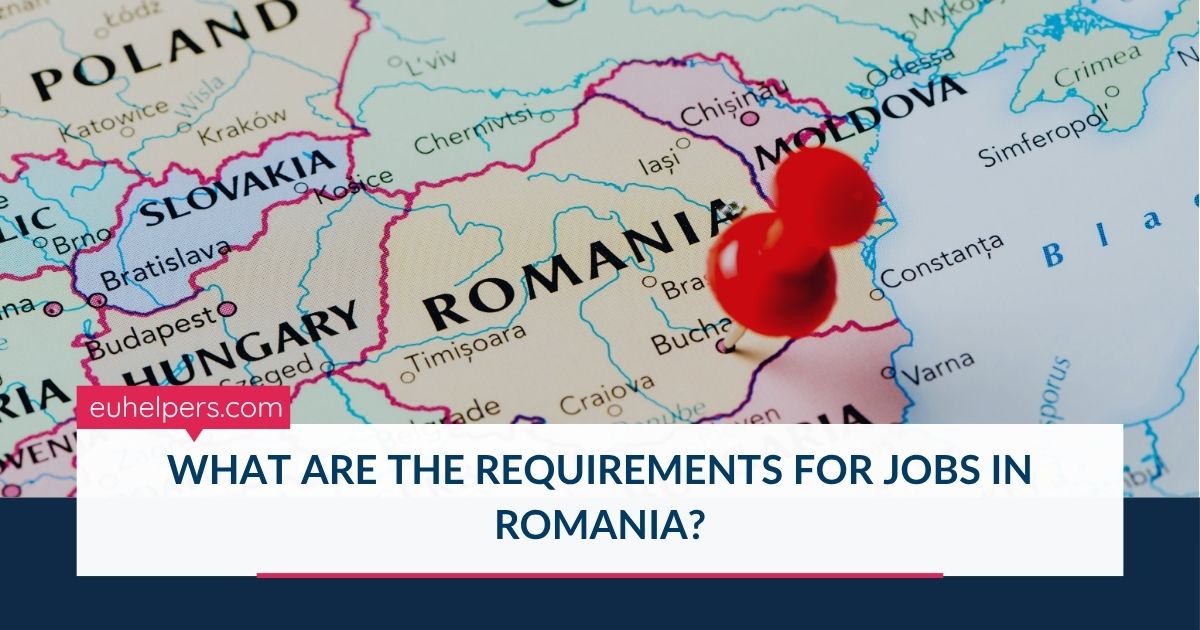

If you are asking about the requirements for jobs in Romania as a foreign worker, you are researching one of Eastern Europe's most rapidly growing, increasingly internationally oriented, and genuinely accessible employment destinations. Romania is an EU and Schengen member state at the crossroads of Central and Eastern Europe, with a large and expanding economy, persistent labor shortages across construction, manufacturing, IT, agriculture, and hospitality, and a government that has actively raised its annual work permit quota to meet the demand from international workers.
Romania is opening its doors wider than ever. With 100,000 new work permits available for foreign workers, Romania is opening its doors to skilled professionals in high-demand industries such as IT, construction, healthcare, manufacturing, and hospitality. Whether you're interested in short-term seasonal jobs or long-term employment leading to residency, Romania offers clear pathways forward.
Hiring international talent has become a common practice for Romanian companies, especially in fields like construction, manufacturing, hospitality, IT, engineering, transport, retail, and agriculture. As the local labor shortage continues to grow, more employers are turning to foreign workers to fill critical roles.
This guide covers everything you need to know — the types of work permits available in Romania, the exact requirements for each, the labor market test, the complete document checklist, the step-by-step application process, salary ranges across the most in-demand sectors, your rights as a legal worker, the path to permanent residence, and how EU Helpers can connect you with a verified Romanian employer and guide you through every stage completely free of charge.
Why Romania Needs Foreign Workers
Romania faces a structural labor shortage that is the direct result of decades of emigration of working-age Romanians to higher-wage Western European countries and a declining domestic birth rate. Hundreds of thousands of Romanian citizens have relocated to Germany, Italy, Spain, the United Kingdom, and other EU countries. This has created acute labor gaps particularly in construction, manufacturing, agriculture, transport, hospitality, and healthcare — gaps that Romanian employers can only fill by recruiting internationally.
The region continues to register negative demographic trends, leading to a significant reduction in the working-age population. Main labour shortages include heavy truck and lorry drivers, sewing machine operators, shop sales assistants, cleaners and helpers in offices, hotels and other establishments, security guards, and plasterers.
Romania is experiencing a significant labor shortage, particularly in the construction, engineering, and trade sectors. As the country continues to develop its infrastructure and economy, the demand for skilled foreign workers has never been higher.
Romania is also growing rapidly as a technology hub. The increasing tendency to embrace artificial intelligence, deploy blockchain, and automate solutions creates demand for tech specialists. The construction and infrastructure sector has been crucial in revitalizing the Romanian economy. Growth in this sector is evident in the expansion of highways and various urban renewal programs. Romania's healthcare system and pharmaceutical market are poised for significant growth, driven by an aging population and rising healthcare demands.
Who Needs a Work Permit in Romania
Citizens of the European Union, European Economic Area, and Switzerland can legally work in Romania without having to apply for visas or permits. All other foreign nationals require two documents — a Romania work permit and a Romania work visa — to live and work in the country legally.
In Romania, third-country nationals need a local employer to sponsor and apply for a work permit on their behalf. A permit will be issued only if the position cannot be filled by Romanian citizens or citizens of EU/EEA Member States or by permanent residents in Romania.
This employer-driven system means the process always begins with the employer, not the individual worker. The employer applies for your work permit through the General Inspectorate for Immigration — Inspectoratul General pentru Imigrări, or IGI — before you can apply for your work visa.
Types of Work Permits in Romania
The General Work Permit (Standard Employment)
For regular jobs in industries like construction, hospitality, factories, retail, and more, the General Work Permit is the most commonly used permit type. Most foreign workers hired from Asia or other non-EU countries fall under the General Work Permit.
The General Work Permit is the foundational permit for non-EU workers seeking standard year-round employment in Romania. It is valid for one year and renewable annually. It is tied to a specific employer and role. It requires the employer to have first posted the job with AJOFM — the Job Agency — and demonstrated that no suitable Romanian or EU candidate was available.
The Highly Skilled Worker Permit
This permit is for foreign professionals with expertise in specialized fields such as IT, engineering, and medicine. It carries a higher salary threshold reflecting the professional level of the role, provides faster processing in some cases, and can be renewed for up to two years at a time — compared to one year for the General Work Permit. It is the preferred route for professionals in technology, healthcare, and engineering.
The Seasonal Work Permit
For seasonal workers who want to stay in Romania for seasonal work, the government provides a seasonal employment permit. This is typically issued to workers in agriculture, tourism, food processing, and similar seasonal industries. It is valid for a maximum of six months.
Seasonal work in Romania is primarily concentrated in agriculture — particularly fruit, vegetable, and grain harvesting — and in tourism and hospitality during the summer season on the Black Sea coast and in the mountain resort areas. The seasonal permit is simpler and faster to obtain than the General Work Permit and is the best entry point for workers seeking their first European employment experience.
The EU Blue Card
The EU Blue Card is for highly skilled professionals meeting specific criteria. It requires a university degree or equivalent higher professional qualification and a job offer meeting a specific salary threshold.
The EU Blue Card provides enhanced EU mobility rights, allowing holders to transfer to another EU member state after 18 months without starting a completely new permit process. It is the most attractive permit type for senior professionals, researchers, and specialists.
The Intra-Company Transfer Permit
If you are transferring from one branch of a multinational company to another in Romania, the Intra-Company Transfer Permit is for you. It allows employees of multinational companies to work in Romania temporarily.
The Digital Nomad Visa
Romania offers a Digital Nomad Visa for remote workers employed by companies registered outside Romania. Applicants must meet specific criteria. The income requirement is a monthly income of at least €3,700 for the six months preceding the application. Proof of remote employment with a non-Romanian company must be provided. Health insurance with a minimum coverage of €30,000 must be obtained. A clean criminal record certificate must be submitted. Proof of accommodation in Romania must be shown.
Work Permit Type Comparison
| Permit Type | Duration | Sector | Education Required | Labor Market Test | Employer Sponsorship |
|---|---|---|---|---|---|
| General Work Permit | 1 year (renewable) | All sectors | Not mandatory | Required (30 days) | Yes |
| Highly Skilled Worker Permit | Up to 2 years (renewable) | IT, engineering, healthcare | Role-dependent | Required | Yes |
| EU Blue Card | Up to 2 years (renewable) | High-skill roles | University degree | Required | Yes |
| Seasonal Work Permit | Up to 6 months | Agriculture, tourism, hospitality | Not required | Simplified | Yes |
| Intra-Company Transfer | Up to 3 years | Multinational transfers | Role-dependent | Not required | Yes (same company) |
| Digital Nomad Visa | 1 year (renewable) | Remote work for foreign employer | Not required | Not required | No (self-employed) |
The Labor Market Test in Romania — How It Works
Employers need to post the job at AJOFM — the Job Agency — and prove that no suitable Romanian candidate applied. A business cannot hire foreign workers if it has tax debts or pending legal issues. Romania sets minimum salaries depending on job type, and employers must comply.
The labor market test in Romania requires the employer to advertise the specific position with the National Agency for Employment — known as AJOFM at the regional level — for a defined period, typically 30 days for General Work Permits. During this period, registered unemployed Romanian citizens and other EU/EEA nationals have priority access to apply. If no suitable candidate applies and is hired within the advertising period, the employer can proceed with the foreign worker application.
Employer Activity Requirements: Employers must have operated in Romania for at least one year to hire foreign workers. Employers must finalize employment contracts within 15 business days of a worker's entry into Romania.
This requirement — that the employer must have been active in Romania for at least one year — protects workers from fraudulent or newly established companies that may not have the stability to employ international staff compliantly.
Requirements for Jobs in Romania — Worker Eligibility
Other conditions include that the prospective employee must meet all of the employer's requirements for the position under legal provisions, have a clean criminal record, provide a medical certificate that states their capability to carry out the tasks required for the job, and fall within the annual quota for third-country nationals who may be granted a work permit.
The general eligibility requirements for non-EU workers seeking employment in Romania are: being a national of a non-EU/EEA/Swiss country, having a confirmed job offer from a registered Romanian employer who has completed the labor market test, meeting the educational, professional, or experience requirements for the specific role as determined by the employer, having a clean criminal record from your home country and any country of prior residence, being medically fit to perform the work, and falling within the annual quota of work permits established by the Romanian government.
The Curriculum Vitae and an affidavit stating that you have no criminal record, are medically fit to be employed, and have minimal Romanian language skills are required. A medical certificate stating that you are fit to work is required. Graduation records, translated and certified, and all scientific degrees and certifications, accompanied by a validation certificate issued by the Ministry of Education and Scientific Research, are required.
The Annual Work Permit Quota
Romania sets an annual quota for the number of work permits that can be issued to non-EU workers. This quota is established by the Romanian government at the beginning of each year and covers all categories of work permits except for EU Blue Cards and Intra-Company Transfer permits, which are outside the quota system.
If the 100,000 work permit quota is filled, you may have to wait until the following year unless applying under special exemptions.
The quota operates on a first-come, first-served basis — permits are issued until the quota is filled, and new applications in that category are deferred to the following period once the quota is exhausted. This makes early application by employers strategically important for positions in quota-limited categories. EU Helpers monitors the quota status throughout the year and advises employers and candidates on application timing to maximize the probability of successful permit issuance.
In-Demand Sectors for Foreign Workers in Romania
Construction and Infrastructure
Main labour shortages include plasterers, construction laborers, and related skilled trades. The construction and infrastructure sector has been crucial in revitalizing the Romanian economy. Growth in this sector is evident in the expansion of highways and various urban renewal programs. The industry requires civil engineers, architects, project managers, and skilled professionals.
Romania's EU-funded infrastructure investment program is one of the largest in Central and Eastern Europe. Highway construction, urban renewal, housing development, and industrial facility construction all create consistent demand for civil engineers, site managers, electricians, plumbers, welders, carpenters, plasterers, tile layers, and general construction laborers.
Information Technology
IT has been the best paid job sector with average monthly salaries of 6,500 lei per month, equaling 1,306 euros. Foreign workers with expertise in software development, cybersecurity, and data analytics are particularly sought after. Many international tech companies have established offices in major Romanian cities, offering competitive salaries and benefits.
Romania has developed a significant technology sector centered on Bucharest, Cluj-Napoca, Timișoara, and Iași. Major multinational technology companies including Amazon, Oracle, IBM, Capgemini, and Accenture have established Romanian technology centers. Software developers, data engineers, cloud architects, cybersecurity specialists, and DevOps engineers are consistently in demand.
Manufacturing and Automotive
The industrial specificity of many Romanian regions is given by the automotive, aeronautics, pharmaceuticals, metalworking, manufacture of wood and light industry, and IT sectors.
Romania's automotive sector — anchored by the Dacia/Renault plant in Mioveni, one of Europe's largest automotive manufacturing facilities — together with Ford in Craiova and hundreds of automotive component suppliers, creates consistent demand for production line workers, quality technicians, CNC machine operators, welders, and maintenance engineers.
Agriculture
Almost 29% of the working population in Romania works in agriculture, which is the highest proportion in the European Union and significantly higher than the European average of 5%.
Romania has the largest agricultural sector by employment share in the EU. Fruit picking, vegetable harvesting, grain farming, livestock management, and food processing are all significant sources of employment for foreign workers, particularly through seasonal work permits. The Danube Plain, Transylvania, and Moldavia regions all have extensive agricultural operations.
Healthcare
Demand is expected to be particularly strong for professionals in health and science and engineering.
Romania's healthcare system faces acute staff shortages, worsened by the emigration of Romanian doctors and nurses to higher-paying Western European countries. Foreign doctors, nurses, physiotherapists, pharmacists, and care workers are increasingly recruited to fill critical positions in both public and private healthcare facilities.
Transportation and Logistics
Main labour shortages include heavy truck and lorry drivers.
Romania's geographic position as a transit country for EU freight — on major corridors linking Western Europe to Turkey, the Middle East, and Central Asia — creates consistent demand for professional truck drivers, logistics coordinators, and warehouse operatives. Professional truck drivers are among the most consistently short-supplied occupational categories in Romania.
Hospitality and Tourism
Romania's tourism industry is growing steadily, driven by the Black Sea coast in summer, ski resorts in the Carpathian Mountains in winter, and cultural tourism in cities including Bucharest, Brașov, Sibiu, Cluj-Napoca, and Timișoara. Hotel housekeeping staff, waiters, bartenders, front desk receptionists, and kitchen workers are in consistent demand, particularly through seasonal work permits.
Salary Ranges in Romania by Sector
| Sector | Monthly Gross Salary (RON) | Monthly Gross Salary (€ approx.) |
|---|---|---|
| IT — Software Developer | 9,000 – 18,000+ RON | €1,800 – €3,600+ |
| Engineering | 6,000 – 12,000 RON | €1,200 – €2,400 |
| Automotive / Manufacturing | 4,000 – 7,000 RON | €800 – €1,400 |
| Construction — Skilled Trade | 5,000 – 9,000 RON | €1,000 – €1,800 |
| Healthcare — Doctor | 7,000 – 18,000 RON | €1,400 – €3,600 |
| Healthcare — Nurse | 4,500 – 7,500 RON | €900 – €1,500 |
| Transport — Truck Driver | 5,000 – 9,000 RON | €1,000 – €1,800 |
| Agriculture — Seasonal | 3,500 – 5,000 RON | €700 – €1,000 |
| Hospitality — Hotel Staff | 3,500 – 5,500 RON | €700 – €1,100 |
| Factory / Warehouse | 3,500 – 5,500 RON | €700 – €1,100 |
Required Documents for Romanian Work Permit and Visa
Documents the Employer Submits to IGI (Work Permit Application)
The employer submits their company registration documents and proof of good standing with Romanian tax and social security authorities, the labor market test results from AJOFM confirming no suitable Romanian or EU candidate was available, the signed employment contract specifying the role, salary, working hours, and contract duration, the payment of the work permit application tax of €100 per permit, and the completed work permit application form.
Documents the Worker Submits (Visa Application)
Required documents include a Curriculum Vitae with an affidavit stating no criminal record, medical fitness, and minimal Romanian language skills. A medical certificate stating fitness to work is required. Graduation records, translated and certified, and all scientific degrees and certifications accompanied by a validation certificate are required. A passport or ID with the long-stay visa in original and copy are required.
The complete document package for the worker's visa application includes a valid passport with at least twelve months of remaining validity, the original work permit issued by IGI, a clean criminal record certificate from the home country and any country where you have lived for more than six months in the past three years — officially apostilled and translated into Romanian, a medical certificate confirming fitness to perform the contracted work, copies of educational qualifications, diplomas, training certificates, and professional licenses relevant to the role — with official Romanian translations, proof of accommodation in Romania — either employer-provided housing confirmation or an independently arranged rental contract, health insurance documentation covering your initial period in Romania, a recent biometric passport photograph, the completed visa application form, and payment of the visa application fee of approximately €120.
All foreign public documents must be apostilled or otherwise legalized in accordance with Romanian requirements, and all documents in languages other than Romanian must be officially translated by a certified translator.
Step-by-Step Process: How to Get a Work Permit and Visa for Romania
Step One — Find a Verified Romanian Employer
The entire Romanian work permit process begins with the employer. Visit https://euhelpers.com/jobs-in-europe to browse all current Romania-specific job listings across construction, manufacturing, IT, agriculture, hospitality, healthcare, and transport. Every employer on the EU Helpers platform is legally registered, has been active in Romania for at least one year, is compliant with Romanian tax and social security obligations, and has confirmed vacancies before the listing is published.
Step Two — Employer Posts Job and Completes Labor Market Test
Employers need to post the job at AJOFM and prove that no suitable Romanian candidate applied.
The employer registers the vacancy with the regional AJOFM office. The position is advertised for 30 days. If no suitable local or EU candidate applies, the employer receives confirmation to proceed with the non-EU worker application. EU Helpers coordinates this stage with employers.
Step Three — Employer Applies to IGI for the Work Permit
Employers apply to IGI — Inspectoratul General pentru Imigrări. The process usually takes 30 to 45 days, depending on workload. Once approved, the foreign worker receives the Work Permit.
After submitting the application for a work permit, the General Inspectorate for Immigration must answer the request within 30 days. The term may be extended by a maximum of 15 days for further verification.
Step Four — Worker Applies for the Long-Stay Work Visa
After obtaining the work permit, foreign citizens must apply for a long-stay visa at the Romanian diplomatic missions and consular offices. Within 60 days from obtaining the work permit, an application must be submitted for a long-stay visa for employment purposes. Otherwise, the permit will expire.
The worker submits the visa application along with required documents. Visa approval takes around 10 to 20 days, depending on embassy workload.
This 60-day window is strictly enforced — if you do not submit your visa application within 60 days of the work permit being issued, the permit expires and the entire process must begin again. Apply at the Romanian embassy or consulate in your home country as soon as you receive the work permit.
Step Five — Travel to Romania
Once your long-stay visa is approved, travel to Romania. Your employer must finalize your employment contract within 15 business days of your arrival.
Step Six — Apply for Temporary Residence Permit
If you intend to work in Romania for more than 90 days, you must also get a temporary residence permit after you arrive in Romania.
After arriving in Romania, the applicant must apply for a residency permit. This final process usually takes between 30 to 45 days, during which the authorities verify the applicant's qualifications and ensure compliance with Romanian laws.
Within 90 days of arrival, apply for your temporary residence permit at the local IGI office. Bring your passport, work visa, work permit, employment contract, and proof of accommodation. Provide biometric data. Once issued, the residence permit is valid for one year and renewable annually. Register with the national health insurance system and obtain your Romanian tax identification number.
Key Timeline Summary
| Stage | Responsible Party | Typical Duration |
|---|---|---|
| Labor market test (AJOFM) | Employer | 30 days |
| Work permit application (IGI) | Employer | 30–45 days |
| Long-stay visa application | Worker (at embassy) | 10–20 days |
| Travel to Romania | Worker | — |
| Residence permit application | Worker (at IGI in Romania) | 30–45 days |
| Total Process | Employer + Worker | ~3–4 months |
Worker Rights and Benefits in Romania
All legally employed foreign workers in Romania are entitled to the full protection of Romanian labor law and applicable EU employment regulations from their first day of work.
Romania has strict labour laws that protect workers' rights, ensuring fair wages, paid holidays, and job security.
To increase the attractiveness of the labour market and to maintain an adequate work force, the Romanian Government raises annually the minimum monthly gross salary on economy. The minimum wage was 3,700 lei, representing the base to which the employers may add various financial incentives to increase interest for the jobs, such as meal vouchers, transportation costs, and health insurance.
Every legal worker is entitled to paid annual leave of minimum 20 working days per year, enrollment in the national public health insurance system from the first day of employment, social security contributions including pension and unemployment insurance, sick pay protection, workplace safety standards and training, and equal pay with Romanian workers performing the same role — no employer can pay a foreign worker less than the Romanian equivalent for the same work.
Meal vouchers are one of the most practically significant standard benefits in Romanian employment — many employers issue these monthly as a supplement to salary, and they are tax-exempt in Romania up to statutory limits.
Daily Life as a Foreign Worker in Romania
Romania's cost of living is one of the lowest of any EU country. Bucharest and the major cities — Cluj-Napoca, Timișoara, Iași, Brașov, Constanța — provide excellent urban infrastructure, strong international communities, English-language services, and a growing range of international restaurants, cultural events, and entertainment. Outside major cities, rental costs are extremely low, making even entry-level wages go significantly further than equivalent wages in Western Europe.
Romania offers a relatively low cost of living compared to other European countries. Language: Romanian is the official language, but English is widely spoken in major cities, especially in the business and tech sectors.
Romania joined the Schengen Area in 2024, meaning that residence permit holders can travel freely within the Schengen zone for up to 90 days in any 180-day period — providing access to Germany, France, Austria, Italy, Spain, the Netherlands, and all other Schengen countries without additional visas.
The Path to Permanent Residence in Romania
Yes, after five years of legal stay, workers may apply for permanent residence. Stable employment strengthens eligibility.
Workers who maintain continuous legal residence in Romania for five years — through annual residence permit renewals and continuous legal employment — become eligible to apply for permanent residence. This provides the right to remain in Romania indefinitely without employer sponsorship, full access to Romanian social services, unrestricted Schengen travel rights, and the ability to work in any role without a specific permit tied to a single employer.
Romanian citizenship can subsequently be applied for after eight years of continuous legal residence for most nationalities, or five years for certain priority categories including citizens of former Romanian territories. Portuguese citizenship, with its strong global passport, is a notable parallel example of European citizenship's value — similarly, Romanian citizenship provides full EU citizenship with the right to live and work freely across all EU member states.
How to Apply Through EU Helpers
EU Helpers is your most reliable and safest partner for finding a verified, employer-sponsored job in Romania with a legally registered employer who actively supports the full work permit and visa process.
Visit https://euhelpers.com/jobs-in-europe to browse all current Romania-specific job listings across construction, IT, manufacturing, agriculture, healthcare, transport, and hospitality. Every employer on the EU Helpers platform is verified, has been active for at least one year, is AJOFM and IGI compliant, and has confirmed vacancies.
Submit your application with your CV, relevant qualifications, and language skills. The EU Helpers team reviews every application and contacts shortlisted candidates within five to seven business days. From there, the team coordinates your employer interview, supports the labor market test process at AJOFM, coordinates the employer's IGI permit application, prepares your complete document checklist for the embassy visa application, and supports your arrival, IGI residence permit registration, health insurance enrollment, and first day at work. The entire EU Helpers service is completely free of charge for all job seekers — no fees, no charges, and no obligations until you accept a verified job offer.
Conclusion
Romania's combination of persistent labor shortages, a generous 100,000-permit annual quota, competitive salaries, EU membership, Schengen access, and a genuinely affordable cost of living make it one of the most genuinely attractive employment destinations available to non-EU foreign workers in Europe today. Romania has a strong job market, competitive wages, and a pathway to Schengen residency. The country is becoming an attractive destination for foreign workers due to its high demand for skilled workers — companies are actively seeking foreign workers in various skilled trades — as well as competitive wages and the pathway to European residency.
Whether you are a construction engineer targeting Romania's infrastructure boom, a software developer entering the growing Bucharest technology market, a truck driver filling one of Romania's most persistent skill shortages, an agricultural worker joining Romania's harvest season, or a hotel worker serving the growing Black Sea coast tourism industry, Romania has a real and waiting opportunity for you. Visit https://euhelpers.com/jobs-in-europe today and let EU Helpers guide you from your first application to your first day working legally in Romania.
FAQs
The core requirements for non-EU foreign workers to work legally in Romania are a confirmed job offer from a registered Romanian employer who has been operating for at least one year, a work permit approved by the General Inspectorate for Immigration — IGI — on behalf of the employer, a long-stay Type D employment visa applied for within 60 days of the work permit being issued, a valid passport with at least twelve months of remaining validity, a clean criminal record certificate from your home country officially apostilled and translated into Romanian, a medical fitness certificate confirming your ability to perform the contracted work, proof of accommodation in Romania, and health insurance coverage for your initial period. The employer must also demonstrate through a labor market test that no suitable Romanian or EU/EEA candidate was available for the role. The entire permit process is initiated and led by the employer — you cannot apply independently.
Romania offers several work permit categories for different types of employment. The General Work Permit is the most common, covering standard employment across all sectors including construction, manufacturing, hospitality, agriculture, and transport. It is valid for one year and renewable annually. The Highly Skilled Worker Permit is for specialized professionals in IT, engineering, and healthcare, valid for up to two years. The EU Blue Card targets highly qualified university-educated professionals earning above the salary threshold, providing enhanced EU mobility rights. The Seasonal Work Permit is for agricultural and tourism workers for up to six months. The Intra-Company Transfer Permit covers employees of multinational companies transferring to a Romanian branch. The Digital Nomad Visa covers remote workers employed by foreign companies and earning at least €3,700 per month. Each permit type has specific eligibility requirements and documentation needs, and EU Helpers advises all candidates on which permit applies to their specific situation.
The Romanian work permit process is employer-led and follows a clear sequence. First, the employer posts the job vacancy with AJOFM — the regional employment agency — for 30 days as a labor market test demonstrating no suitable local candidate was found. Second, the employer submits the work permit application to IGI along with all required corporate and worker documents and pays the €100 permit tax. IGI processes the application within 30 days, extendable by 15 days for complex cases. Third, once the work permit is approved and sent to the worker, the worker has 60 days to apply for the long-stay Type D employment visa at the Romanian embassy or consulate in their home country. Visa processing takes 10 to 20 days. Fourth, the worker travels to Romania and within 90 days of arrival applies for the temporary residence permit at the local IGI office. The total process from starting the labor market test to receiving the residence permit typically takes three to four months.
The complete document package for a Romanian work permit and visa application is divided between employer-submitted and worker-submitted documents. The employer submits company registration documents, proof of good tax and social security standing, labor market test results from AJOFM, the signed employment contract, and the €100 permit tax. The worker submits a valid passport with at least twelve months of remaining validity, the original work permit from IGI, a clean criminal record certificate from the home country and any prior country of residence for the past three years — apostilled and translated into Romanian, a medical fitness certificate, copies of all relevant educational qualifications and professional certificates with official Romanian translations, proof of accommodation in Romania, health insurance documentation, a biometric passport photograph, and the completed visa application form. All foreign public documents must be apostilled or legalized, and all non-Romanian documents must be officially translated by a certified translator. Incomplete applications cause significant delays.
The Romanian government sets an annual quota for the number of work permits that can be issued to non-EU workers across most permit categories — currently set at 100,000 permits per year. This quota covers General Work Permits, Seasonal Permits, and Highly Skilled Worker Permits, but does not apply to EU Blue Cards or Intra-Company Transfer permits. Permits are issued on a first-come, first-served basis once the quota is active at the start of the year. When the quota for a specific category is filled, new applications are deferred to the following year's quota period. This makes early application strategically important — employers who initiate the labor market test and permit application early in the year have significantly better chances of successful permit issuance within that year's quota allocation. EU Helpers monitors quota availability throughout the year and advises employers and candidates on optimal application timing.
The most consistently in-demand employment sectors for foreign workers in Romania are construction and infrastructure — driven by EU-funded highway, housing, and urban development programs requiring civil engineers, electricians, plumbers, welders, plasterers, and general laborers. Information technology has the highest salary levels and is concentrated in Bucharest, Cluj-Napoca, Timișoara, and Iași — with demand for software developers, data engineers, cybersecurity specialists, and cloud architects. Manufacturing and automotive — centered on the Dacia/Renault plant in Mioveni, Ford in Craiova, and hundreds of automotive component suppliers — needs production workers, quality technicians, and maintenance engineers. Transportation consistently needs professional truck drivers, which are among Romania's most acute shortages. Healthcare needs doctors, nurses, and care workers due to the emigration of Romanian healthcare professionals. Agriculture employs seasonal workers in harvesting and food processing, and hospitality serves the growing tourism industry.
Salaries in Romania vary significantly by sector and experience. IT professionals — software developers, data engineers, cybersecurity specialists — earn the highest wages at approximately €1,800 to €3,600 or more per month gross. Engineering and technical professionals earn €1,200 to €2,400 gross per month. Healthcare doctors earn €1,400 to €3,600 gross per month, while nurses earn €900 to €1,500. Professional truck drivers earn €1,000 to €1,800 per month. Construction skilled trade workers earn €1,000 to €1,800 gross per month. Factory and warehouse workers earn €700 to €1,100 gross per month. Agricultural seasonal workers typically earn €700 to €1,000 per month. Romania's cost of living is among the lowest in the EU, meaning even entry-level wages provide a comfortable standard of living. Many employers supplement base salaries with meal vouchers, transport allowances, and health insurance as standard benefits, further improving the total compensation package.
Romanian language skills are helpful but not formally required for most foreign worker positions in Romania. For IT, engineering, and technology roles in multinational companies, English is the primary working language and Romanian language ability is not a condition of employment. For manufacturing, construction, and logistics roles, basic English or the use of multilingual supervisory staff is typically sufficient for day-to-day operations. Unskilled factory, warehouse, and agricultural roles generally require minimal language ability beyond basic safety instruction comprehension. For healthcare roles, Romanian language skills become more important for patient communication, though many hospitals serving international patients operate in English. Romanian language proficiency significantly improves quality of daily life, social integration, and long-term career advancement prospects. Learning basic Romanian — greetings, workplace vocabulary, and essential phrases — is strongly recommended for all workers planning to stay more than a few months.
Yes — work permit holders in Romania can apply for family reunification to bring their spouse or registered partner and dependent children to Romania. Family reunification requires the primary permit holder to demonstrate sufficient income to support the family without recourse to public funds, valid accommodation of sufficient size for the family, and health insurance coverage for all family members. Each family member must apply for their own long-stay visa through the Romanian embassy and then apply for a family reunification residence permit upon arrival in Romania. Family members who wish to work independently need their own work permit and residence permit. Minor children can enroll in Romanian state schools. EU Helpers advises all placed workers on family reunification procedures, required documentation, income thresholds, and timing based on their specific permit type.
Yes — Romania's General Work Permit is available for unskilled and entry-level workers across construction, manufacturing, agriculture, hospitality, cleaning, and transport. No formal educational qualification is required for most unskilled roles, and the permit can be obtained provided the employer has completed the labor market test, the worker has a clean criminal record, is medically fit to perform the work, and falls within the annual quota. Romania is one of the most accessible European countries for unskilled non-EU workers, with a straightforward permit system, a large annual quota, and consistent demand from employers in labor-shortage sectors. Many employers in construction and manufacturing actively provide accommodation and transport for non-EU workers as part of the employment package. EU Helpers lists unskilled job vacancies with full details of accommodation provisions, sector, salary, and employer support for the permit process.
Romania's work permit system compares favorably to many EU countries in terms of accessibility for both skilled and unskilled workers. The 100,000-permit annual quota is one of the highest in Central and Eastern Europe relative to the size of the country. The General Work Permit covers all skill levels without requiring formal qualifications — unlike Germany's Skilled Worker Visa or the EU Blue Card, which require recognized educational credentials. Processing times of 30 to 45 days for IGI work permit decisions are among the faster timelines in the EU. The salary requirements are set at Romanian national standards — significantly lower than in Germany, the Netherlands, or Austria — making the permit accessible for a wider range of roles and employers. Romania's recent Schengen accession adds significant value by providing residents with visa-free travel across 27 Schengen countries on a Romanian residence permit.
Romanian work permits are tied to a specific employer and a specific role. If your employment ends or you wish to change employers, you must notify the IGI and the new employer must obtain a new work permit on your behalf before you can begin work with them. The new employer must complete a new labor market test for the specific position and submit a new permit application to IGI. Your residence permit remains valid during the transition period, but you cannot legally work for the new employer until the new permit is issued. If the gap between your current employment ending and the new permit being issued is extended, maintaining your legal status may require additional action — consulting an immigration lawyer is advisable for complex employer transitions. EU Helpers advises all placed workers on the correct procedure for employment changes and can help connect workers with new verified Romanian employers where needed.
Yes — Romania offers a Digital Nomad Visa for non-EU nationals who work remotely for employers or clients based outside Romania. The visa is valid for one year and can be renewed for a further year. The eligibility requirements include a monthly income of at least €3,700 from remote employment or freelance activity for the six months preceding the application, proof of employment with a non-Romanian company or contracts with non-Romanian clients demonstrating remote work status, health insurance with minimum coverage of €30,000 valid in Romania, a clean criminal record certificate, and proof of accommodation in Romania. The Digital Nomad Visa does not require employer sponsorship and is applied for directly at the Romanian embassy — making it the most accessible Romanian entry route for self-organized remote professionals. Romania's affordable cost of living, EU membership, Schengen travel rights, and excellent internet infrastructure make it an attractive base for digital nomads.
Workers who maintain continuous legal residence in Romania for five years through annual residence permit renewals and continuous legal employment become eligible to apply for permanent residence. The five-year qualifying period begins from the date of the first residence permit issuance and must be genuinely continuous — extended unauthorized absences from Romania interrupt the qualifying period. During the five years, workers must maintain valid employment and permit status, pay all applicable taxes and social security contributions, demonstrate sufficient accommodation and financial means, and keep a clean criminal record. The permanent residence application is submitted to the IGI and requires evidence of the full qualifying period through permit copies, tax compliance certificates, and employment documentation. Permanent residence, once granted, provides indefinite right to remain in Romania, unrestricted labor market access, full Schengen travel rights, and the ability to apply for Romanian citizenship after eight years of total legal residence.
EU Helpers is a completely free-of-charge recruitment platform that connects non-EU foreign workers with verified Romanian employers who are legally registered, have been operating in Romania for at least one year, are compliant with all tax and social security obligations, are authorized to hire non-EU workers, and have confirmed vacancies. Every Romania job listing on the EU Helpers platform at https://euhelpers.com/jobs-in-europe is a real, current vacancy confirmed by a direct employer mandate, with full details of the role, sector, city, salary, accommodation provisions, and work permit pathway. When you apply through EU Helpers, the team reviews your background and qualifications, matches you with suitable Romanian opportunities in your target sector, coordinates your employer interview, supports the employer through the AJOFM labor market test and IGI work permit application, prepares your complete document checklist for the embassy visa application, and guides you through every step including arrival, IGI residence permit registration, health insurance enrollment, and your first day at work. The entire EU Helpers service is completely free for all job seekers — no fees, no charges, and no hidden costs at any stage.