
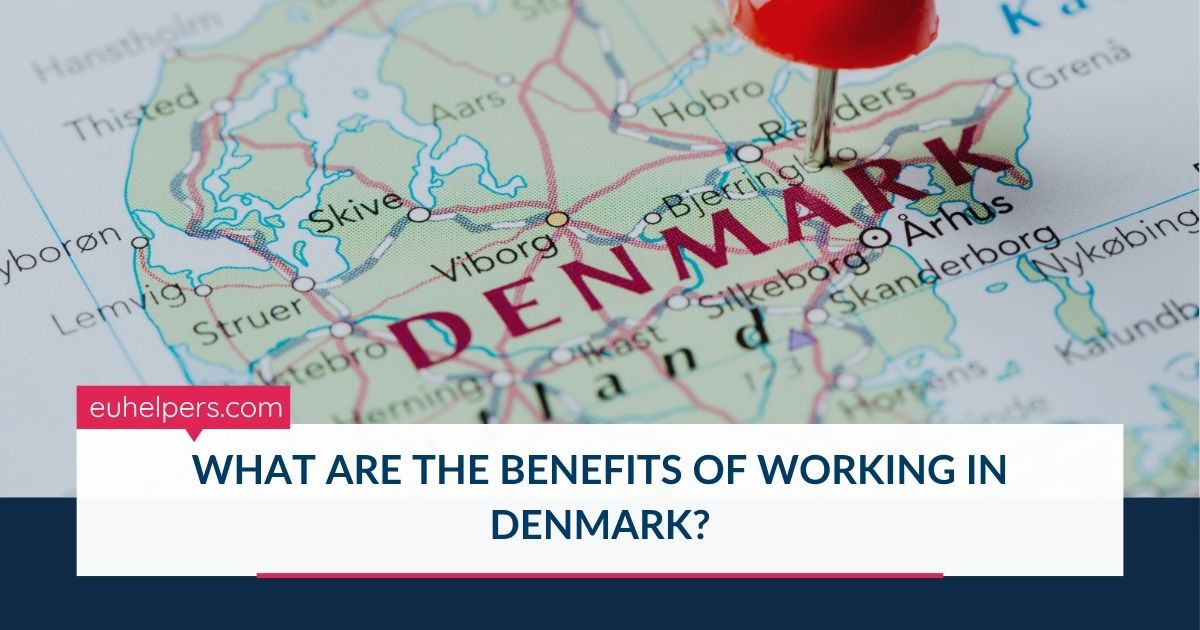
If you are asking about the benefits of working in Denmark as a foreign worker, you are researching one of the most genuinely exceptional employment environments anywhere in the world. Denmark is not simply another European country with a decent labor market. It is a place where the entire architecture of working life — the hours, the pay, the leave, the social support, the relationship between employer and employee, and the fundamental culture of work — has been deliberately and carefully designed over more than a century to produce the best possible outcome for workers and their families.
Denmark consistently ranks among the top countries for quality of life, economic stability, and social support systems. High average salaries mean skilled professionals can earn between €45,000 and €100,000 annually depending on the sector. Tax-funded healthcare and education provide free or highly subsidized public services. The 37-hour work week, five weeks of paid vacation, and remote and hybrid work options define the work-life balance. According to the Danish Ministry of Immigration and Integration, the country is actively seeking foreign professionals to fill labor shortages across IT, healthcare, engineering, and skilled trades.
Danish salaries are the second-highest in the world on average, according to data released by Swiss banking conglomerate UBS. Add to that one of the highest employment rates in the world, generous social welfare that guarantees a safety net, and sky-high work-life balance.
This guide covers every significant benefit of working in Denmark — the 37-hour working week and genuine work-life balance, the five weeks of paid annual leave, the flexicurity model and what it really means for workers, free healthcare and free education, the salary levels across key sectors, parental leave provisions, the strong social safety net, the path to permanent residence, the visa pathways available, and how EU Helpers can connect you with a verified Danish employer and guide you through every step of the process completely free of charge.
Why Denmark Is Europe's Most Worker-Friendly Country
Denmark's exceptional status as an employer destination is not accidental — it is the product of more than a century of deliberate social development, strong labor union culture, and a deeply embedded national belief that work should serve life rather than the other way around.
Denmark's famous labour market model — Flexicurity — is widely admired for its ability to reflect the needs of employers while, at the same time, safeguarding the welfare of employees. Around 67% of Danish workers are union members. Strikes are uncommon in Denmark, because both sides feel a duty to reach an agreement that will benefit society at large. The flexible labour market and reliable safety net have helped make globalisation more palatable for Danes — they feel confident that if one job disappears, another is likely to arise in its place. This also means Danes feel comfortable changing jobs in order to advance their careers.
For foreign workers, this environment translates into concrete, practical benefits from the first day of legal employment — benefits that are not dependent on how long you have been in Denmark, whether you are Danish by birth, or which sector you work in. The Danish system provides its protections universally, to every legally employed worker regardless of nationality.
Benefit One — The 37-Hour Working Week
One of the most immediately striking and practically significant benefits of working in Denmark is the standard working week. In most of the world, full-time employment means 40 or more hours per week. In Denmark, the standard full-time working week is 37 hours.
Denmark's standard working week is 37 hours, and overtime is not permitted in the country for over 48 hours over a quarter year. Regular working hours in Denmark are from 8 or 9 AM to 4 or 5 PM, and the work week is Monday to Friday.
Three fewer hours every week than the standard 40-hour week translates to approximately 156 fewer working hours per year — nearly four full working weeks of additional free time annually compared to a standard global work schedule. This time is genuinely returned to workers for family, rest, recreation, and personal development. Danish workplaces do not compensate for shorter official hours with informal pressure to stay late or work through lunch. The culture genuinely reflects the 37-hour norm.
The typical workweek in Denmark consists of 33 to 37 hours. Employees are entitled to a substantial amount of paid holiday time.
Benefit Two — Five Weeks of Paid Annual Leave
Every employed worker in Denmark is legally entitled to five full working weeks — 25 working days — of paid annual leave every year. This is among the most generous statutory leave entitlement of any country in the world.
According to the Danish Holiday Act, employees are entitled to five working weeks — 25 days — of paid vacation per year, accrued at a rate of 2.08 days for every month worked. The Act states that employees can exercise their vacation entitlement as they earn it and can accumulate paid leave for 16 months, or until the following year's end.
Employees are entitled to five weeks of 25 days of paid holidays per year, and three of these weeks must be taken between May 1 and September 30. Additionally, 12 Danish national holidays occur each year.
The combination of 25 days of paid annual leave and 12 public holidays provides Danish workers with a total of 37 days away from work each year — more than seven full working weeks. For families, this abundance of guaranteed leisure time is transformative. Summer holidays, winter breaks, and regular long weekends are genuine expectations rather than aspirations.
Danish law ensures every employee earns 2.08 days of paid leave monthly. For salaried employees, employers must add a 1% holiday supplement based on the previous year's gross salary. This structured approach ensures your costs remain predictable regardless of salary fluctuations.
Some employers offer more than the statutory 25 days of holiday. In competitive sectors like IT or finance, a comprehensive package including supplementary health insurance, a strong pension scheme, and flexible work is often expected.
Benefit Three — The Flexicurity Model — Security Without Rigidity
Denmark's unique contribution to the global understanding of labor markets is the concept of flexicurity — a portmanteau of flexibility and security. It is the single most important conceptual framework for understanding why Denmark's labor market works better than almost anywhere else in the world for workers.
Flexicurity — the famous Danish labour market model — means that employers can easily hire and fire to adjust to the needs of the marketplace. At the same time, employees have a secure safety net in-between jobs. The Danish Flexicurity model is based on a long tradition of dialogue between employer associations and labour unions. Wages and working conditions are based on collectively-negotiated agreements, and the government rarely interferes.
The Danish model, known as the flexicurity model, combines high mobility between jobs with a comprehensive income safety net for the unemployed and an active labour market policy. Relatively low Employment Protection Legislation allows employers the flexibility to reconfigure the workforce to adapt to changing market conditions. A system of income security for unemployed people with a relatively high compensation rate supports workers between jobs. Active labour market policy aims at contributing to ensuring a well-functioning labour market through a number of measures in relation to both unemployed and employed persons.
For foreign workers, flexicurity means three practically important things. First, Danish employers are comfortable hiring non-Danish workers because employment relationships can be adjusted more easily if needed — this lowers the perceived risk for employers and makes Danish companies more open to international recruitment. Second, if you lose your job in Denmark through no fault of your own, you are financially protected while you find a new one. Third, the Danish government actively helps unemployed people re-enter the workforce through funded training, retraining, and career counseling.
Employees who join and pay subscription fees to an A-kasse — unemployment insurance fund — get up to two years of dagpenge — unemployment benefit — after losing their jobs. The Danish government runs education and retraining programs and provides counselling services to get unemployed people back to work as quickly as possible.
The flexicurity model encourages job mobility. Because employees can change jobs without losing access to pensions or earned holiday entitlements, they feel confident moving around to advance their careers. The relative ease of hiring and dismissing employees in Denmark means that employers are more likely to take chances on different types of candidates.
Benefit Four — Free Healthcare for All Legal Residents
Every person legally resident and working in Denmark has full access to Denmark's universal public healthcare system funded through taxation — completely free at the point of use.
Denmark has a universal public healthcare system funded through taxation, providing residents with access to medical services, hospital care, and general practitioners.
This means that from the first day you are legally registered as a resident in Denmark, you can see a general practitioner, receive hospital treatment, access specialist referrals, and receive emergency care — all without paying. For foreign workers coming from countries without universal healthcare, or from countries where healthcare is technically available but practically difficult to access, this benefit is genuinely life-changing.
Although there is a universal public healthcare system for residents in Denmark, it is still common for many employers to offer secondary health insurance to their employees to give them greater coverage and more options for care and help them access more specialized care or reduced wait times.
The combination of free universal healthcare as a baseline and employer-provided supplementary private health insurance as a standard benefit at many Danish companies means that healthcare costs are essentially zero for legally employed workers in Denmark, with excellent care accessible at every level.
Benefit Five — Free Education — For You and Your Children
Denmark provides free public education at all levels for legal residents — from pre-school through university. For foreign workers with children, this means your children can attend Danish schools from the first year of residency without any tuition fees.
More significantly, Denmark's universities and higher education institutions are free for EU/EEA residents and for workers who establish legal residency under Danish work permits. For children of foreign workers who grow up in Denmark, the entire educational pathway — from primary school through doctorate — is available at no cost.
This benefit has profound long-term financial significance. In countries where education is expensive, families must plan for and save toward educational costs throughout their working lives. In Denmark, these costs are removed entirely from the family budget, allowing income to be directed toward housing, lifestyle, savings, and other priorities.
Benefit Six — High Salaries Across All Sectors
The average hourly wage in Denmark is approximately €43.50, providing a strong baseline for attracting skilled professionals. Danish salaries are the second-highest in the world on average.
Danish wages are among the highest in the world, not only in absolute terms but also in terms of what those wages can actually purchase. This is because Denmark has no national minimum wage set by law — instead, wages are set through collective bargaining agreements between employer associations and trade unions, and the result is consistently high compensation across virtually every sector.
There is no national minimum wage in Denmark. Instead, minimum wages for specific industries and professions are set by collective bargaining agreements, which cover around 80% of the Danish labour force. In general, salaries are quite high in Denmark, with an average net annual salary of EUR 41,931. The EU average is EUR 28,217.
High average salaries mean skilled professionals can earn between €45,000 and €100,000 annually depending on the sector. The highest-paying roles in Denmark include IT such as software engineers, DevOps, and cybersecurity specialists, engineering including mechanical, civil, and electrical, and life sciences including pharma and biotech specialists. Salaries can range from €70,000 to over €110,000 per year, depending on the role and experience level.
Key Salary Ranges by Sector — Denmark
| Sector | Annual Gross Salary Range | Notes |
|---|---|---|
| IT and Software | €55,000 – €110,000+ | English-language workplaces common |
| Engineering | €50,000 – €85,000 | High demand, shortage occupation |
| Healthcare (doctors) | €70,000 – €120,000 | On Positive List |
| Healthcare (nurses) | €40,000 – €55,000 | On Positive List |
| Finance and Banking | €55,000 – €100,000 | Copenhagen concentrated |
| Construction Trades | €40,000 – €65,000 | Strong collective agreements |
| Life Sciences | €60,000 – €110,000 | Pharma and biotech hubs |
| Teaching and Education | €40,000 – €55,000 | Growing shortage occupations |
| Logistics and Transport | €35,000 – €55,000 | Strong union coverage |
| Agriculture | €30,000 – €45,000 | Seasonal peaks |
Benefit Seven — Generous Parental Leave
Denmark's parental leave provisions are among the most progressive and generous in the world, reflecting a national commitment to gender equality in childcare and family life.
In total, parents in Denmark are entitled to 52 weeks of paid parental leave split between both partners. Expectant mothers are entitled to four weeks of maternity leave before delivery and 14 weeks off post-delivery. Fathers, on the other hand, are entitled to two weeks of paternity leave following their partners' delivery. After 14 weeks post-delivery, both partners receive 32 weeks of paid parental leave that can be shared and either used concurrently or one after another.
Denmark has generous parental leave provisions, allowing parents significant time off to care for a child. Entitlements and payment during leave are a combination of employer obligations often through collective agreements and public benefits.
For foreign workers who start families during their time in Denmark, this means comprehensive, paid support during the critical first year of a child's life — support that genuinely enables both parents to be present, that protects both parents' career continuity, and that reflects the Danish belief that childcare is a shared family and social responsibility rather than a burden falling primarily on mothers.
Benefit Eight — Comprehensive Pension and Retirement Provisions
State Pension — Folkepension — is a basic pension provided by the state, dependent on residency and contribution history. Labor Market Pensions — Arbejdsmarkedspension — are occupational pensions established through collective agreements or individual company schemes. This is the most significant pillar for most employees. In many sectors, contributing to a specific industry-wide pension fund is mandatory under collective agreements. Typical contributions involve both the employer and the employee contributing a percentage of the salary.
Denmark's multi-pillar pension system builds genuine long-term financial security for workers through a combination of the state pension, mandatory occupational pension contributions through employment, and voluntary individual savings. For foreign workers who remain in Denmark for their full careers, this provides comprehensive retirement coverage. For workers who eventually return to their home countries, accrued pension entitlements typically remain accessible at retirement age under applicable bilateral social security agreements.
Benefit Nine — Flat Workplace Hierarchy and Exceptional Culture
The most common features of a Danish workplace culture include flexible working hours, a flat hierarchy, an informal work atmosphere, and teamwork. The country highly values work-life balance, which makes it one of the most family-friendly countries in the world.
Danish workplaces are internationally renowned for their genuinely flat organizational structures. Employees at all levels — from entry-level professionals to senior managers — typically address each other by first name, sit in open-plan offices without executive privilege of space, eat together in the same canteen, and participate in decision-making processes that involve genuine input from all levels of the team. This structure is not performative — it reflects a deep cultural belief in the value of each person's contribution and the right of individuals to be treated with dignity regardless of their organizational level.
For foreign workers from cultures with more hierarchical workplace structures, this Danish approach can be initially surprising but is consistently rated as one of the most valued aspects of working in Denmark by international professionals. It creates workplaces where ideas are genuinely welcome from all sources, where employees feel respected and valued, and where professional development is not blocked by organizational politics.
Benefit Ten — High Quality of Life and Happiness
In recent years, Danes have been consistently ranked as the happiest nation on Earth, which has in part been attributed to aspects of Denmark's flexicurity model.
Denmark's quality of life is not simply about economic indicators — it encompasses a genuinely enjoyable and sustainable way of daily living. Danish cities — Copenhagen, Aarhus, Odense, and Aalborg — are consistently ranked among the world's most liveable, with excellent public transport, cycling infrastructure, cultural institutions, parks, harbors, and social facilities. The natural environment — the Danish coastline, forests, and countryside — is accessible and well-maintained. Safety is exceptionally high, with Denmark consistently among the world's lowest-crime countries.
Benefit Eleven — English-Friendly Work Environment
Denmark offers global workforce integration with English-speaking workplaces and multicultural environments.
Denmark has one of the highest rates of English proficiency of any non-English-speaking country in the world. The vast majority of Danish professionals speak excellent English, and in many sectors — particularly IT, life sciences, finance, and international business — English is the primary working language of the company. This makes Denmark significantly more immediately accessible to qualified English-speaking professionals than Germany, France, or Spain, where language acquisition is a more pressing first requirement.
Danish language skills are still genuinely valuable — they improve daily life, expand job opportunities, and are required for certain permanent residence pathways — but the absence of Danish does not prevent you from being an effective professional contributor from day one in most modern Danish workplaces.
Benefit Twelve — Family Reunification Rights
Through the work visa application process, you can bring your accompanying family members to Denmark. Your partner or spouse might also qualify for a work permit, which would enable them to work in the nation.
Workers on Danish work permits can apply for family reunification for their spouses and dependent children. Spouses who accompany workers on Danish work permits typically receive their own right to work in Denmark, often with access to the full Danish labor market. Children receive access to the free Danish education system. This makes Denmark one of the most practically family-supportive European destinations for foreign workers.
The Danish Visa Pathways — How to Access These Benefits
To access all these benefits as a non-EU foreign worker, you need to obtain a Danish work permit through one of the official pathways managed by SIRI — the Danish Agency for International Recruitment and Integration.
Denmark offers several tailored visa schemes for foreign workers. The main categories are: the Fast-Track Scheme, a streamlined process for certified companies to hire highly skilled workers rapidly; the Positive List Scheme for occupations on Denmark's official Positive Lists of in-demand jobs; and the Pay Limit Scheme for any job offering a high salary — currently DKK 552,000 per year at the current threshold.
The Positive List Scheme
As the name suggests, the Positive List for Skilled Workers is a list of jobs that are in high demand in Denmark but do not have enough skilled people to fill them. The list is changed twice a year, on January 1 and July 1. These rules let you get a Danish work and residence permit if you have been offered a job on the Positive List for Skilled Work.
Denmark expanded its Positive Lists to include 190 higher education and 65 skilled work job titles. Applicants need a job offer, proper qualifications, and salary meeting Danish standards to apply for permits. Application fee is DKK 6,055 and processing time is typically one month via Danish Agency SIRI.
The Pay Limit Scheme
The Pay Limit Scheme is the simplest route for high-earning roles. Any foreign worker with an annual job offer of at least DKK 552,000 can apply. There are no requirements about what field or educational level — the only condition is the salary.
The Supplementary Pay Limit Scheme
The Supplementary Pay Limit Scheme is for workers who have been offered a job in Denmark that pays at least DKK 393,000 per year.
The Fast-Track Scheme
The Fast-Track Scheme is for certified companies to sponsor workers more quickly and with more freedom. One of the biggest benefits of Fast-Track is the Quick Job Start option — if the foreign employee is already eligible to enter Denmark such as visa-free or holding a Schengen visa, the employer can arrange an immediate provisional work permit, allowing the employee to start working right away while the formal permit is processed.
Pathway to Permanent Residence in Denmark
Working legally in Denmark for a sustained period opens the pathway to permanent residence, which provides the right to remain in Denmark indefinitely without employer sponsorship and access to additional social rights.
Permanent residence in Denmark generally becomes available after four to eight years of continuous legal residence depending on the specific pathway, the type of work performed, Danish language skills, integration conditions, and the permit category held. Permanent residence holders can subsequently apply for Danish citizenship after nine years of total residence or shorter periods with strong integration evidence.
For workers who settle their families in Denmark, develop Danish language skills over time, and build their careers within Denmark's outstanding labor market, permanent residence and eventual citizenship represent the full realization of the extraordinary opportunities that Denmark provides.
Step-by-Step: How to Get a Job in Denmark as a Non-EU Worker
Step One — Identify Your Target Sector and Visa Pathway
Review the Danish Positive Lists at SIRI's official website to identify whether your occupation is listed. If your occupation appears on the Positive List, this is your primary visa pathway. If your expected Danish salary meets the Pay Limit Scheme threshold, that pathway is also available. If you are targeting a senior or specialist position with a certified Danish employer, the Fast-Track Scheme may be accessible.
Step Two — Find a Verified Danish Employer
Visit https://euhelpers.com/jobs-in-europe to browse all current Denmark-specific job listings across IT, engineering, healthcare, life sciences, construction, finance, and other sectors. Every Danish employer on the EU Helpers platform is legally registered, authorized to hire non-EU workers, and has a confirmed vacancy.
Step Three — Complete the Employer Interview
Danish employers typically conduct one to three rounds of interviews for professional roles. Be prepared for an open, direct, and collaborative interview style — Danish hiring processes are less formal than in many countries and may involve meeting multiple future colleagues, not just the hiring manager.
Step Four — Receive and Accept a Job Offer
A written job offer is required for all Danish work permit applications. The offer must specify your job title, salary, working hours, start date, and the terms of employment that meet Danish standards as verified by SIRI.
Step Five — Apply for Your Work and Residence Permit
To apply for a Danish work permit, you need to create a case order ID, pay the application fee, gather the necessary documents, and then submit the application online.
Your employer and you jointly apply through SIRI's online portal. Processing time is typically one month for most permit categories.
Step Six — Travel to Denmark and Register
Upon arrival in Denmark, register your address with the local authority, obtain your CPR number — the Central Personal Register number that connects you to the healthcare system, tax system, and all public services — and open a Danish bank account.
Step Seven — Begin Work and Access Your Benefits
From your first day of legal employment, all Danish employment benefits described in this guide apply to you — the 37-hour work week, five weeks of paid leave, free healthcare, pension contributions, the protection of collective agreements, and the full safeguards of Danish labor law.
How EU Helpers Can Help You Get a Job in Denmark
EU Helpers is your most reliable partner for finding a verified, employer-sponsored job in Denmark. Every Danish job listing on the EU Helpers platform at https://euhelpers.com/jobs-in-europe is a real, current vacancy confirmed directly with the employer, with full details of the role, sector, city, salary, visa pathway, and relocation support.
The EU Helpers team reviews every application, coordinates employer interviews, advises on documentation and visa pathway selection, supports employers through the SIRI permit process, and guides candidates through every step from initial application to their first day working legally in Denmark. This service is provided completely free of charge to all job seekers — all recruitment costs are borne by the employer.
Conclusion
Denmark's benefits for workers are not marketing claims — they are the product of decades of deliberate social development, strong labor traditions, and a genuinely held national belief that work should make life better rather than consuming it. With a 37-hour work week, five weeks of paid vacation, tax-funded free healthcare and education, some of the highest average salaries in the world, and a family-friendly immigration policy, Denmark is actively seeking foreign professionals to fill labor shortages across IT, healthcare, engineering, and skilled trades.
Every legally employed foreign worker in Denmark receives these benefits from their first day of work — not after years of residence, not only if you hold specific qualifications, but immediately and universally. Visit https://euhelpers.com/jobs-in-europe today and let EU Helpers guide you from your first application to your first day working in one of the world's most exceptional employment environments.
FAQs
Denmark offers a comprehensive package of employment benefits that is genuinely exceptional by global standards. The standard working week is 37 hours — three hours fewer than the standard 40-hour week in most countries. Every employee receives five full working weeks — 25 days — of paid annual leave every year plus 12 public holidays. Free universal healthcare funded through taxation is available to all legal residents from the first day of registration. Free public education at all levels including university is available to children of resident workers. Salaries are the second-highest in the world on average, with skilled professionals earning €45,000 to over €100,000 annually depending on sector. The flexicurity model provides genuine job security through a comprehensive social safety net and up to two years of unemployment benefit. All these benefits apply to legally employed foreign workers from their first day of work.
Flexicurity is Denmark's unique labor market model combining flexibility for employers with genuine security for workers. It operates as a golden triangle: employers can hire and fire relatively freely without lengthy legal processes, workers who lose their jobs receive substantial unemployment benefit for up to two years through the A-kasse insurance fund, and the government provides active employment support including retraining, skills development, and job placement assistance. For foreign workers specifically, flexicurity creates a more open hiring environment — Danish employers are more willing to hire international candidates because the consequences of a poor fit are less financially drastic than in countries with rigid employment protection laws. Flexicurity also means that if your employment ends in Denmark, you are financially protected while you find your next position, and the Danish government actively supports your re-employment through funded training and career counseling.
All Danish workers — including foreign workers — are legally entitled to five working weeks of paid holiday per year under the Danish Holiday Act. That equates to 25 working days of paid leave, accrued at the rate of 2.08 days per month worked. Three of those weeks must be taken during the summer period between May 1 and September 30. In addition to the 25 days of statutory paid holiday, Denmark has 12 public holidays per year. Combined, this provides 37 days of annual paid time away from work — more than seven full working weeks. Many employers in competitive sectors including IT, finance, and life sciences offer additional leave days above the statutory minimum as part of their talent attraction packages.
Yes. Denmark has a universal public healthcare system funded through taxation that provides free healthcare at the point of use to all legal residents, including foreign workers from their first day of registered residence. Once you obtain your CPR number — Central Personal Register number — after arriving in Denmark, you are registered in the healthcare system and can access general practitioners, hospitals, specialist referrals, emergency care, and preventive healthcare services at no cost. In addition to this free public healthcare, many Danish employers provide supplementary private health insurance as a standard employment benefit, giving workers faster access to private specialists and reduced waiting times for elective treatments. Healthcare costs for legally employed foreign workers in Denmark are effectively zero.
Danish salaries are the second-highest in the world on average, according to UBS research. The average net annual salary in Denmark is approximately €41,931, compared to an EU average of €28,217. For skilled professionals in high-demand sectors, earnings are significantly higher. IT professionals including software engineers, DevOps, and cybersecurity specialists earn between €55,000 and €110,000 or more annually. Engineers earn €50,000 to €85,000. Healthcare professionals including doctors earn €70,000 to €120,000. Finance professionals earn €55,000 to €100,000. Life sciences and pharma specialists earn €60,000 to €110,000. Denmark has no legally mandated national minimum wage — instead, minimum salaries are set through collective bargaining agreements, and the result is that even entry-level wages are significantly above the EU average.
Yes. Work permit holders in Denmark can apply for family reunification for their spouse or registered partner and their dependent children. Spouses who join a work permit holder in Denmark typically receive their own right to work in Denmark with full access to the Danish labor market. Children of legally resident workers can attend Danish public schools free of charge. The processing of family reunification applications runs through the same SIRI system as work permit applications. EU Helpers advises all placed candidates on family reunification options and timing based on their specific permit type, as conditions and qualifying periods vary by permit category.
The standard full-time working week in Denmark is 37 hours, typically distributed across five days from Monday to Friday with working hours of approximately 8am to 4pm or 9am to 5pm. Overtime beyond 37 hours per week is not standard practice in Danish workplace culture and is legally restricted — the maximum weekly average over a four-month period is 48 hours. Danish workplace culture genuinely respects the boundary between work time and personal time. Working late is not a norm or expectation, and leaving at the end of the standard workday is normal and professional, not viewed as a sign of insufficient commitment. This culture of genuine work-life boundary is one of the most consistently praised aspects of working in Denmark by international professionals.
Denmark offers several structured work permit pathways for non-EU professionals. The Positive List Scheme covers occupations on Denmark's official list of in-demand professions — the list is updated twice a year and currently includes over 190 higher education professions and 65 skilled trade professions, covering IT, healthcare, engineering, and many other sectors. The Pay Limit Scheme is available to any worker offered an annual salary of at least DKK 552,000, regardless of sector or qualification type. The Supplementary Pay Limit Scheme covers roles offering at least DKK 393,000 per year. The Fast-Track Scheme provides accelerated processing for certified Danish employers and includes a Quick Job Start option for eligible workers. The application fee is approximately DKK 6,055 and processing typically takes one month. EU Helpers advises all candidates on which pathway applies to their specific role and qualification profile.
Yes. Legal employment in Denmark provides a pathway to permanent residence. The qualifying requirements for Danish permanent residence typically include a period of continuous legal residence — generally four to eight years depending on the specific pathway and integration factors — demonstration of Danish language skills at an approved level, financial self-sufficiency, and meeting specific integration conditions. Workers who have maintained continuous legal employment, developed Danish language skills, and integrated into Danish society are the strongest candidates. Permanent residence provides the right to remain in Denmark indefinitely without employer sponsorship, full access to all Danish social rights, and the ability to apply for Danish citizenship after nine years of total legal residence or earlier with exceptional integration evidence.
English is sufficient for many professional roles in Denmark, particularly in IT, software development, life sciences, finance, and internationally oriented businesses. Denmark has extremely high English proficiency — it consistently ranks among the top two or three non-English-speaking countries for English language skills — and many Danish companies operate entirely in English as their primary working language. However, Danish language skills are genuinely valuable and become increasingly important for career advancement, social integration, and quality of daily life. For some visa pathways and permanent residence applications, Danish language certification is required. Most Danish employers and the Danish government provide Danish language training support — many employers fund Danish language courses for international staff, and the Danish state provides free Danish language education for legal residents.
Denmark's Positive Lists and the Pay Limit Scheme identify the sectors and roles with the strongest demand for qualified foreign professionals. Information technology — including software development, cybersecurity, data engineering, and cloud architecture — has consistently strong demand and the most English-friendly workplace environments. Healthcare — particularly specialist doctors, general practitioners, physiotherapists, and nursing professionals — appears prominently on the Positive Lists. Engineering across mechanical, civil, electrical, and renewable energy disciplines has persistent shortage demand. Life sciences and pharmaceutical research at companies including Novo Nordisk, Leo Pharma, and Lundbeck are among Denmark's highest-profile employment sectors. Skilled construction trades including electricians, plumbers, and carpenters have strong demand driven by Denmark's construction and green energy investment programs.
Denmark compares very favorably to Norway and Sweden — its two Scandinavian neighbors — in most aspects of working life, though all three countries offer significantly better conditions than the European average. Norway offers slightly higher average wages, particularly in the oil and energy sector, and the highest caregiver wages in Europe, but living costs are higher and the Norwegian language is more challenging to learn than Danish for most applicants. Sweden has a similarly strong social safety net and work-life balance culture, and Stockholm's technology sector is particularly vibrant. Denmark distinguishes itself from both with its unique flexicurity model, the highest proportion of English-language workplaces among the three countries, the most internationally accessible visa system with the Positive List and Pay Limit Schemes, and Copenhagen's position as one of Europe's most cosmopolitan and globally connected cities.
Denmark's parental leave provisions are among the most generous in the world. Mothers are entitled to four weeks of maternity leave before the expected birth and 14 weeks immediately following delivery — all paid. Fathers are entitled to two weeks of paternity leave immediately following birth — also paid. After the initial 14 weeks of maternity leave, both parents together receive 32 additional weeks of paid parental leave that can be shared between them in any combination — taken concurrently or consecutively — giving a total of 52 weeks of paid parental leave for both parents combined. The payment level during parental leave is a combination of employer obligations established through collective agreements and public dagpenge benefit. For many collective agreement employees, full pay or near-full pay is maintained throughout the leave period.
Denmark's cost of living is high relative to most European countries, but it must be understood in context of the salary levels and free public services. Copenhagen is the most expensive city, with rental accommodation costs for a one-bedroom apartment in the city center ranging from approximately DKK 9,000 to DKK 15,000 per month. Food, transport, and social activities are all priced above European averages. However, when Danish salary levels are properly compared to Danish costs — and when the value of free healthcare, free education, and comprehensive social security are factored in — the effective standard of living and disposable income available to workers is genuinely competitive with or superior to higher-paying but more expensive destinations. For skilled professionals earning €60,000 or more annually, Copenhagen provides an excellent quality of life with meaningful monthly savings.
EU Helpers is a completely free-of-charge recruitment platform that connects non-EU foreign workers with verified Danish employers who are legally authorized to hire non-EU workers and sponsor the necessary work permits through SIRI. Every Denmark job listing on the EU Helpers platform at https://euhelpers.com/jobs-in-europe is a real, current vacancy confirmed by a direct employer mandate, with full details of the role, sector, city, salary, visa pathway — Positive List, Pay Limit, or Fast-Track — and relocation support provisions. When you apply through EU Helpers, the team reviews your qualifications and experience, matches you with suitable Danish opportunities in your target sector, coordinates your employer interview, advises on which SIRI permit pathway applies to your role and profile, supports the employer through the permit application process, and guides you through every step including arrival, CPR registration, bank account opening, and first day at work. The entire EU Helpers service is completely free — no fees, no charges, and no hidden costs at any stage.