
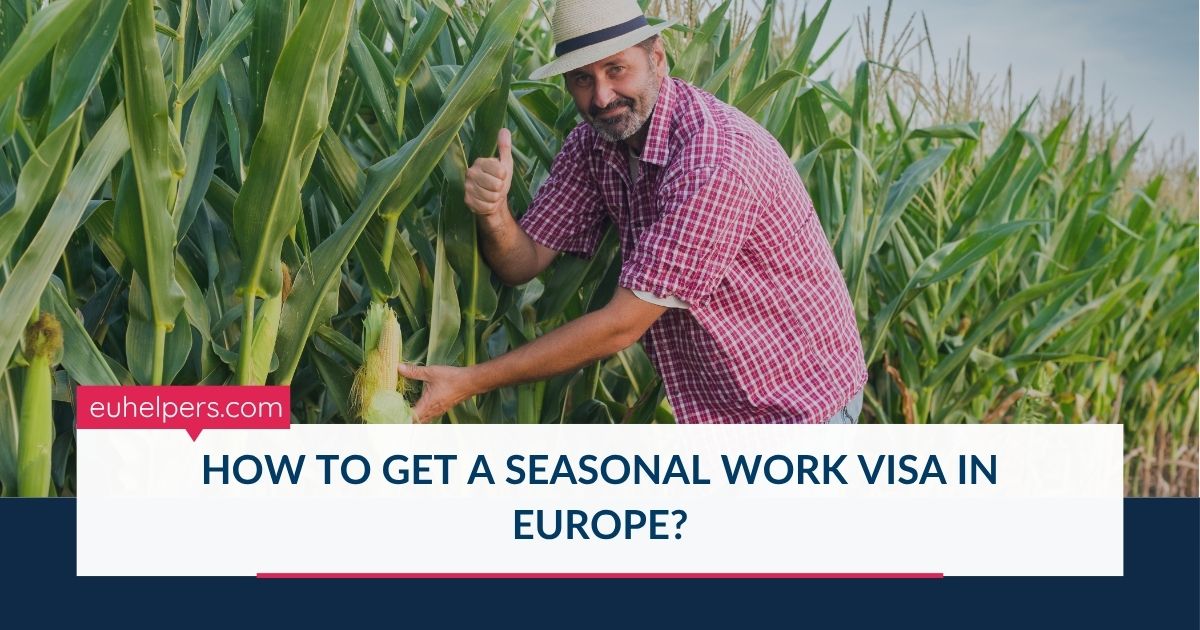

If you are asking how to get a seasonal work visa in Europe, you are exploring one of the most accessible, practical, and genuinely rewarding opportunities available to any foreign worker looking to start a European career or simply earn income abroad for a few months. Europe's seasonal labor market is enormous. From strawberry farms in Andalusia and grape harvests in Burgundy to Alpine ski resorts in Austria and beach resort hotels in Croatia, millions of seasonal jobs open up every year across the continent — and European employers consistently struggle to fill them with local workers alone.
EU rules allow third-country nationals who reside outside the EU to enter and stay in the EU for seasonal work for a period of up to nine months within any twelve-month period. The EU has established rules to ensure fair working conditions, adequate accommodation, and equal employment rights for seasonal workers from non-EU countries.
A seasonal work visa allows foreign workers to live and work temporarily in a country for specific seasonal jobs such as farming, tourism, or hospitality. It is usually valid for a few months during peak work seasons each year.
Seasonal work in Europe is not just a short-term financial opportunity — for many workers, it is the first and most accessible step into the European labor market, providing the documented European work experience, the language development, and the employer relationships that open the door to longer-term employment, more senior positions, and eventually permanent residence. Countries like Spain, France, and Italy are perfect for tourism roles, while Germany, Austria, and Switzerland are known for their structured seasonal work systems and attractive wages.
This guide gives you everything you need — the EU framework that governs seasonal work visas, country-by-country breakdowns of the best seasonal work destinations, the top sectors and roles available, realistic salary ranges, the complete document requirements, the step-by-step application process, and how EU Helpers can connect you with a verified seasonal employer and support your entire journey at no cost to you.
The EU Framework for Seasonal Work Visas
Understanding the legal framework governing seasonal work in Europe is the essential starting point for any foreign worker planning to apply for a seasonal work visa.
If you employ workers from outside the EU or EFTA as seasonal workers, it is essential to understand the EU regulations on their entry and stay. These rules ensure fair working conditions, adequate accommodation, and equal employment rights. Note that these regulations do not apply in Denmark and Ireland, where national laws govern seasonal work.
The EU Seasonal Workers Directive — Directive 2014/36/EU — established a common framework across most EU member states for the entry, stay, and rights of non-EU seasonal workers. Under this framework, non-EU nationals can enter an EU member state for seasonal work for up to nine months in any twelve-month period. They must return to their home country after the authorized period ends.
These rules ensure that seasonal workers have access to adequate accommodation, fair working conditions, and equal treatment with nationals in terms of employment and other rights. There are also measures and mechanisms to prevent abuse, labour rights infringements, and exploitation through monitoring and inspections, complaint mechanisms, and sanctions.
Processing time for seasonal work visa applications typically takes up to 90 days, though some countries may be faster. EU seasonal work rules do not apply in Denmark and Ireland — these countries have their own national legislation for seasonal workers.
Each EU member state implements the Directive through its own national system, meaning the specific application process, required documents, salary minimums, and eligible sectors vary from country to country. Understanding both the EU-wide framework and the specific rules of your target country is essential for a successful application.
The Top European Countries for Seasonal Work Visas
Germany
Germany is one of the most popular and well-organized seasonal work destinations in Europe. Its structured employment system, strong worker protections, and high wages make it an excellent choice for seasonal workers from around the world.
Germany provides a Seasonal Worker Visa primarily for temporary jobs in agriculture, tourism, and forestry. Workers must have a formal job offer, and employers often coordinate directly with German labor authorities.
Germany issues seasonal visas for up to 90 days within a 180-day period. Germany's fields and restaurants are bustling from March to October.
From third countries, you can work up to 90 days out of 180 days in total. Normally you need to apply for a visa in a German embassy or consulate in your home country. The German foreign office recommends a period of at least eight to ten weeks before you hope to start work. That means if you wanted to start work in March with the first harvests, you would need to apply at the turn of the year. You must work regularly at least 30 hours per week. Germany's Federal Employment Agency — the BA — has to check whether you meet the requirements for seasonal work. Georgian and Moldovan nationals can be issued work permits without prior approval from the visa office.
Seasonal workers in Germany are entitled to the national minimum wage. Agricultural workers earn €12.00 to €15.00 per hour. Tourism sector workers earn €12.00 to €18.00 per hour plus potential tips.
Agriculture remains one of the primary sectors for seasonal work in Germany. The demand for seasonal workers in this field is consistently high, especially during harvest seasons. They typically work during the harvests, which take place from March to October. Most apply directly with the agricultural businesses or farms or via agencies operating in their home countries. Some big businesses recruit in countries of origin ahead of the season, while some workers apply via online platforms.
Key peak seasons in Germany include the strawberry harvest in May and June, the asparagus harvest from April to June, cherry and stone fruit picking in July, apple and grape harvests in September and October, and Christmas market and hospitality positions in November and December.
Spain
The Seasonal Work Visa in Spain targets blue-collar roles in agriculture and tourism, allowing employers to bring in non-EU workers for up to nine months during peak labor demand, such as harvest seasons or tourism surges. The seasonal work visa can be extended up to nine months and provides a pathway to full work visas and ultimately permanent residency after five years of cumulative legal residence.
Spain's agricultural regions like Huelva and Murcia are top employers for seasonal pickers. Tourist hotspots like the Costa del Sol also hire for the busy summer months.
For seasonal agricultural work in Spain, wages might start around €1,200 to €1,600 per month, often with accommodation provided. Spain's economy, particularly its agricultural and tourism sectors, relies heavily on foreign labor during peak seasons. The Seasonal Work Visa is a streamlined pathway for non-EU workers to fill roles in agriculture and hospitality for up to nine months.
Spain allocates annual quotas for seasonal work visas, particularly for agriculture. The largest single program involves the strawberry harvest in Huelva, which employs tens of thousands of seasonal workers annually, primarily from Morocco under a bilateral agreement. Other major seasonal opportunities include olive harvesting in Andalusia from October to January, citrus fruit picking in Valencia from October to March, summer tourism and hospitality on the Costa del Sol and Balearic Islands, and wine grape harvesting in La Rioja, Castilla-La Mancha, and Catalonia from August to October.
France
France requires non-EU citizens to obtain a seasonal work permit, which is typically issued for employment in hospitality, farming, and tourism.
France offers a Temporary Seasonal Worker Permit — Travailleur Saisonnier — allowing work up to six months per year. You need a valid work contract and proof of accommodation, and you must apply from your home country.
France offers diverse seasonal opportunities, from grape picking in the countryside to working in luxurious ski resorts in the Alps. It is an excellent choice for those looking for scenic work environments and cultural immersion. The Travailleur Saisonnier visa covers vineyards, ski resorts, and tourism with peak seasons in spring for vine harvesting and winter for ski resorts. Average salary is €10.50 to €12.50 per hour.
Key seasonal opportunities in France include the Champagne, Burgundy, and Bordeaux grape harvests in September and October, summer tourism and hospitality on the Côte d'Azur from June to September, Alpine ski resort work from December to April, agricultural work in Provence and the Loire Valley from April to September, and Christmas market and hospitality positions in Alsace and Strasbourg in November and December.
Italy
Italy opens quotas annually under the Decreto Flussi program, offering thousands of spots to seasonal workers from non-EU countries.
The Decreto Flussi program in Italy manages quotas for foreign workers, particularly in agriculture and hospitality. Understanding basic Italian can improve job prospects. Popular sectors include agriculture, festivals, and hospitality with peak seasons from April to November for agriculture and year-round for hospitality. Average salary is €9 to €12 per hour.
Italy's Decreto Flussi program releases annual quotas for seasonal workers, typically opening in January or February for the coming season. Competition for quota places is significant, and applications are processed on a first-come, first-served basis until quotas are filled. Workers from countries that have bilateral labor agreements with Italy benefit from priority access to quotas. The Decreto Flussi covers seasonal agricultural roles including fruit, vegetable, and grape harvesting across Italy's diverse agricultural regions, as well as hospitality and tourism roles in coastal resorts, ski areas, and major cities.
Austria
Austria offers seasonal work permits for roles in agriculture and tourism. The validity of the permit depends on the duration of employment, and applications are usually processed through the Austrian Public Employment Service or the local consulate.
Austria is ideal for winter sports lovers and those interested in resort jobs. Popular sectors include ski resorts, winter tourism, and hospitality. Peak seasons are winter from December to March. Average salary is €10 to €13 per hour plus accommodation in some jobs.
Austria's seasonal work system requires a regional quota allocation for non-EU seasonal workers, applied for by the employer. The ski resort season from December through April is the primary driver of seasonal demand, with Tyrol, Salzburg, and Vorarlberg's alpine regions hosting some of Europe's most prestigious ski resorts. Summer tourism in the Salzkammergut lake district and Vienna's hospitality sector also generate significant seasonal demand. Many Austrian ski resort employers provide staff accommodation and meals as part of the employment package.
Portugal
Portugal has developed rapidly as a seasonal work destination, with growing demand in its expanding wine, fruit, and tourism industries. Portugal's tourism and agriculture industries are booming. Seasonal jobs are centered around the Algarve coast, Douro Valley, and Alentejo. Tourist hotspots hire a lot in spring and early summer, so starting the job search early in the year is important.
Portugal offers coastal tourism and hotel work with an average pay of €6 to €9 per hour.
Portugal's seasonal opportunities include the Douro Valley grape harvest in September and October, Alentejo olive and cork harvests from October to December, Algarve summer tourism and beach resort work from May to September, and Lisbon and Porto hospitality sector work year-round.
Croatia
Croatia's stunning coastline fills up with visitors every summer, creating huge demand for seasonal workers in hospitality and tourism. A work contract and accommodation proof are required for the visa application. Croatia's job market is competitive — having previous experience in customer service gives you an edge.
Croatia's Adriatic coast is one of Europe's fastest-growing tourist destinations, and the summer season from May to September generates enormous demand for hotel, restaurant, boat tour, diving, and hospitality staff. Dubrovnik, Split, Hvar, and the Istrian peninsula are the primary employment centers.
Poland
Poland is known for its simplified hiring procedures for non-EU workers, making it a great option for quick entry into the European seasonal work market.
Poland is a major agricultural producer and one of the most accessible European countries for seasonal work, particularly for workers from countries that have bilateral or simplified work arrangement agreements with Poland. Agricultural roles in berry harvesting, vegetable production, and greenhouse work are widely available from spring through autumn.
Netherlands
In the Netherlands, seasonal work is permitted through a residence permit for jobs in agriculture and horticulture. The Immigration and Naturalisation Service manages these permits, and applicants must demonstrate a valid employment offer and meet accommodation standards.
The Netherlands offers flower farming, agriculture, and logistics seasonal work with an average pay of €9 to €11 per hour.
The Netherlands is one of Europe's most important agricultural producers, and its greenhouse and outdoor farming sectors generate significant seasonal demand for flower cultivation, vegetable harvesting, and packing work particularly from spring through autumn.
Key Seasonal Work Comparison
| Country | Primary Sectors | Peak Season | Visa Duration | Average Hourly Pay | Accommodation |
|---|---|---|---|---|---|
| Germany | Agriculture, Tourism, Forestry | March – October | Up to 90 days | €12 – €18 | Often provided |
| Spain | Agriculture, Tourism | Year-round | Up to 9 months | €1,200 – €1,600/month | Often provided |
| France | Vineyards, Ski Resorts, Tourism | Spring and Winter | Up to 6 months | €10.50 – €12.50 | Varies |
| Italy | Agriculture, Hospitality | April – November | Up to 9 months | €9 – €12 | Varies |
| Austria | Ski Resorts, Tourism | December – March | Varies | €10 – €13 | Often provided |
| Portugal | Tourism, Wine, Olive | May – October | Up to 9 months | €6 – €9 | Varies |
| Croatia | Coastal Tourism, Hospitality | May – September | Up to 9 months | €6 – €10 | Sometimes provided |
| Poland | Agriculture, Horticulture | Spring – Autumn | Up to 9 months | €8 – €12 | Often provided |
| Netherlands | Flower Farming, Agriculture | Year-round | Up to 9 months | €9 – €11 | Sometimes provided |
| Switzerland | Ski Resorts, Luxury Hospitality | December – March | Varies | €20 – €25 | Often provided |
| Greece | Summer Tourism, Islands | June – September | Up to 9 months | €5 – €8 | Sometimes provided |
Top Seasonal Job Categories Across Europe
Agriculture — Fruit and Vegetable Harvesting
Agricultural harvesting is the largest and most consistently available seasonal employment category across Europe. From strawberry picking in Huelva, Spain to apple harvesting in Normandy, France, grape picking in the Rhine Valley, Germany and blueberry harvesting in Poland, agricultural seasonal work provides reliable employment for millions of non-EU workers every year.
Requirements are minimal — physical fitness, reliability, a willingness to work outdoors in varying weather, and the ability to meet daily output targets are the primary expectations. Accommodation is widely provided on-farm or nearby, and organized transport from arrival airports or major cities to farm locations is commonly arranged by employers or their recruitment agents.
Pay varies by country, with Spanish agricultural workers earning approximately €1,200 to €1,600 per month including potential piece-rate bonuses, French agricultural workers earning €10.50 to €12.50 per hour, German agricultural workers earning €12 to €15 per hour, and Netherlands greenhouse and flower farm workers earning €9 to €11 per hour.
Hospitality and Tourism
Europe offers tons of job opportunities from working in bars, clubs, sales, marketing, hotels, tourism, and more in its seasonal resort economy. Working a summer season is really popular and a great way to experience living in Europe for a short period. Some companies offer working holiday packages, providing a paid job and accommodation in popular European holiday resorts.
Hospitality and tourism seasonal roles are widely available across all European coastal, alpine, and city tourism destinations. Roles include hotel receptionists, housekeeping staff, waiters and food runners, kitchen assistants and commis chefs, bartenders, lifeguards, activity coordinators, tour guides, and resort entertainment staff.
Language skills in English are generally sufficient for tourist-facing roles in international resort environments, where a multilingual guest base expects English-speaking staff. Basic knowledge of the local language significantly improves the overall experience and is valued by employers, but is not typically a strict prerequisite for entry-level resort positions.
Ski Resort Work
Alpine ski resort employment is one of the most sought-after categories of European seasonal work, combining excellent pay with an extraordinary lifestyle experience. Austria, France, Switzerland, Italy, and Germany all have world-class ski resorts that recruit large numbers of seasonal staff from across Europe and internationally.
In Switzerland, seasonal resort jobs often include benefits like free ski passes, staff discounts, and sometimes accommodation.
Roles available in ski resorts include ski lift operators, ski instructors, ski and snowboard rental technicians, chalet and hotel housekeeping staff, restaurant servers, kitchen assistants, chefs, hotel receptionists, childcare and kids club staff, spa and wellness staff, and ski patrol and mountain safety personnel. Switzerland offers the highest pay in this category at €20 to €25 per hour, while Austria and France typically offer €10 to €14 per hour with accommodation frequently included.
Wine and Vineyard Work
The European wine harvest — vendange in France, vendemmia in Italy, Ernte in Germany — is one of the great seasonal employment traditions of the continent. Every September and October, vineyards across France's Champagne, Burgundy, and Bordeaux regions, Italy's Tuscany, Piedmont, and Veneto, Germany's Rhineland and Mosel, Spain's La Rioja, and Portugal's Douro Valley recruit large numbers of seasonal grape pickers and vineyard support workers.
Vineyard harvest work is physically demanding but enormously culturally rewarding. Workers typically live on-site or very nearby, eat together in communal dining facilities, and develop close working relationships with the vineyard team and fellow seasonal workers from around the world. Pay is typically at or above the national minimum wage, and free or subsidized meals are commonly provided.
Food Processing
Year-round food processing plant work — meat processing, dairy production, bakery operations, snack food manufacturing — provides more consistent year-round seasonal employment than harvest-dependent agricultural work. Major food processing employers in Germany, Poland, the Netherlands, and Denmark recruit foreign workers in large numbers for packing, processing, quality control, and logistics support roles.
These roles offer more predictable hours, controlled indoor working environments, and often more stable and longer contract durations than outdoor harvest work. Pay is typically at or above the national minimum wage, and many food processing employers provide subsidized accommodation for non-local workers.
How to Get a Seasonal Work Visa in Europe — Step-by-Step Process
The following is a complete, practical guide to the full process of obtaining a seasonal work visa for Europe as a non-EU foreign national.
Step One — Identify Your Target Country and Sector
Begin by deciding which country and sector best suits your skills, experience, language ability, and lifestyle preferences. Consider the timing of peak seasons, the pay levels, accommodation provisions, and the specific visa rules of each country. Use the comparison table above and the country-by-country breakdown in this guide to make an informed choice. If you want to work in multiple European countries across different seasons — for example, Germany's summer harvest followed by Austria's winter ski season — plan your calendar carefully to ensure your visa durations align.
Step Two — Find and Confirm a Job Offer
Finding a good job offer is the first step to getting a visa. Think about where you want to go and what kind of job you want. Some places are better for farming, while others focus more on tourism. Apply through specialized seasonal job platforms, and consider applying directly to hotels, farms, and other relevant businesses.
EU Helpers at euhelpers.com lists verified, current seasonal job vacancies across multiple European countries. Every employer listed is verified, legally authorized to sponsor seasonal work permits for non-EU workers, and has a confirmed job opening before the listing is published.
A signed employment contract or formal job offer letter from the employer is the central document in every seasonal work visa application. This document must clearly state your job title, the start and end dates of your seasonal employment, your agreed wage, working hours, and the name and address of your employer.
Step Three — Prepare Your Complete Document Package
Essential documents include a valid passport, signed job contract, health insurance, passport-sized photo, visa application form, proof of accommodation, and visa fee payment confirmation.
The standard document package for most European seasonal work visa applications includes:
A valid passport with at least six months of remaining validity beyond your intended return date, with at least two blank pages. A completed visa application form in the language required by the specific embassy or consulate. A signed employment contract clearly stating all key employment terms. Proof of accommodation — either a letter from your employer confirming they will provide accommodation, or a rental contract for accommodation you have arranged independently. Health insurance covering all risks and all costs during your stay in Europe. A recent passport-sized photograph in the standard visa photo format. A clean criminal record certificate from your country of residence, issued within the past three to six months. In some countries, a medical fitness certificate confirming you are physically capable of performing the work described in your contract.
If you arrange accommodation yourself, you must provide the seasonal worker with a rental contract or equivalent document in which the rental conditions are clearly stated. The rent that the seasonal worker pays may not be excessive compared with their net salary and compared with the quality of the accommodation. The rent may not be automatically deducted from the worker's wage.
Step Four — Submit Your Application at the Relevant Embassy or Consulate
Submit your complete application in person at the embassy or consulate of the country you intend to work in, located in your home country or country of legal residence. Most seasonal work visa applications must be submitted in person, with biometric data including fingerprints and a photograph collected at the appointment.
Processing time for seasonal work visa applications is usually around 90 days, though some countries may be faster. Start early — many jobs are filled months in advance. Missing documents can delay your visa. Always check the latest visa rules for the country you are applying to.
The German foreign office recommends a period of at least eight to ten weeks before you hope to start work. That means if you wanted to start work in March with the first harvests, you would need to apply at the turn of the year. Some businesses will take regular returning seasonal workers, so recruitment might start as early as October or November for the following year's harvests.
Step Five — Receive Your Visa and Travel to Europe
Once your seasonal work visa is approved, you collect it from the embassy or consulate and travel to the host country. Organize your travel to arrive a few days before your contract start date to allow for accommodation settling-in, local registration, and familiarization with the work location.
Upon visa approval, the worker enters Spain, registers with Social Security within 30 days, and gets a Foreigner's Identity Card or TIE. Similar registration requirements apply in most EU countries — you are typically required to register your address with local authorities within a defined period of arrival, usually between three and eight working days depending on the country.
Step Six — Begin Work and Fulfill Your Contract
Once you begin work, your employer registers you with the national social insurance system, which provides you with at least basic healthcare coverage and accident insurance for the duration of your employment. Most seasonal workers in Europe are covered by the same labor law protections as local workers — including minimum wage, regulated working hours, paid rest periods, and the right to a written employment contract.
Even if you are a seasonal worker, German labor law applies to you. Most working days in Germany should be no longer than eight hours. Days can be extended to ten hours, but you normally need a rest period of at least 11 hours between two shifts. You are entitled to at least two days paid leave each month if you are working full time.
Step Seven — Return Home After Your Contract Ends
EU rules encourage the re-employment of third-country seasonal workers, so check with national authorities on what possibilities there are to make the process easier.
You must leave the host country before your seasonal work visa expires. Overstaying is illegal and can affect your ability to obtain European visas in the future. Many seasonal employers actively invite their best-performing workers back for subsequent seasons, and some countries offer simplified re-entry processes for returning seasonal workers who have established a track record with a specific employer.
Worker Rights for Seasonal Workers in Europe
EU rules ensure that seasonal workers have access to adequate accommodation, fair working conditions, and equal treatment with nationals in terms of employment and other rights. National authorities are obliged to monitor compliance with the rules. Inspectors must be granted access to both the workplace and the accommodation. If rules are not followed, seasonal work authorisations may be withdrawn, and employers could face financial penalties and even a ban on hiring third-country nationals in the future.
All legal seasonal workers in EU countries are entitled to the same national minimum wage as local workers in the same role. Working hours are regulated by national law. Paid rest periods — both daily and weekly — are mandatory. Accommodation provided by the employer must meet the national standards for adequate housing, including minimum space, heating, sanitation, and safety requirements. Adequate accommodation for seasonal workers entails providing safe, clean, and comfortable living spaces that have a minimum size, meet basic needs such as heating, sanitation, and privacy. This includes ensuring that the accommodation is not overcrowded, has proper ventilation, and is located within a reasonable distance from the workplace.
If you encounter any problems with your employer regarding wages, working conditions, or accommodation, you have the right to report these to the national labor inspectorate of the host country without risk to your legal status. EU rules specifically protect seasonal workers' right to file complaints against exploitative employers.
Accommodation for Seasonal Workers
Accommodation is one of the most important practical elements of seasonal work in Europe, and understanding your entitlements and options clearly before you travel will prevent significant stress and financial uncertainty on arrival.
A large vineyard in Spain employs seasonal workers for the grape harvest. The vineyard provides an on-site dormitory with shared rooms. Each room houses no more than four workers, has individual beds, lockers for personal belongings, and is equipped with a shared bathroom and kitchen facilities. The dormitory is cleaned weekly, and all utilities are included at no extra cost. A hotel in the Italian Alps hires additional staff for the winter season. The hotel rents nearby apartments for its workers, ensuring each apartment is fully furnished with a bedroom, living area, kitchen, and bathroom. The cost of the accommodation is partially subsidised by the hotel. The rent to be paid by the workers is reasonable compared to their net salary and the quality of the accommodation.
For workers in agriculture and ski resorts, free or heavily subsidized accommodation provided by the employer on-site or very nearby is the norm. For hospitality workers in city hotels, accommodation is less consistently provided, and some workers need to arrange their own housing. EU Helpers clearly states for every seasonal job listing whether accommodation is provided, what the terms are, and whether any deduction from salary applies.
Salary and Financial Planning for Seasonal Work in Europe
Salaries for seasonal work in Europe vary between €6 and €15 per hour depending on the country and sector.
Switzerland and Germany consistently offer the highest hourly rates for seasonal workers, with Switzerland paying €20 to €25 per hour for ski resort and luxury hospitality work and Germany paying €12 to €18 per hour for agricultural and tourism roles. France, the Netherlands, and Austria occupy a middle tier at €10 to €14 per hour. Southern European countries including Spain, Portugal, Croatia, and Greece offer lower hourly rates of €6 to €12 per hour, but many jobs in these countries include accommodation and meals as part of the package, which significantly reduces living costs.
For many seasonal workers, the combination of regular paid employment and free accommodation means that the net savings potential from even a three to six-month season in Europe is substantial compared to equivalent employment at home. Workers in Spanish strawberry harvesting with free accommodation provided can save €700 to €1,000 per month net. Workers in German agricultural roles with accommodation can save €1,000 to €1,500 per month. Workers in Swiss ski resorts with subsidized accommodation can save €1,500 to €2,500 per month.
Returning and Building a Long-Term European Career
Many of the most successful long-term migrants to Europe begin their journeys as seasonal workers. The first season establishes your European work history, your relationship with a specific employer, your developing language skills, and your understanding of European workplace culture. Each subsequent season builds on this foundation.
The seasonal work visa provides a pathway to full work visas and ultimately permanent residency after five years of cumulative legal residence, making it a strategic option for those with long-term European ambitions.
Workers who complete one or more successful seasons, develop language proficiency, and build relationships with employers who value their reliability often find that the transition from seasonal to longer-term employment becomes available to them. Many employers in Spanish hospitality, Austrian ski resorts, and French wine country specifically offer permanent or longer-term contracts to their best seasonal staff as a retention strategy.
Why EU Helpers Is Your Best Partner for Seasonal Work in Europe
EU Helpers is your most reliable and safest partner for finding a verified, employer-sponsored seasonal job in Europe. Every seasonal employer on the EU Helpers platform is legally registered, authorized to hire non-EU seasonal workers, and committed to providing the fair wages, proper accommodation, and legal employment conditions required by EU seasonal worker rules.
Visit EU Helpers to browse all current seasonal job listings across multiple European countries. Filter by country, sector, season timing, accommodation provisions, and salary level to find the right opportunity. Every listing clearly states all key terms including start and end dates, salary, accommodation details, and the specific visa pathway.
Submit your application with your CV and key documents. The EU Helpers team reviews every application and contacts shortlisted candidates within five to seven business days. From there, the team coordinates your employer interview, helps with document preparation for the seasonal visa application, and supports you through every step up to your arrival and first day at work.
The complete EU Helpers service for all job seekers is entirely free of charge. All recruitment costs are borne by the employer. There are no placement fees, no processing charges, and no obligations of any kind until you accept a job offer.
Conclusion
Getting a seasonal work visa in Europe is a practical, achievable, and genuinely rewarding first step into the European labor market for any non-EU foreign worker. EU rules allow third-country nationals who reside outside the EU to enter and stay in the EU for seasonal work for a period of up to nine months within any twelve-month period, with rules ensuring fair working conditions, adequate accommodation, and equal employment rights.
Whether you want to pick strawberries in Spain, work the grape harvest in France, staff a ski resort in Austria, serve tourists on Croatia's Adriatic coast, or work in Germany's world-famous agricultural belt, the opportunity is real, the process is clear, and the rewards — financial, professional, and personal — are genuinely significant.
Visit EU Helpers today. Browse current seasonal listings, find the right opportunity, and let EU Helpers guide you from your first application to your first day working in Europe.
FAQs
A seasonal work visa in Europe is a temporary work and residence authorization that allows non-EU nationals to live and work legally in a European country for a specific period during peak seasonal demand in sectors such as agriculture, tourism, hospitality, and forestry. Under the EU Seasonal Workers Directive, non-EU nationals can stay in an EU member state for seasonal work for up to nine months within any twelve-month period, after which they must return to their home country. The exact validity period depends on the specific country and the duration of the employment contract. Germany typically issues seasonal visas for up to 90 days, Spain allows up to nine months, France allows up to six months, and Italy's program follows its annual Decreto Flussi quota system. All seasonal workers must leave the host country by the date their visa expires.
Yes, in virtually all European countries, a confirmed, signed job offer or employment contract from a registered employer is required before you can apply for a seasonal work visa. The job offer serves as the primary supporting document demonstrating that your entry into the country is for legitimate work purposes. Your employer's name, address, job title, start and end dates, wage, and working hours must all be clearly stated in the contract. Some countries additionally require the employer to apply for a work authorization on your behalf before you can apply for the visa at the embassy. EU Helpers connects candidates with verified European employers who are ready and authorized to provide confirmed job offers as the foundation for the visa process, completely free of charge.
The best European countries for seasonal work vary by sector and personal preference. For agriculture and fruit picking, Spain, France, Germany, Poland, and Italy offer the most consistent and accessible opportunities. For ski resort work, Switzerland, Austria, and France are the leading destinations, with Switzerland offering the highest wages. For coastal tourism and hospitality, Croatia, Greece, Portugal, and Spain all have strong summer seasonal markets. For wine harvest work, France, Italy, Germany, Spain, and Portugal all have significant vendange and vendemmia recruitment needs in September and October. Germany is widely considered the best destination for structured, well-organized, well-paid agricultural seasonal work with strong legal protections. Spain is the largest-volume seasonal employer in Europe, particularly for agricultural workers from non-EU countries.
The standard documents required for most European seasonal work visa applications include a valid passport with at least six months of remaining validity, a completed visa application form, a signed employment contract from the European employer clearly stating job title, dates, wages, and working hours, proof of accommodation either provided by the employer or independently arranged, health insurance covering all risks and all medical costs during your stay, a recent passport-sized photograph, a clean criminal record certificate from your home country issued within the past three to six months, and a medical fitness certificate for some countries and sectors. Germany additionally requires confirmation from the Federal Employment Agency that you meet the seasonal work criteria. Some countries require financial means documentation. Always verify the specific requirements of your target country with the relevant embassy or through EU Helpers before submitting.
Earnings from seasonal work in Europe vary significantly by country and sector. Switzerland offers the highest seasonal wages in Europe at €20 to €25 per hour in ski resorts and luxury hospitality. Germany pays €12 to €18 per hour for agricultural and tourism work. France pays €10.50 to €12.50 per hour. Austria pays €10 to €13 per hour with accommodation frequently included. The Netherlands pays €9 to €11 per hour for greenhouse and agricultural work. Southern European countries including Portugal, Croatia, and Greece pay €6 to €10 per hour but typically offer more affordable living costs and often include accommodation. Spain pays approximately €1,200 to €1,600 per month for agricultural work with accommodation often provided. For most seasonal workers in Europe, the combination of wages and included accommodation results in meaningful net savings of €500 to €2,500 per month depending on the destination.
Many European seasonal employers — particularly in agriculture, ski resorts, and rural tourism — provide free or subsidized accommodation as part of the employment package. EU rules require that any employer-provided accommodation meets national standards for adequate housing, is not overcrowded, has proper sanitation and heating, and is located within reasonable distance of the workplace. The rent charged, if any, must not be excessive relative to the worker's net salary and must not be automatically deducted from wages without the worker's explicit agreement. Accommodation arrangements vary by employer and sector — on-farm dormitories are common for agricultural work, staff apartments near ski resorts are standard for winter hospitality work, and hotels sometimes provide staff rooms for hospitality workers. EU Helpers clearly states all accommodation terms in every seasonal job listing.
Yes, it is possible to work in multiple EU countries during a single year on successive seasonal work visas, provided you comply with the visa conditions of each country and leave by the required date before applying for the next one. For example, you could work the spring strawberry harvest in Spain from February to June, return home briefly, and then apply for a German grape harvest visa for September and October, and then potentially apply for an Austrian ski resort position for December through March. Each country's visa is separate and independent, with its own application process and requirements. Planning such a multi-country seasonal career requires careful calendar management, advance document preparation, and early application to avoid gaps. EU Helpers can advise on sequencing seasonal contracts across multiple European countries.
All legal seasonal workers in EU countries are entitled to the same worker rights as local employees in equivalent roles, enforced under EU rules and national labor law. These rights include the national minimum wage — seasonal workers cannot legally be paid less than local workers doing the same job, payment of wages directly to the worker's bank account without unauthorized deductions, regulated maximum working hours and mandatory rest periods, adequate accommodation meeting national housing standards if provided by the employer, the right to complain to national labor authorities without risk to your visa status, social insurance coverage including at minimum accident insurance from the first day of work, access to emergency medical care, and equal treatment in terms of employment conditions with national workers. EU rules specifically prohibit exploitative practices and mandate enforcement inspections at both workplaces and employer-provided accommodation.
Standard short-term seasonal work visas do not directly lead to permanent residency in Europe, as they are specifically temporary authorizations that require return to the home country at the end of each season. However, for countries like Spain, the seasonal work visa provides a legitimate pathway toward longer-term status when combined with subsequent longer-term work contracts. After accumulating five years of cumulative legal residence in Spain — which can include time spent on multiple seasonal visas — workers become eligible to apply for long-term resident status. In Germany, repeated seasonal employment builds a track record that can support a later application for a standard employment visa if the worker develops qualifications and language skills that qualify them for a permanent position. The most direct route from seasonal work to long-term residence is to transition, after gaining experience and language skills, to a standard employer-sponsored work permit for a non-seasonal role with a willing employer.
Italy's Decreto Flussi is an annual government decree that sets quotas for the number of non-EU workers — both seasonal and longer-term — who can enter Italy for employment in specific sectors. For seasonal workers, the decree typically opens quotas for agriculture, hospitality, and tourism roles, with a fixed number of places available for workers from specific countries. Applications under the Decreto Flussi are submitted by Italian employers on behalf of the foreign workers they wish to hire, and they are processed on a first-come, first-served basis until the quota is filled. Once the employer's application is approved, the worker applies for a seasonal work visa at the Italian embassy in their home country. The quota typically opens in January or February and fills very quickly, making early employer registration and preparation essential. Workers from countries that have bilateral labor agreements with Italy receive priority access to quotas.
Yes, health insurance covering all medical risks and costs during your stay in Europe is mandatory for most European seasonal work visa applications. For work lasting more than 90 days in most EU countries, mandatory social insurance enrollment through your employment covers basic healthcare from the first day of work, so no separate private insurance is typically required once employment begins. For the initial visa application and during the period before social insurance enrollment takes effect, you will need to present evidence of valid health insurance. Many employers assist with or provide this insurance as part of the employment onboarding process. EU Helpers advises all candidates on the specific health insurance requirements for their target country and ensures that all application packages include appropriate insurance documentation.
For most European seasonal work visas, you should begin the application process at least two to three months before your intended work start date, with some countries requiring even more lead time. Germany specifically recommends allowing eight to ten weeks between application and work start date. Italy's Decreto Flussi quotas are often fully allocated within days or weeks of opening in January or February, so employer applications must be ready immediately when the program opens. Spain's agricultural programs run bilateral recruitment processes that begin several months before the harvest season. The most common mistake made by seasonal work visa applicants is starting the process too late and missing either the application window or the beginning of the seasonal contract. EU Helpers helps candidates identify the correct timeline for their specific destination and sector and begins the preparation process well in advance of deadlines.
In most cases, you cannot simply extend your stay in Europe after your seasonal work contract ends without applying for a new and different visa category. EU seasonal work rules specifically require that seasonal workers return to their home country when their authorized period expires. If you want to remain in Europe for a further seasonal contract with a different employer or in a different sector, you must apply for a new seasonal work visa in the standard way. If you want to transition to longer-term employment in Europe, you would need to apply for the appropriate long-term work visa category for the relevant country, which is a separate process with different requirements. Some countries do offer returning seasonal worker programs that simplify the re-entry process for workers with an established track record — EU Helpers can advise you on which countries and employers have such programs available.
If your employer violates your rights as a seasonal worker in Europe — by paying less than the minimum wage, providing inadequate accommodation, requiring excessive working hours, or otherwise failing to fulfill the terms of your employment contract — you have the right to report this to the national labor authority of the host country. EU rules specifically protect seasonal workers' right to file complaints against exploitative employers, and doing so should not result in your visa being revoked. The EU's rules on seasonal workers include strong anti-abuse provisions, and employers who are found to have violated the rules face financial penalties and can be banned from hiring third-country seasonal workers in future. If you are placed through EU Helpers, the team provides ongoing support throughout your seasonal contract and can advise you on what steps to take if any employment issue arises.
EU Helpers is a free-of-charge recruitment platform that connects non-EU foreign workers with verified European employers who are legally authorized to hire seasonal workers and sponsor the necessary seasonal work visas. Every seasonal job listed on the EU Helpers platform at https://euhelpers.com/jobs-in-europe is a real, current vacancy confirmed by a direct employer mandate, with clear details about the role, start and end dates, salary, accommodation provisions, and visa pathway. When you apply through EU Helpers, the team reviews your profile, matches you with suitable seasonal opportunities in your preferred country and sector, coordinates your employer interview, assists with document preparation for the seasonal visa application including employment contract review and accommodation confirmation, and supports you through every step up to your arrival and first day at work. The complete EU Helpers service for all job seekers is entirely free — no fees, no charges, no hidden costs at any stage.