
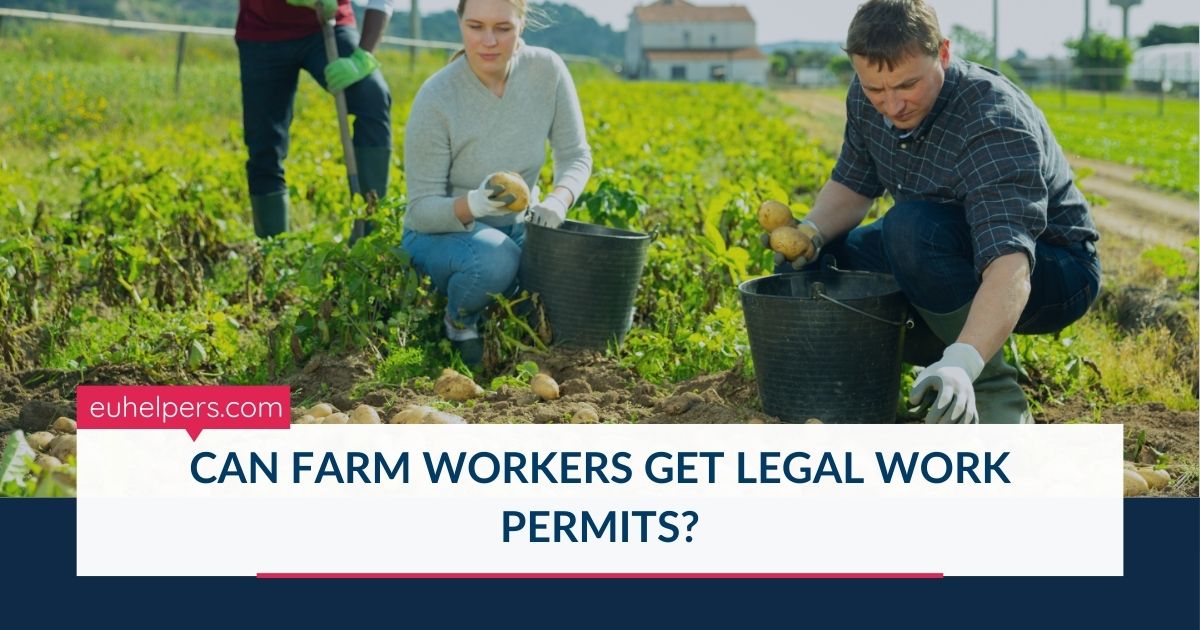

Yes, farm workers can get legal work permits in many European countries. Agriculture is one of the sectors with constant labor shortages, so governments regularly issue seasonal or agricultural work permits to foreign workers.
These permits allow farm workers to work legally and safely under national labor laws, provided all immigration requirements are met.
Why Do European Countries Issue Farm Worker Permits?
Many European countries rely on foreign workers because:
-
Local workers are insufficient for farm jobs
-
Agricultural work is seasonal and labor-intensive
-
Food production depends on timely harvesting
-
Rural areas face workforce shortages
As a result, agriculture is often included in shortage occupation lists or quota systems.
What Type of Work Permits Are Issued to Farm Workers?
Farm workers usually receive:
-
Seasonal work permits (short-term)
-
Agricultural employment visas
-
Low-skilled or blue-collar work permits
These permits are typically:
-
Employer-specific
-
Issued for 3 to 9 months (seasonal) or up to 1–2 years (non-seasonal)
-
Renewable, depending on country rules
Who Is Eligible for a Farm Worker Work Permit?
You may qualify if you:
-
Are a non-EU / non-EEA citizen
-
Have a job offer from an approved farm or employer
-
Meet age, health, and background requirements
-
Can perform physical agricultural work
-
Meet basic language or communication needs
Formal education is usually not required.
What Kind of Farm Jobs Are Covered?
Legal permits are issued for jobs such as:
-
Crop harvesting and planting
-
Fruit and vegetable picking
-
Greenhouse and nursery work
-
Livestock and dairy assistance
-
Farm maintenance and general labor
Exact duties depend on the employer and season.
Are Farm Worker Permits Seasonal or Long-Term?
Most farm worker permits are seasonal, but:
-
Some countries allow repeat seasonal permits
-
Others offer longer permits for livestock or full-time farm roles
-
Continuous legal work may support long-term residence pathways
Rules vary by country and job type.
Salary, Working Hours, and Benefits
Farm workers employed legally are protected by law and usually receive:
-
Minimum wage or agriculture-sector wages
-
Regulated working hours and rest days
-
Health insurance and social security coverage
-
Paid leave (for longer permits)
Many employers also provide accommodation, meals, or transport, especially for seasonal workers.
Do Farm Workers Need Language Skills?
Language requirements are generally basic:
-
Simple English or local language understanding
-
Ability to follow safety and work instructions
Formal language tests are rarely required.
Can Farm Work Permits Lead to Permanent Residence?
Sometimes, yes.
If a worker:
-
Repeatedly works legally
-
Transitions to long-term agricultural employment
-
Pays taxes and social contributions
They may qualify for long-term residence or permanent residence, depending on national law. Seasonal permits alone usually do not lead directly to PR, but they can be a starting point.
Common Risks and Mistakes to Avoid
Farm workers should avoid:
-
Working without a permit
-
Fake job offers or unregistered farms
-
Paying illegal recruitment fees
-
Overstaying after permit expiry
Always ensure the job and permit are official and verifiable.
How euhelpers Can Help
euhelpers assists applicants by:
-
Explaining which countries issue farm worker permits
-
Guiding employer sponsorship and documentation
-
Helping applicants understand seasonal vs long-term options
-
Reducing risks of fraud and rejection
Our focus is on legal, transparent, and safe agricultural employment.
FAQs: Farm Worker Work Permits
Are farm worker permits legal in Europe?
Yes. Many European countries officially issue them.
Do farm workers need experience?
Often no. Training is usually provided.
Are women eligible for farm work permits?
Yes. Farm work permits are open to both men and women.
Is accommodation usually provided?
Often yes, especially for seasonal work.
Can permits be renewed?
Yes, depending on country rules and continued employment.