
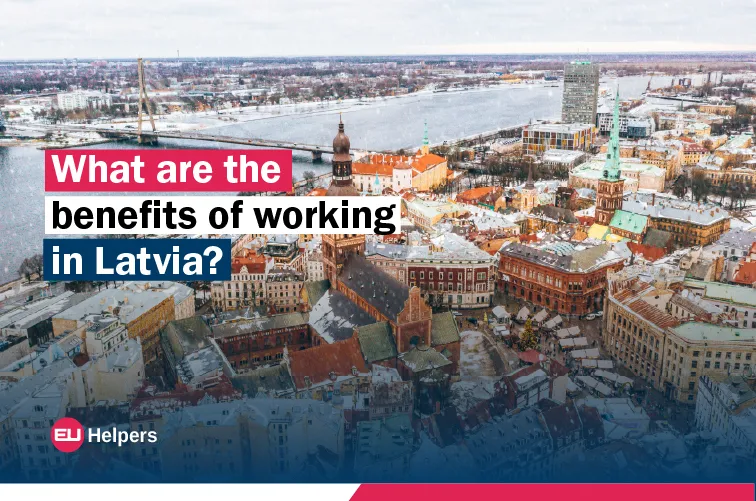

What Are the Benefits of Working in Latvia? A Complete EU Helpers Guide
Latvia, the dynamic Baltic nation on the eastern coast of the Baltic Sea, has firmly established itself as an increasingly attractive and accessible work destination in the European Union for international professionals, IT and tech specialists, fintech and start-up experts, logistics and transport professionals, finance and banking specialists, engineering professionals, healthcare workers, business consultants, founders, and entrepreneurs. As an EU member state, a Schengen Area member, a eurozone member, and a NATO member, with a strategic Baltic location bridging Northern Europe, the Nordic countries, and the broader European market, vibrant historic capital, exceptional digital infrastructure, growing technology sector, and a relatively low cost of living compared to many Western European countries, Latvia consistently ranks among the most interesting emerging destinations in the EU. The capital Riga (one of the Baltic region's largest cities and a UNESCO World Heritage site with its remarkable Art Nouveau architecture), along with Daugavpils, Liepāja, Jelgava, and Jūrmala, hosts multinational companies, technology hubs, logistics operations, financial institutions, and innovative start-ups that consistently recruit foreign talent. For applicants from Asia, Africa, Latin America, the Americas, and Europe, Latvia offers structured immigration pathways, EU-aligned legal protections, English-friendly business environments, and a clear long-term route toward EU long-term residence and eventually Latvian citizenship. At EU Helpers, candidates regularly ask which concrete benefits make Latvia worth choosing as a work destination.
This complete EU Helpers guide explains the real, practical, and long-term benefits of working in Latvia. Whether you are considering a salaried role under the residence permit for employment, the EU Blue Card, the ICT permit, self-employment, the Latvian Startup Visa, the residence permit for investors, or a family-based residence, this article walks you through everything you need to know — from salaries, taxes, and social security to lifestyle, healthcare, family options, and career growth. Keep in mind that immigration rules, salaries, and market conditions may vary by nationality, employer, permit category, sector, and the latest official requirements, so EU Helpers always recommends confirming your eligibility and offer based on your personal profile before making any move.
Why Latvia Is an Emerging Work Destination
Latvia combines a strategic Baltic location, EU and eurozone access, NATO membership, exceptional digital infrastructure, growing technology sector, vibrant Riga lifestyle, and a relatively affordable cost of living. For ambitious professionals seeking emerging opportunities in the EU, Latvia offers a compelling combination.
A Strategic Baltic Location
Latvia's location on the Baltic Sea coast, with strong connections to the Nordic countries, other Baltic states, Poland, Germany, and the broader European market, makes it a strategic base for international business.
Exceptional Digital Infrastructure
Latvia has one of Europe's most advanced digital infrastructures, with widespread high-speed internet, mobile coverage, and a culture of digital innovation supporting a growing technology ecosystem.
Growing Technology and Start-up Ecosystem
Latvia has developed a notable technology and start-up ecosystem, with companies like Printful, Mikrotik (a globally recognized networking equipment manufacturer), Tilde (a leading language technology company), and many growing start-ups. The country actively supports innovation through the Latvian Startup Visa.
Strong Demand for Foreign Talent in Key Sectors
Latvia actively recruits foreign talent through structured pathways such as the residence permit for employment, EU Blue Card, ICT permit, Latvian Startup Visa, residence permit for self-employment, and residence permit for investors. IT, fintech, logistics, finance, engineering, healthcare, and shortage occupations consistently feature in active recruitment.
Top Financial Benefits of Working in Latvia
One of the biggest reasons professionals consider Latvia is its favorable cost-to-salary ratio, with lower cost of living combined with competitive salaries in growing sectors.
Competitive Salaries in Top-Paying Sectors
In top-paying sectors such as senior IT, fintech, finance, logistics, and senior management at multinational companies, salaries are competitive by Baltic and Eastern European standards. Senior specialists at multinational subsidiaries often enjoy attractive compensation packages.
Significantly Lower Cost of Living
Latvia offers a significantly lower cost of living compared to Western EU countries, with affordable housing, food, and services, particularly outside central Riga. This makes salaries provide good purchasing power for skilled professionals.
Comprehensive Social Welfare Benefits
Beyond salary, Latvia's social welfare system provides solid value, including public healthcare, parental leave, unemployment insurance, pension contributions, and education access. These benefits are an integral part of the financial value of working in Latvia.
Strong Wages in Multinational Companies
Multinational companies operating in Latvia typically offer competitive compensation packages, particularly for senior, specialized, and international roles.
Eurozone Currency Convenience
Latvia uses the euro, providing currency stability and convenience for foreign professionals dealing with European business and personal matters.
Lifestyle and Quality-of-Life Benefits
Beyond money, Latvia offers a lifestyle that combines vibrant Baltic culture, exceptional natural beauty, rich cultural heritage, and warm hospitality. Daily life is uniquely attractive for those seeking a Baltic experience.
Vibrant Capital Riga
Riga, Latvia's vibrant capital, is the largest city in the Baltic region and a UNESCO World Heritage site for its remarkable Art Nouveau architecture (one of the world's largest collections of Art Nouveau buildings). Riga offers a dynamic urban lifestyle, vibrant cultural scene, excellent restaurants, lively nightlife, world-class music venues, and a remarkably cosmopolitan atmosphere.
Other Distinctive Locations
Jūrmala, Latvia's beautiful Baltic seaside resort, is a major destination just outside Riga. Daugavpils, Latvia's second city in eastern Latvia, offers distinctive cultural experiences. Liepāja and Ventspils on the Baltic coast, Jelgava, and other Latvian locations each provide unique experiences.
Exceptional Natural Beauty
Latvia offers exceptional natural beauty, with extensive forest coverage (Latvia is one of Europe's most forested countries), beautiful Baltic Sea coastline (including white-sand beaches and dunes), pristine lakes and rivers, Gauja National Park, the spectacular Cape Kolka where the Baltic Sea meets the Gulf of Riga, and many other natural attractions.
Rich Cultural and Historical Heritage
Latvia has a rich cultural and historical heritage, with the medieval Old Town of Riga (UNESCO listed), iconic Art Nouveau architecture, traditional folk music and dance, the world-famous Latvian Song and Dance Festival (a UNESCO Intangible Cultural Heritage), beautiful traditional crafts, and a strong sense of cultural identity that has survived through complex history.
Mild Baltic Climate
Latvia has a temperate Baltic climate with four distinct seasons. Summers are pleasantly warm with long daylight hours (and the famous Latvian summer solstice tradition called Jāņi), while winters are cold with snow. The country's natural rhythms support an attractive outdoor lifestyle.
Safety and Political Stability
Latvia is consistently ranked among the safer countries in Europe, with relatively low crime rates and strong political stability as a stable EU and NATO member.
Strong Work-Life Balance
Latvia values work-life balance, with reasonable working hours, generous vacation entitlements, and a culture that values family time, outdoor activities, and well-being. The Latvian connection to nature is particularly strong.
Family-Friendly Society
Latvia has a culture that values family and community, with high-quality childcare, public education, and family-friendly workplace policies.
Multicultural International Community
Latvia hosts a notable international community, particularly in Riga, with foreign professionals from across Europe and beyond, making networking, friendships, and integration easier for international workers.
Excellent Transport Connections
Latvia has excellent transport connections within Europe through Riga International Airport (a major Baltic hub), efficient rail and bus networks, and the major Port of Riga, making international travel for business and family visits convenient.
Career Growth and Professional Opportunities
Latvia's career environment is dynamic and growing, particularly in technology, fintech, and emerging sectors, offering opportunities for foreign professionals.
Strong Career Pathways in Growing Sectors
IT and software development, fintech and financial services, logistics and transport, engineering, pharmaceuticals, healthcare, wood processing, construction, tourism, marketing, BPO and shared services, and education all offer career pathways for foreign professionals.
Opportunities in Growing IT and Fintech
For IT and fintech professionals, Latvia offers exposure to a growing tech ecosystem in Riga, with global tech companies, growing Latvian tech start-ups, and significant fintech development.
Opportunities for Entrepreneurs Through Startup Visa
The Latvian Startup Visa supports foreign entrepreneurs establishing innovative start-ups in Latvia. Combined with Latvia's EU access, eurozone membership, and growing tech ecosystem, this offers opportunities for serious founders with innovative propositions.
Strong Foundation for Regional and EU Mobility
As an EU, eurozone, Schengen, and NATO member with strategic Baltic location and excellent transport links, Latvia is an excellent base for regional and broader EU careers.
Residency, Work Permit, and Legal Benefits
Working legally in Latvia comes with structured immigration pathways and strong legal protections within the EU framework.
Structured Permit System Through Dedicated Schemes
Most foreign workers obtain a residence permit through dedicated schemes such as the residence permit for employment, EU Blue Card, ICT permit, Latvian Startup Visa, residence permit for self-employment, residence permit for investors, or family-based residence, administered by the Office of Citizenship and Migration Affairs (PMLP).
Residence Permit for Employment
The residence permit for employment is Latvia's main framework for non-EU nationals working in salaried employment with a Latvian employer.
EU Blue Card
Latvia issues the EU Blue Card for highly qualified third-country professionals with recognized higher education or equivalent qualifications and a qualifying job offer that meets the salary threshold.
Latvian Startup Visa
The Latvian Startup Visa supports foreign entrepreneurs establishing innovative start-ups in Latvia.
Residence Permit for Self-Employment
Latvia offers a residence permit for foreign nationals planning to operate as self-employed professionals or business owners.
Residence Permit for Investors
Latvia offers residence permits for foreign nationals making qualifying investments in the country, supporting businesses or other defined economic activities.
Family Reunification With Strong Provisions
Latvia allows qualifying workers and residents to bring close family members, including spouses and dependent children, under family reunification rules. EU Blue Card holders typically benefit from particularly favorable family reunification provisions.
Pathway to Long-Term Residency and Latvian Citizenship
After several continuous years of legal residence and work in Latvia, foreign nationals may become eligible for permanent residence (EU long-term resident status) and eventually Latvian citizenship by naturalization, provided they meet integration, language, and legal requirements. Latvian citizenship is valuable as it grants full EU citizenship benefits.
Healthcare, Education, and Social Benefits
Latvia's public services provide solid support for workers and their families.
Healthcare System
Latvia has a public healthcare system. Once registered and employed in Latvia, residents have access to healthcare services. Many international professionals also use private health insurance to supplement public coverage and access faster private healthcare options.
Educational System for Families
Latvia offers a public educational system, alongside growing international schools, particularly in Riga, with English-language and bilingual programs. Latvian universities have respected traditions, particularly the University of Latvia and Riga Technical University.
Strong Social Protections for Workers
Registered workers benefit from contributions toward pensions, healthcare, unemployment insurance, parental leave, and other social protections through the Latvian social security system.
Required Documents and Step-by-Step Overview of Working in Latvia
While exact requirements depend on the specific permit and applicant profile, the general route to legally working in Latvia follows a predictable structure. EU Helpers guides applicants through each step in detail.
Typical Documents Needed
Applicants usually need a valid passport, police clearance certificates, medical certificates where required, proof of qualifications and experience, a formal job offer or qualifying ground, employer or sponsor documentation, accommodation evidence, valid health insurance, and proof of financial means. Translations into Latvian and apostille or legalization of foreign public documents are commonly required.
General Step-by-Step Process
The process typically starts with securing a job offer, business project, qualifying investment, or another qualifying ground. The employer or applicant then prepares the relevant application, applies for the appropriate visa at the Latvian embassy or consulate where required, travels to Latvia, and obtains the residence permit through the Office of Citizenship and Migration Affairs (PMLP).
Common Mistakes and Reasons for Delays or Refusals
Incomplete documents, missing translations or legalizations, unverified employer sponsorship, salary below thresholds, mismatched qualifications, weak business plans for self-employment or Startup Visa applications, and the wrong permit category being selected are common reasons for delays or refusals. Working with experienced advisors like EU Helpers helps minimize these risks.
Practical Tips for International Applicants
Moving to Latvia is rewarding, but preparation makes the difference between a smooth transition and a stressful one.
Tips From EU Helpers for a Successful Move
Start by carefully evaluating which permit category fits your profile. Identify Latvian employers experienced with hiring foreign workers in IT, fintech, logistics, finance, and shortage occupations. Strengthen your English fluency, which is widely used in IT and international business, and consider learning Latvian for daily life, integration, and broader career opportunities. Plan housing carefully, particularly in central Riga. For Startup Visa applicants, prepare a credible innovative business proposition. Take advantage of Latvia's lower cost of living. Understand how your nationality, passport, employer, and permit category may influence your timeline and documentation. Keep originals and certified copies of all key documents, and always rely on the latest official requirements rather than outdated forums.
Final Guidance
Working in Latvia offers a compelling combination of EU and eurozone access, NATO membership, growing opportunities in tech, fintech, and logistics, vibrant Riga lifestyle, exceptional natural beauty, rich Baltic cultural heritage, significantly lower cost of living than Western EU countries, and a clear pathway to Latvian citizenship and full EU benefits. For international professionals seeking emerging opportunities in the Baltic region of the EU, Latvia stands out as an interesting and accessible destination. However, the process is structured and detailed, and outcomes depend heavily on personal circumstances, employer sponsorship, nationality, sector, and the specific permit category chosen. That is exactly where expert guidance matters. EU Helpers supports international applicants at every stage — from evaluating eligibility and selecting the right permit route to preparing documents, comparing residence permit for employment, EU Blue Card, ICT, Latvian Startup Visa, self-employment, investor routes, and other pathways, and planning a smooth relocation. If Latvia is on your radar as a future work destination, EU Helpers can help you move forward with clarity, confidence, and the latest accurate information.
FAQs
Working in Latvia offers EU and eurozone membership, NATO security, growing opportunities in tech, fintech, and logistics, vibrant Riga lifestyle, exceptional natural beauty, rich Baltic cultural heritage, significantly lower cost of living than Western EU countries, and a clear pathway to Latvian citizenship with full EU benefits.
Latvian salaries are generally lower than Western European averages, but the significantly lower cost of living creates attractive purchasing power for skilled professionals. Top-paying sectors such as IT, fintech, finance, logistics, and senior management at multinational companies offer competitive wages by Baltic standards.
Latvia offers a significantly lower cost of living compared to Western EU countries, with affordable housing, food, and services, particularly outside central Riga. This makes salaries provide good purchasing power.
Yes. Latvia is an EU member state, a Schengen Area member, a eurozone member (since 2014), and a NATO member.
Latvia uses the euro as its currency since 2014, when it joined the eurozone.
Yes. Latvia has emerged as a notable tech hub in the Baltic region, supported by strong technical education, exceptional digital infrastructure, and a growing ecosystem of Latvian tech companies (such as Printful, Mikrotik, Tilde) and international subsidiaries.
The Latvian Startup Visa is Latvia's dedicated route for foreign entrepreneurs establishing innovative start-ups in Latvia, with evaluation considering the project's innovation, viability, and economic impact.
Latvia issues the EU Blue Card for highly qualified third-country professionals with recognized higher education or equivalent qualifications and a qualifying job offer that meets the salary threshold.
Yes. Riga is Latvia's vibrant capital, the largest city in the Baltic region, a UNESCO World Heritage site, and home to major business operations, IT centers, fintech companies, multinational subsidiaries, and a cosmopolitan environment.
Yes. Latvia's strategic location and the major Port of Riga (one of the larger ports on the Baltic Sea) create significant demand for logistics professionals.
IT and software development, fintech and financial services, logistics and transport, engineering, pharmaceuticals, healthcare, wood processing, construction, tourism, marketing, BPO and shared services, and education are among the strongest sectors for foreign professionals.
Qualifying workers and residents can usually apply for family reunification for spouses and dependent children, subject to conditions regarding income, housing, and documentation. EU Blue Card holders typically benefit from particularly favorable family reunification provisions.
After several continuous years of legal residence and work in Latvia, foreign nationals may become eligible for permanent residence (EU long-term resident status) and eventually Latvian citizenship by naturalization, provided they meet integration, language, and legal requirements.
Yes. Latvia has a public healthcare system. Once registered and employed in Latvia, residents have access to healthcare services. Many international professionals also use private health insurance to supplement public coverage.
Yes. Latvia is consistently ranked among the safer countries in Europe, with relatively low crime rates and strong political stability as an EU and NATO member.
Latvian is the official language and is essential for daily life and many roles. However, English is widely used in IT, fintech, multinational companies, BPO/shared services, international business, and tourism, particularly in Riga. Russian is also widely understood among older generations.
Yes. Latvia offers the residence permit for self-employment, the Latvian Startup Visa, and the residence permit for investors for foreign nationals planning to operate as self-employed professionals, innovative founders, or investors. Combined with EU access and a growing tech ecosystem, Latvia offers attractive entrepreneurial opportunities.
The Latvian Song and Dance Festival is one of Latvia's most important cultural traditions, held every five years, and recognized as a UNESCO Intangible Cultural Heritage. It is a major celebration of Latvian cultural identity, music, and dance.
Yes. Latvia's international schools, language centers, and higher education institutions hire foreign teachers and academic staff, particularly for English language teaching and other languages.
EU Helpers supports international applicants with eligibility assessment, sector and salary insights, permit category selection, document preparation, employer and sponsor coordination, and clarity on the latest official requirements. The goal is to help you approach the Latvian work and residency process with accurate, up-to-date, and practical information tailored to your career goals.